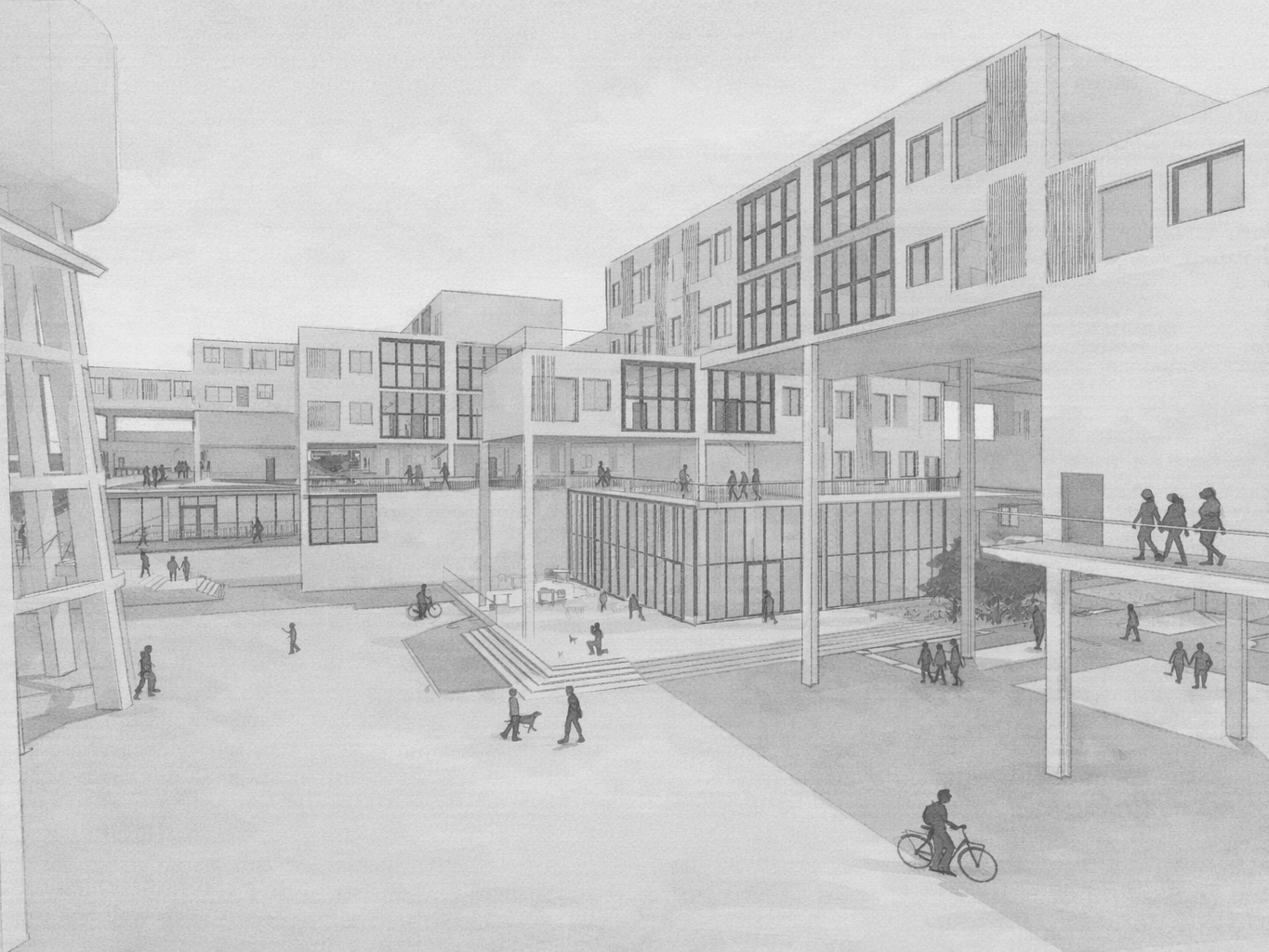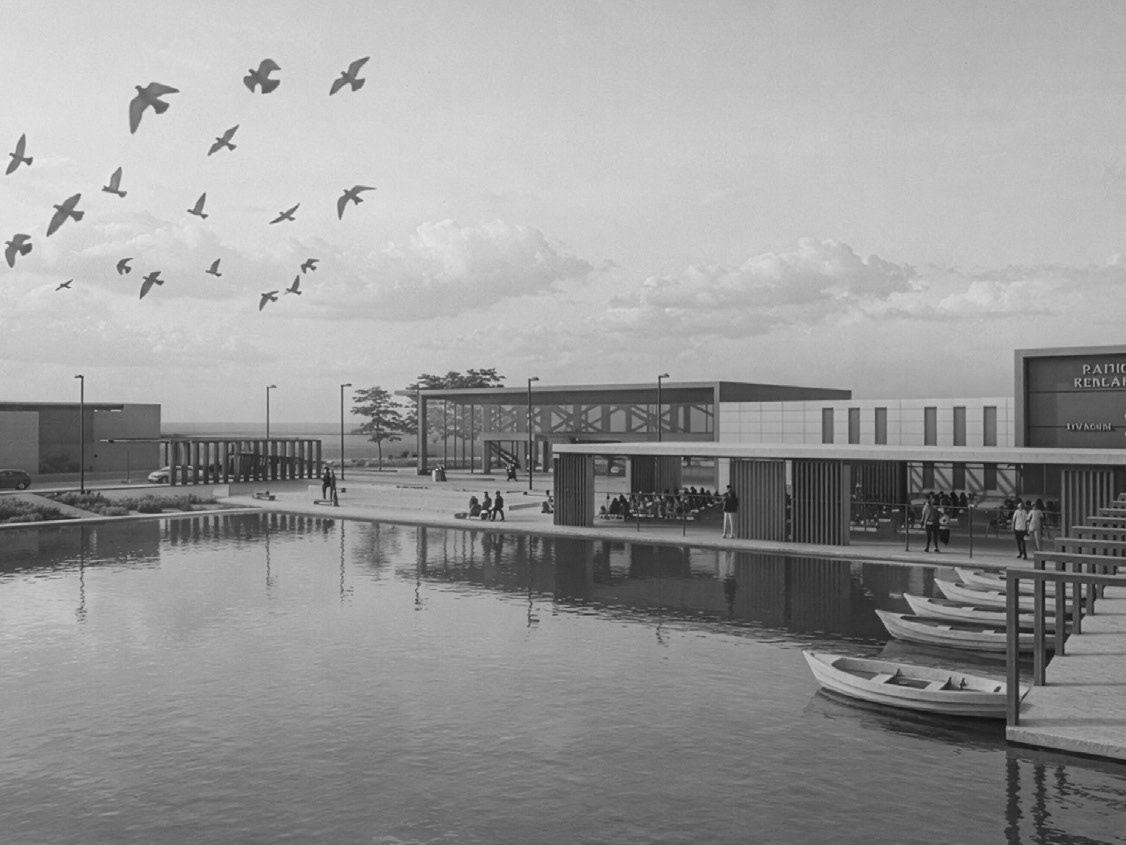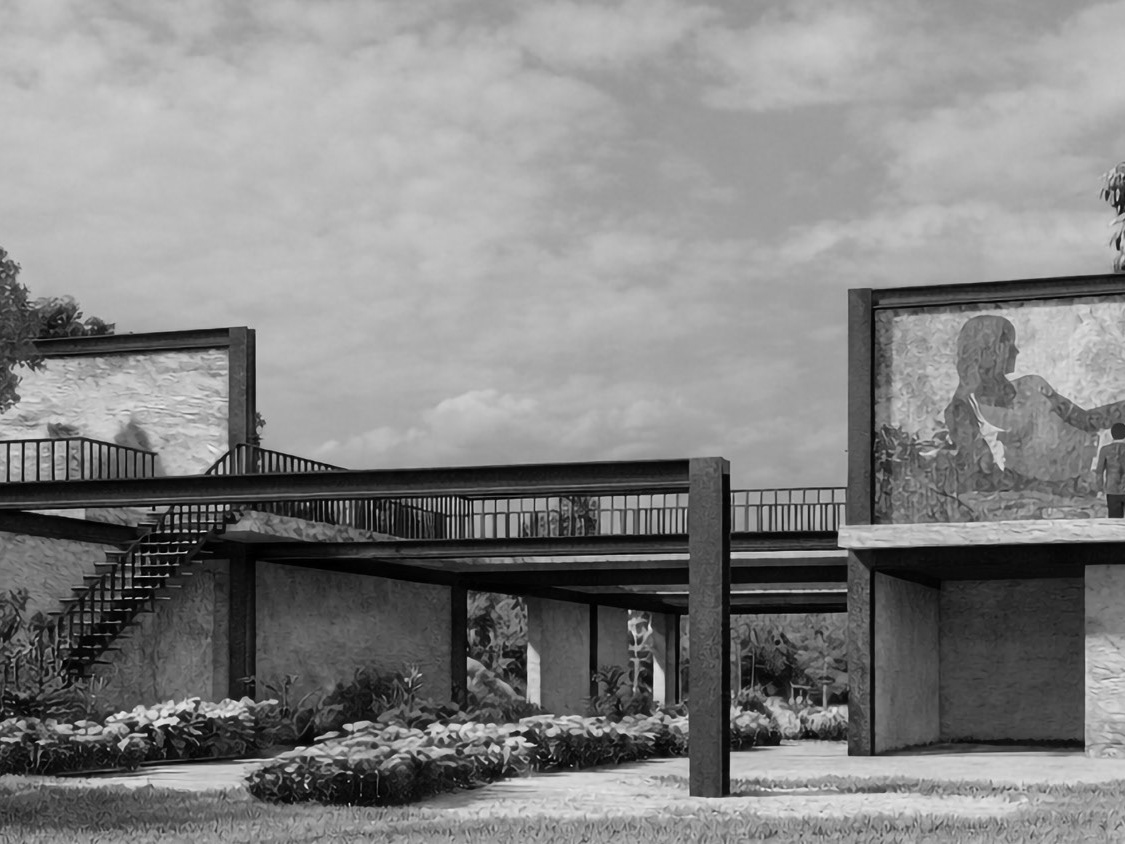
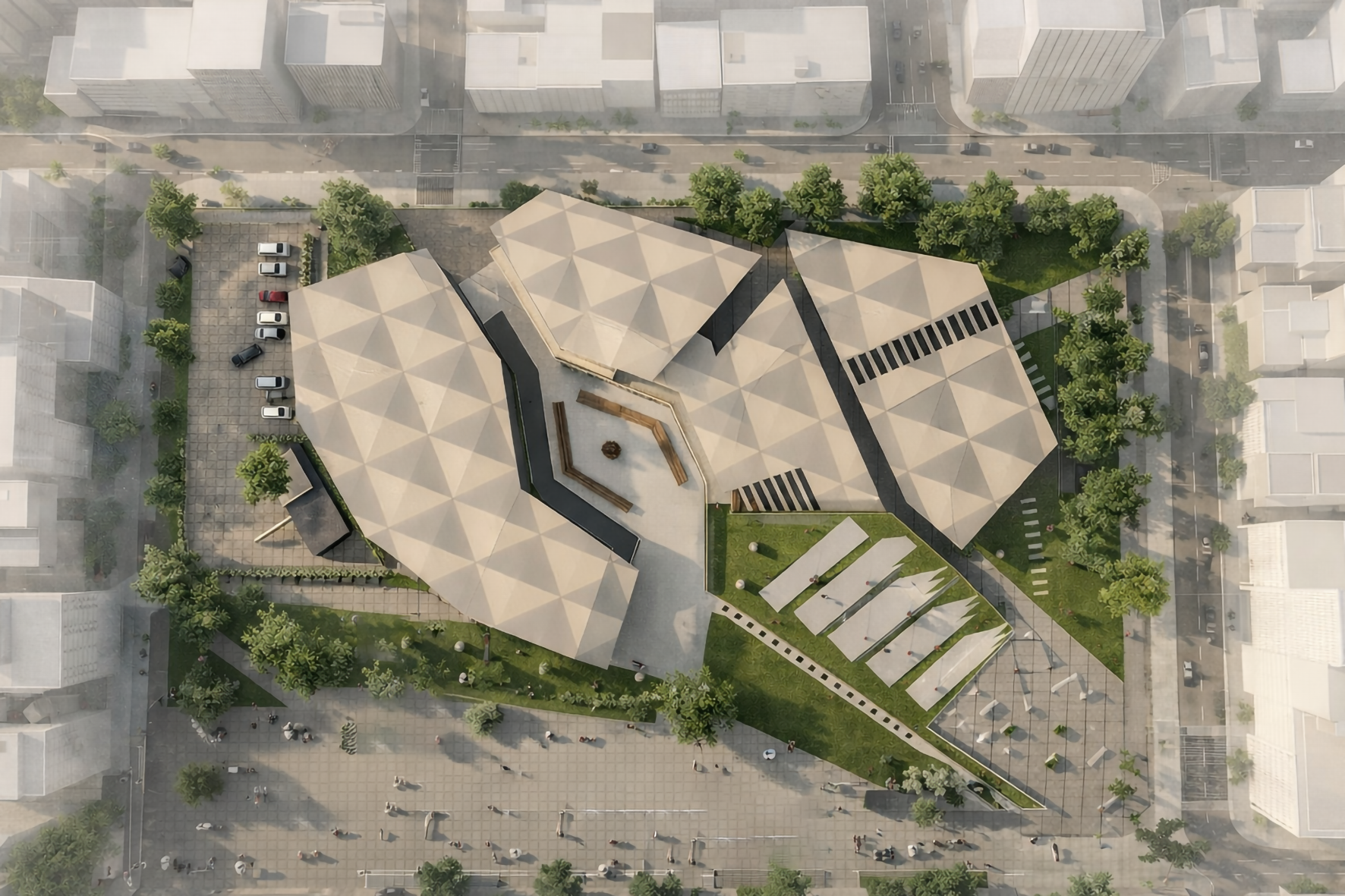
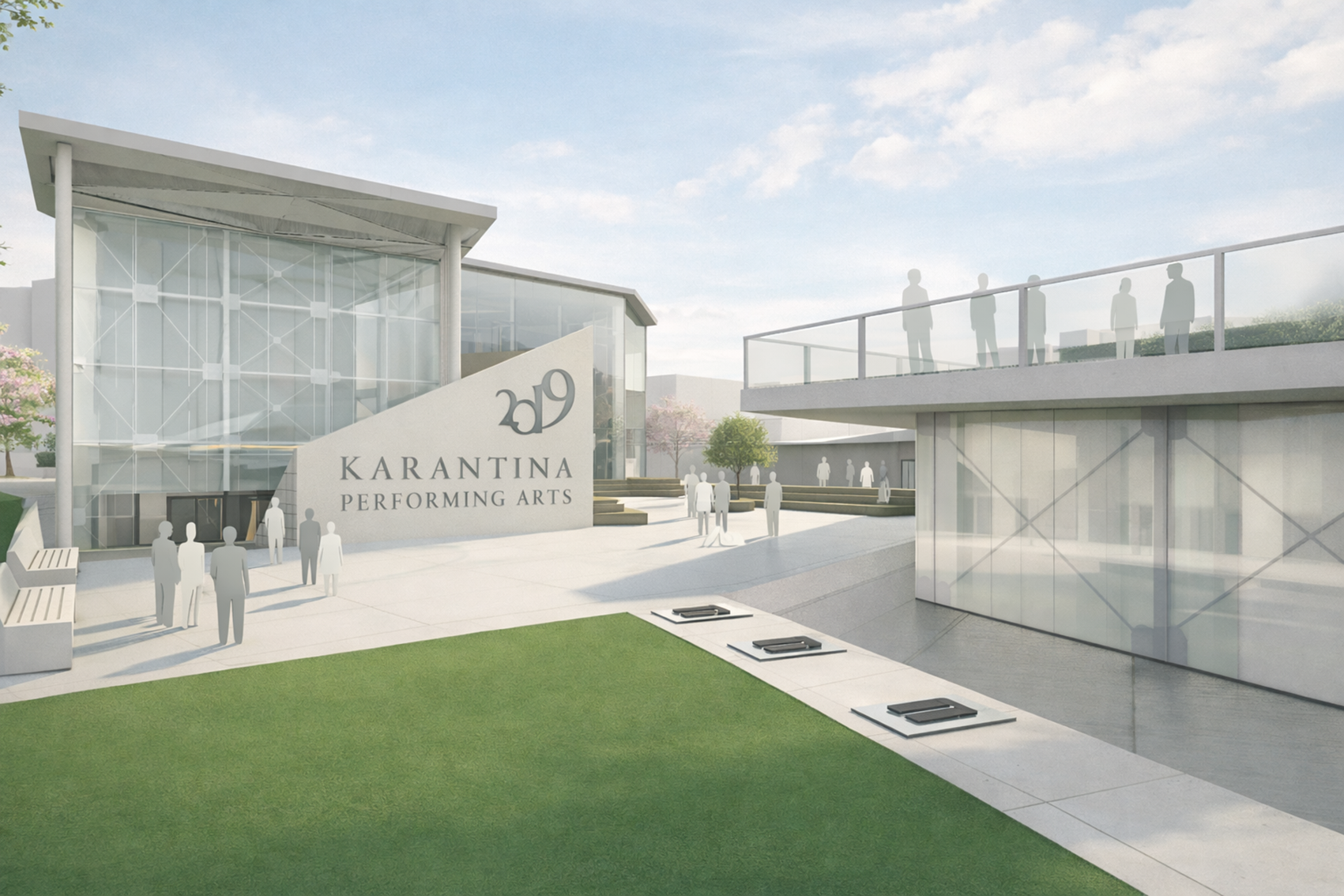
Located in the Karantina district of İzmir, Karantina Performing Arts is conceived as a neighborhood-oriented cultural facility that integrates performance, education, and public life. Rather than functioning as a conventional cultural building used only during scheduled events, the project aims to operate as an active urban space that remains accessible and usable throughout the day.
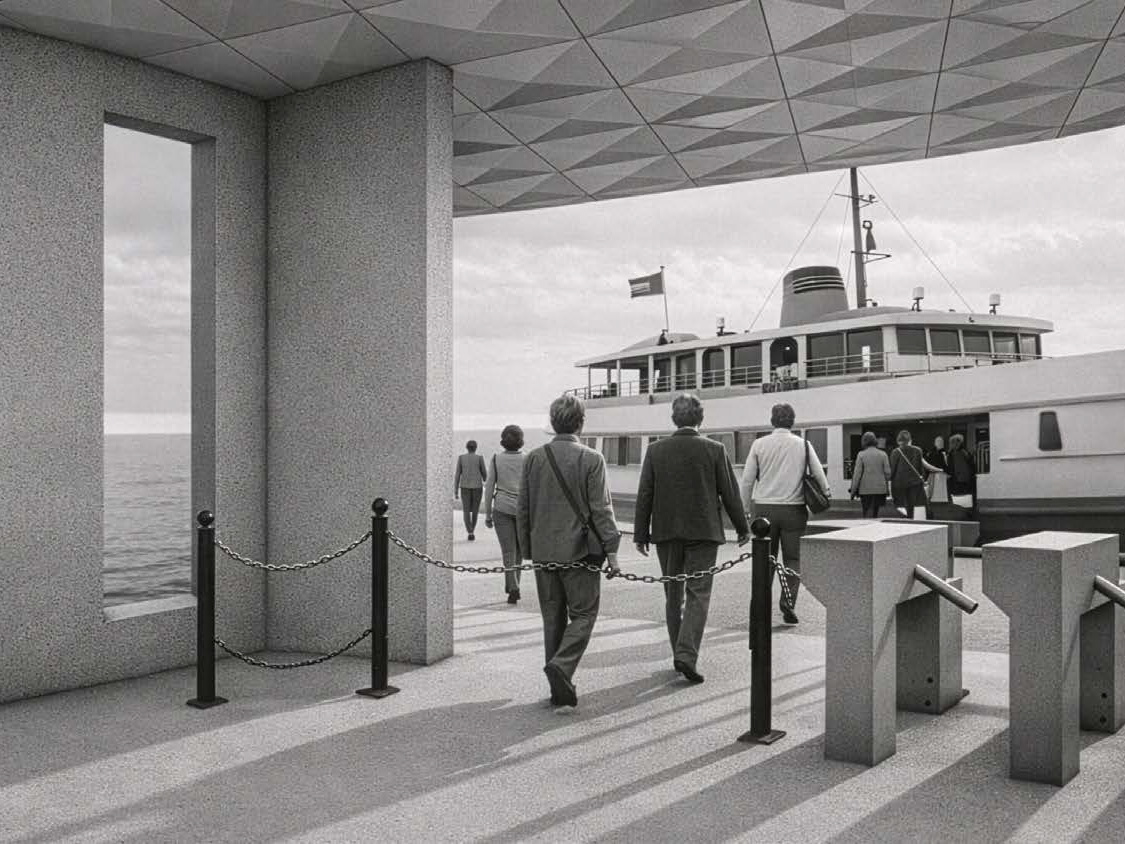
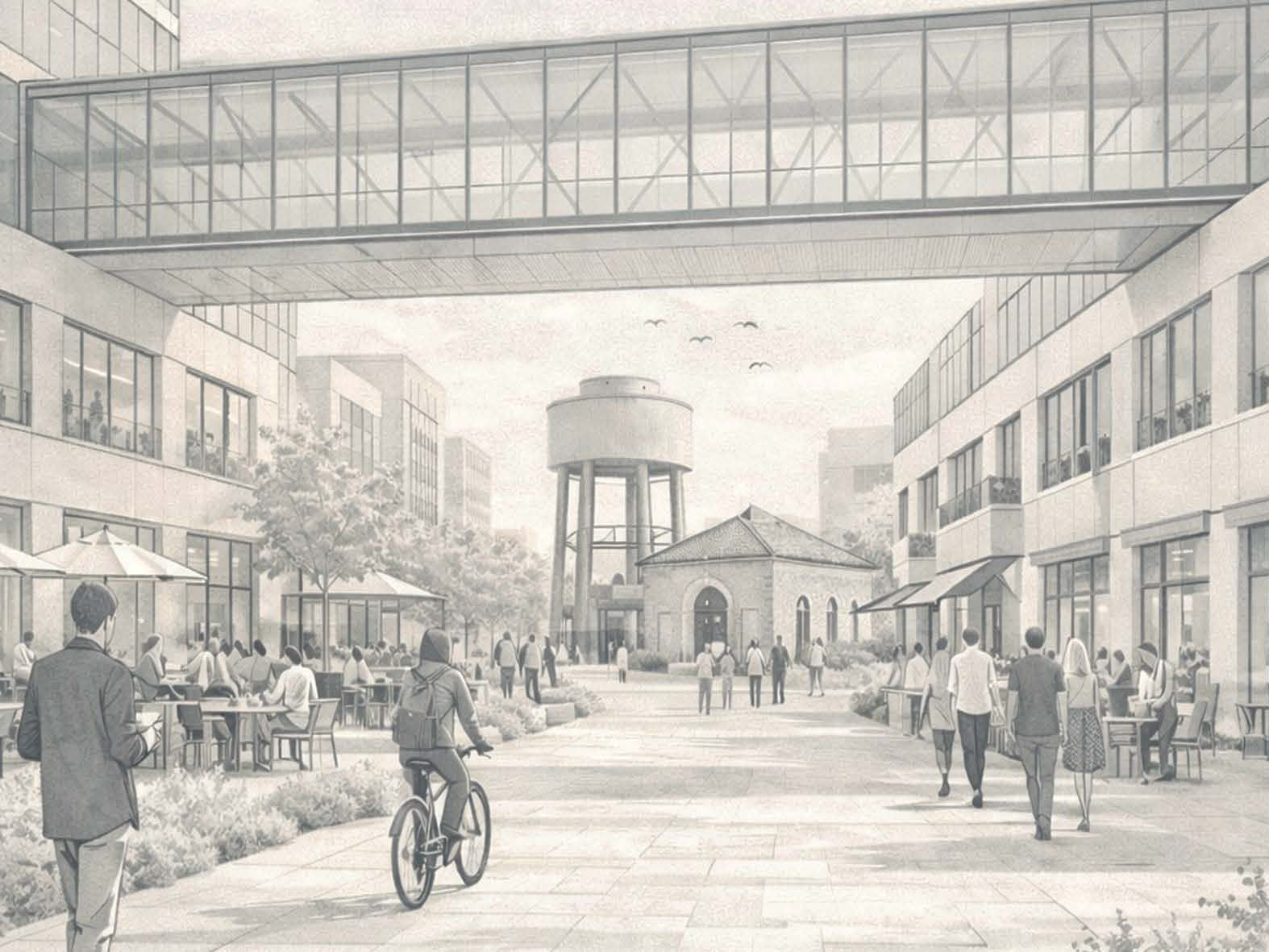
The site sits between Karantina Square and Mithatpaşa Street, two important urban layers within the district. Taking advantage of this condition, the project is organized as a permeable cultural complex that also functions as a pedestrian shortcut between the square and the main street. This strategy transforms the building into an urban connector, allowing the public to pass through the site while naturally encountering its cultural programs.
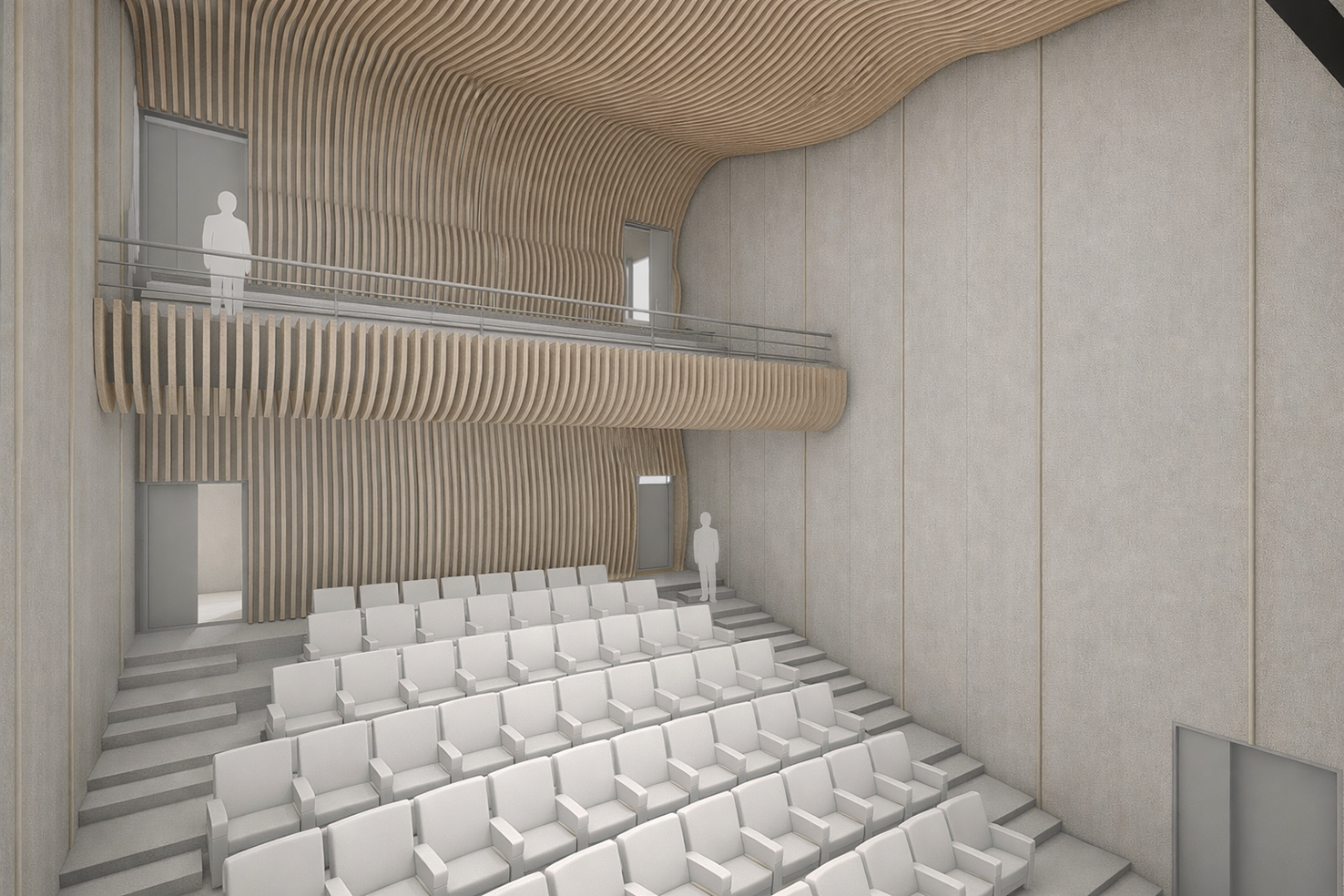
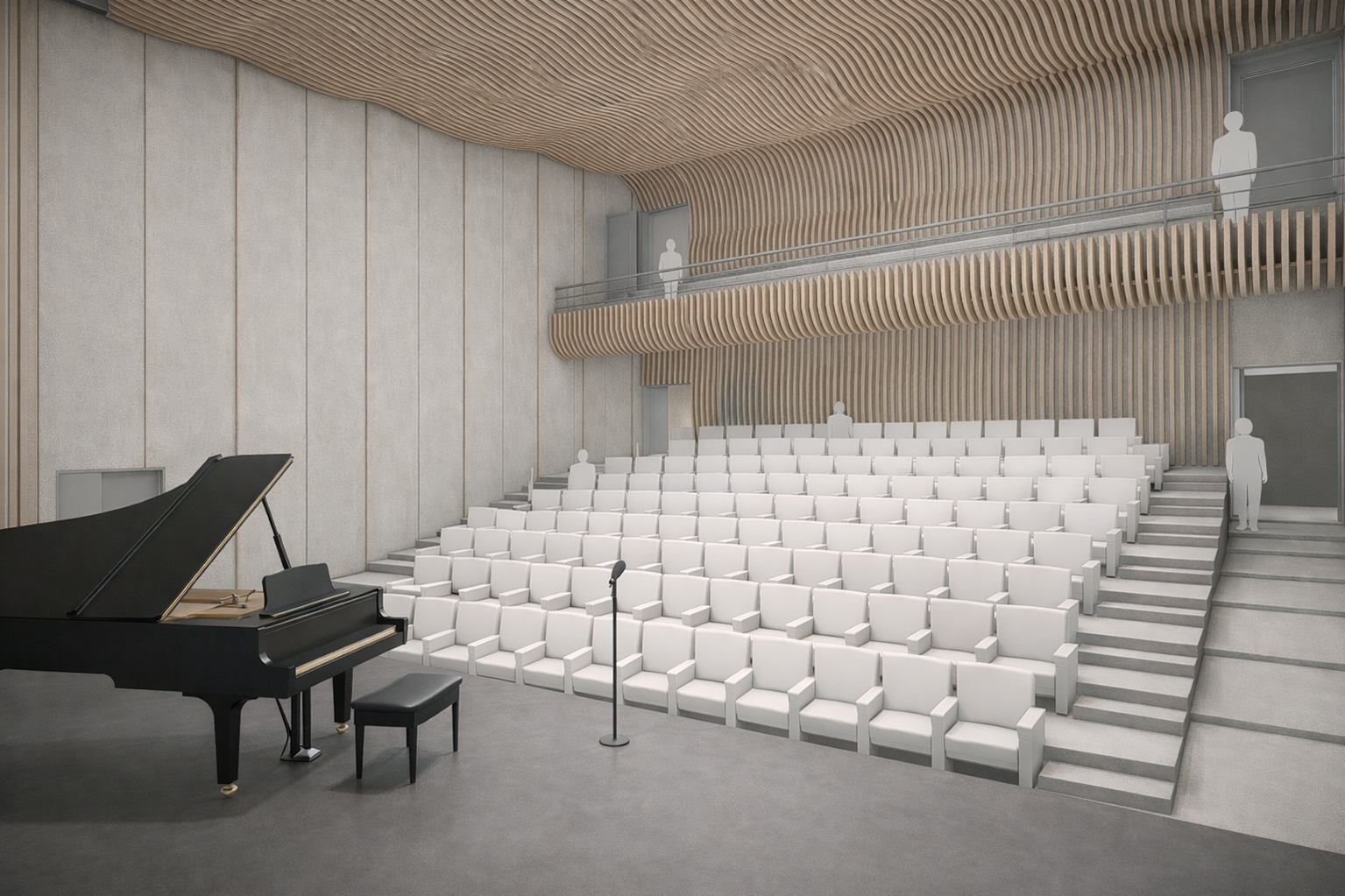
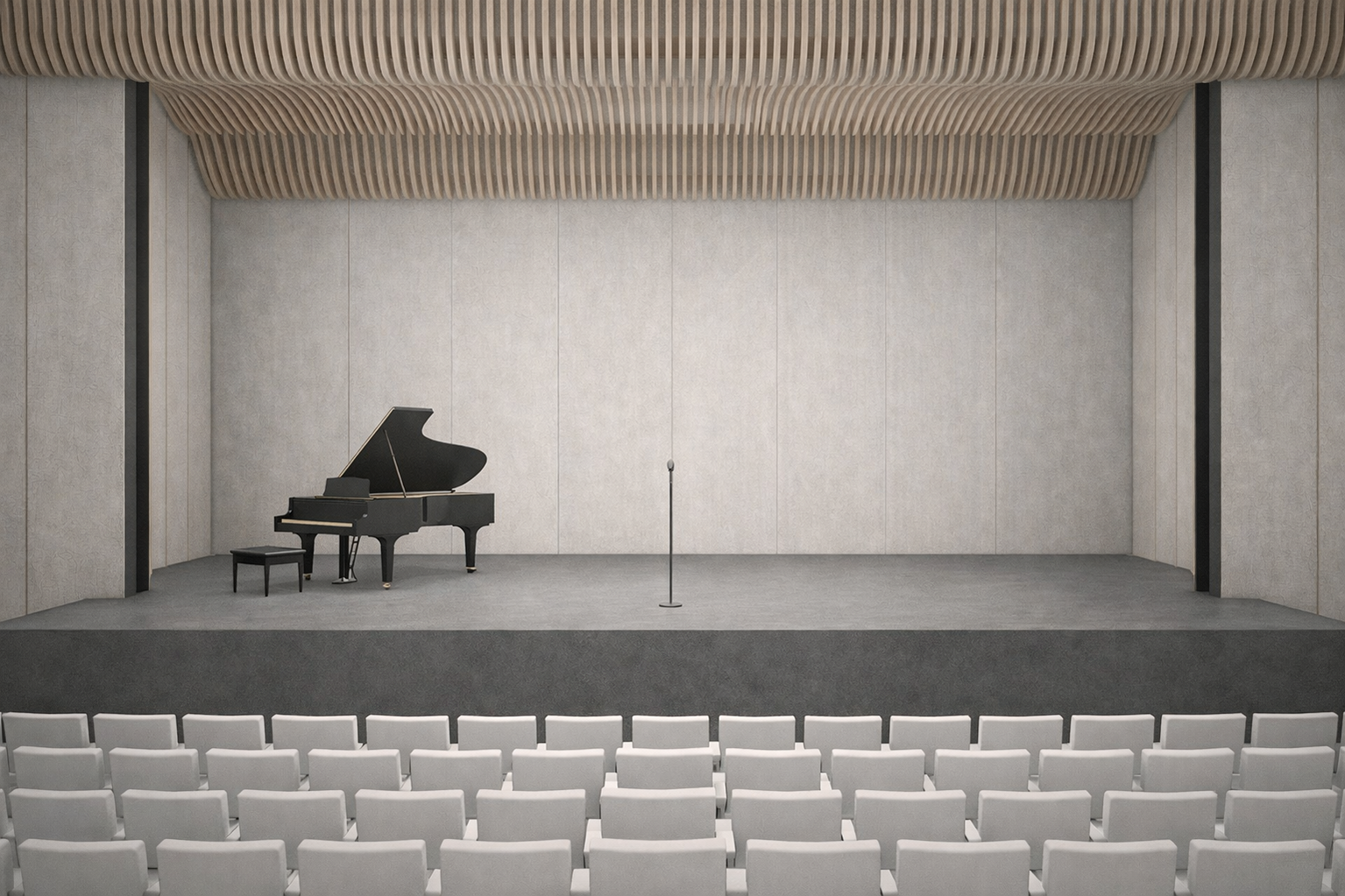
Inside the auditorium, a curved timber acoustic panel system forms the primary spatial element of the interior. Composed of continuous wooden ribs that flow between the walls and ceiling surfaces, the system improves sound diffusion while generating a distinctive spatial identity. This acoustic envelope not only supports the functional requirements of the performance hall but also creates an immersive and expressive architectural atmosphere.
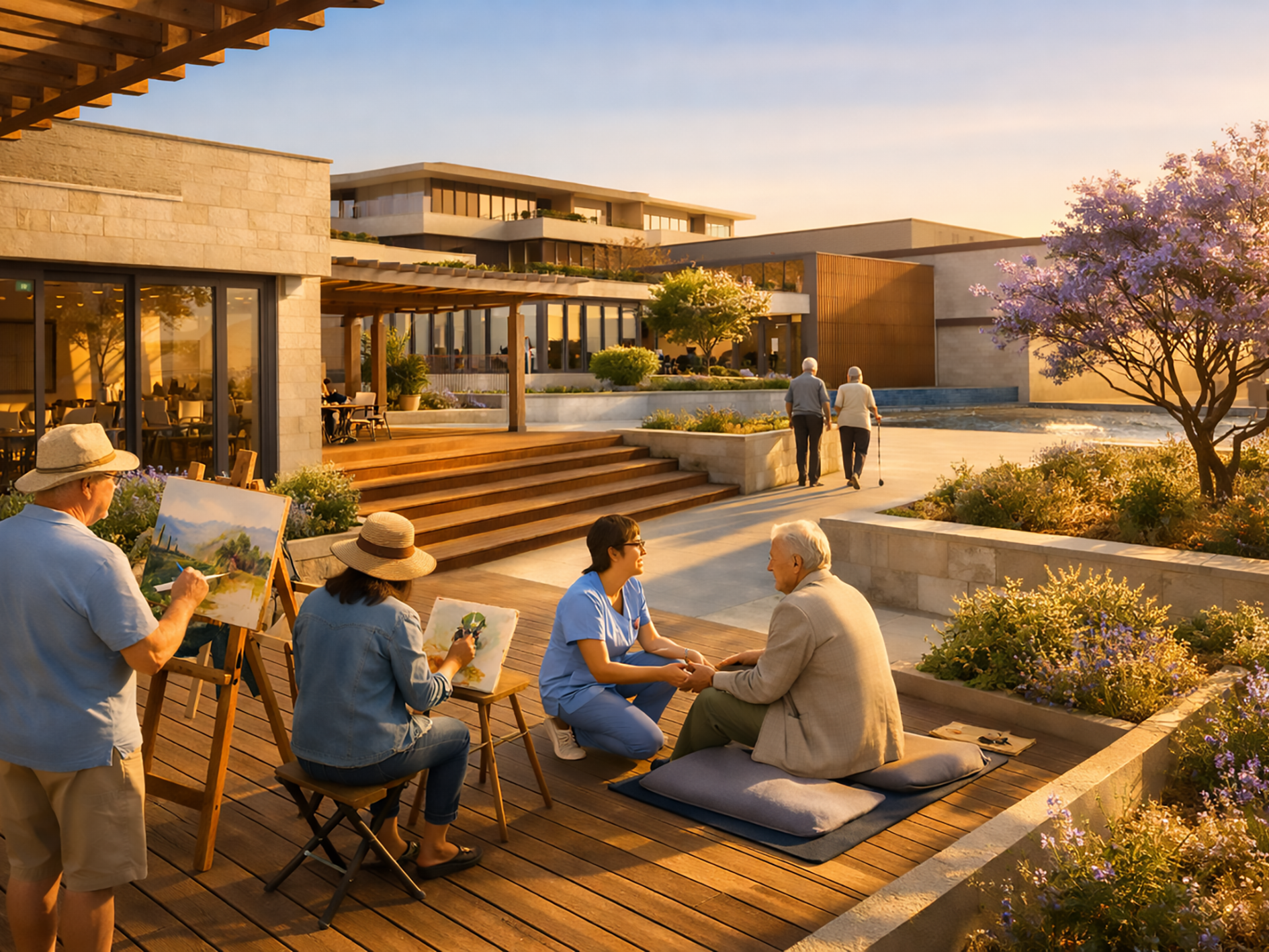
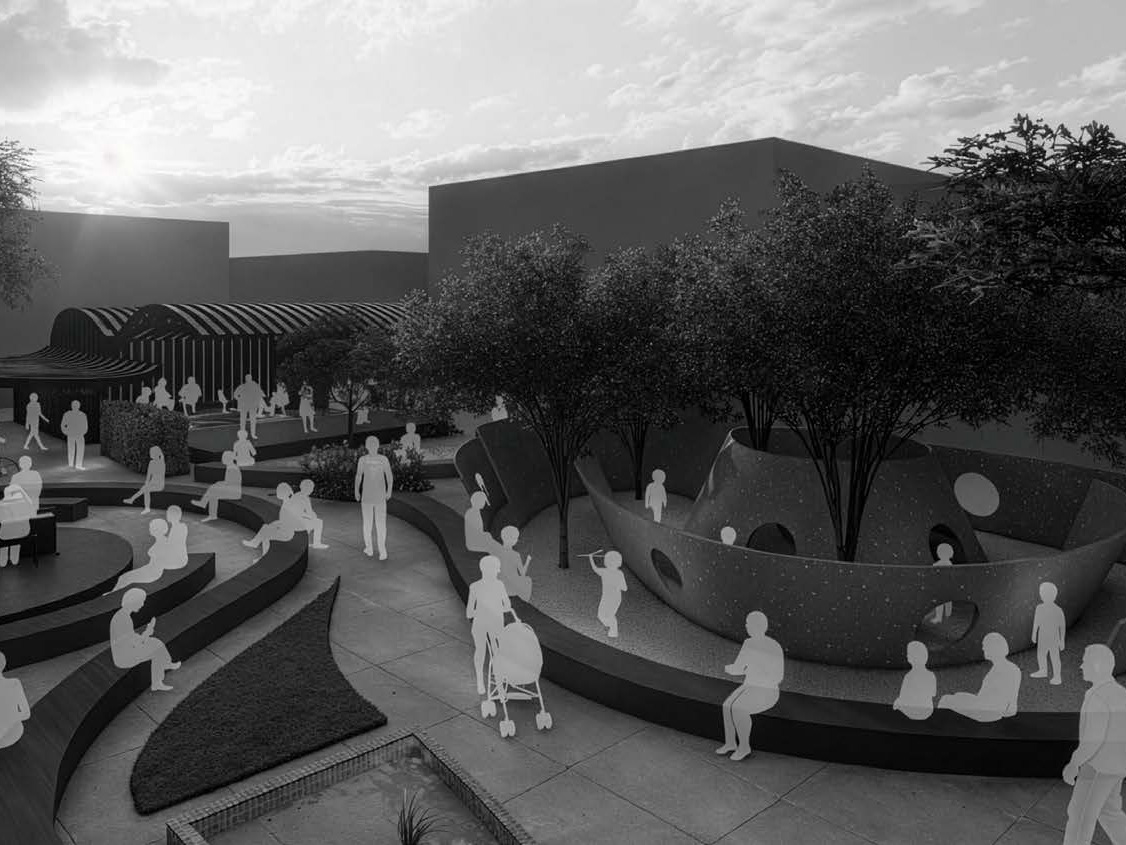
By combining performance venues, educational spaces, and publicly accessible outdoor areas, Karantina Performing Arts seeks to expand the role of cultural infrastructure within the city. The project aims to support local artistic production while simultaneously offering an inclusive public environment where culture becomes part of everyday urban life.
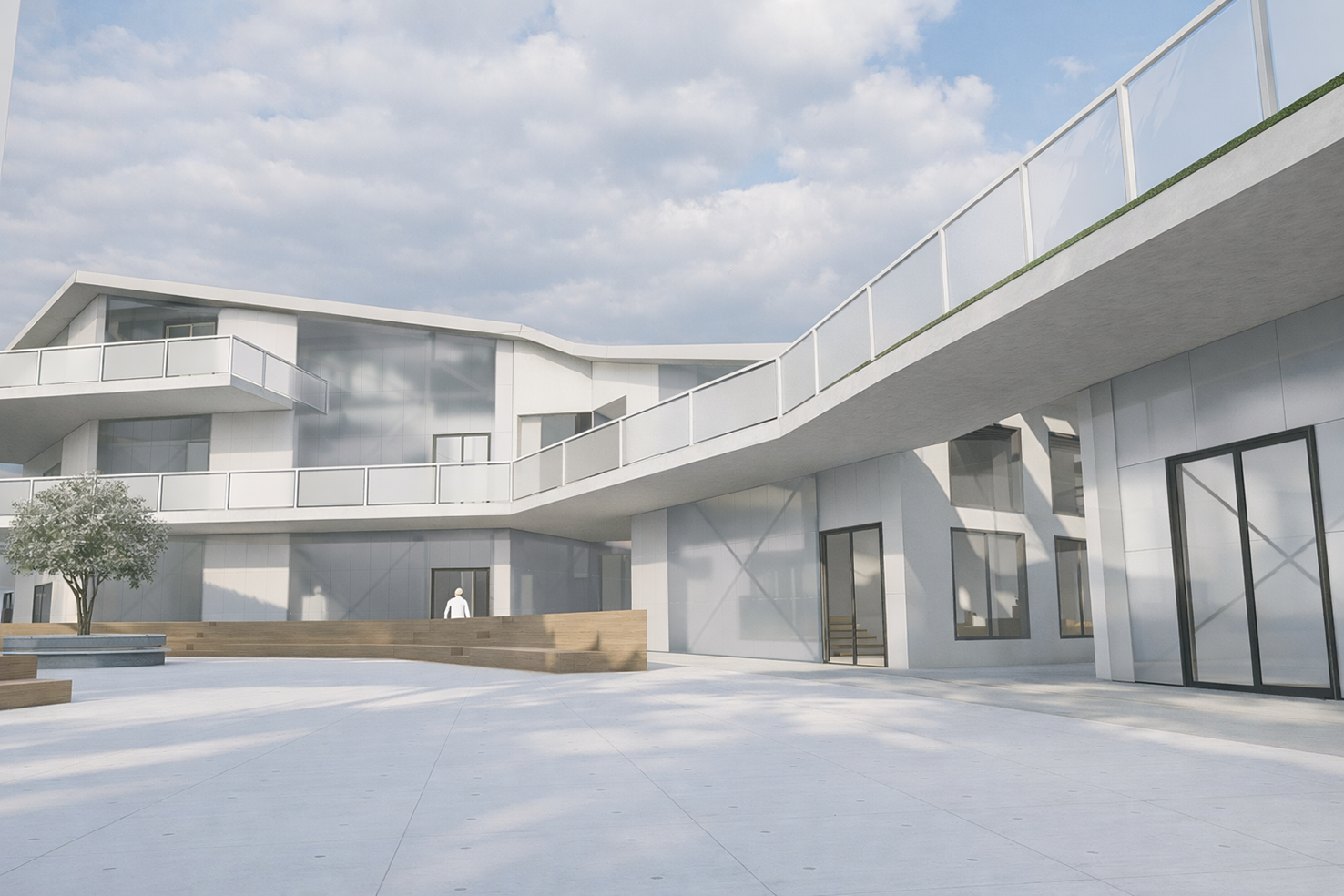
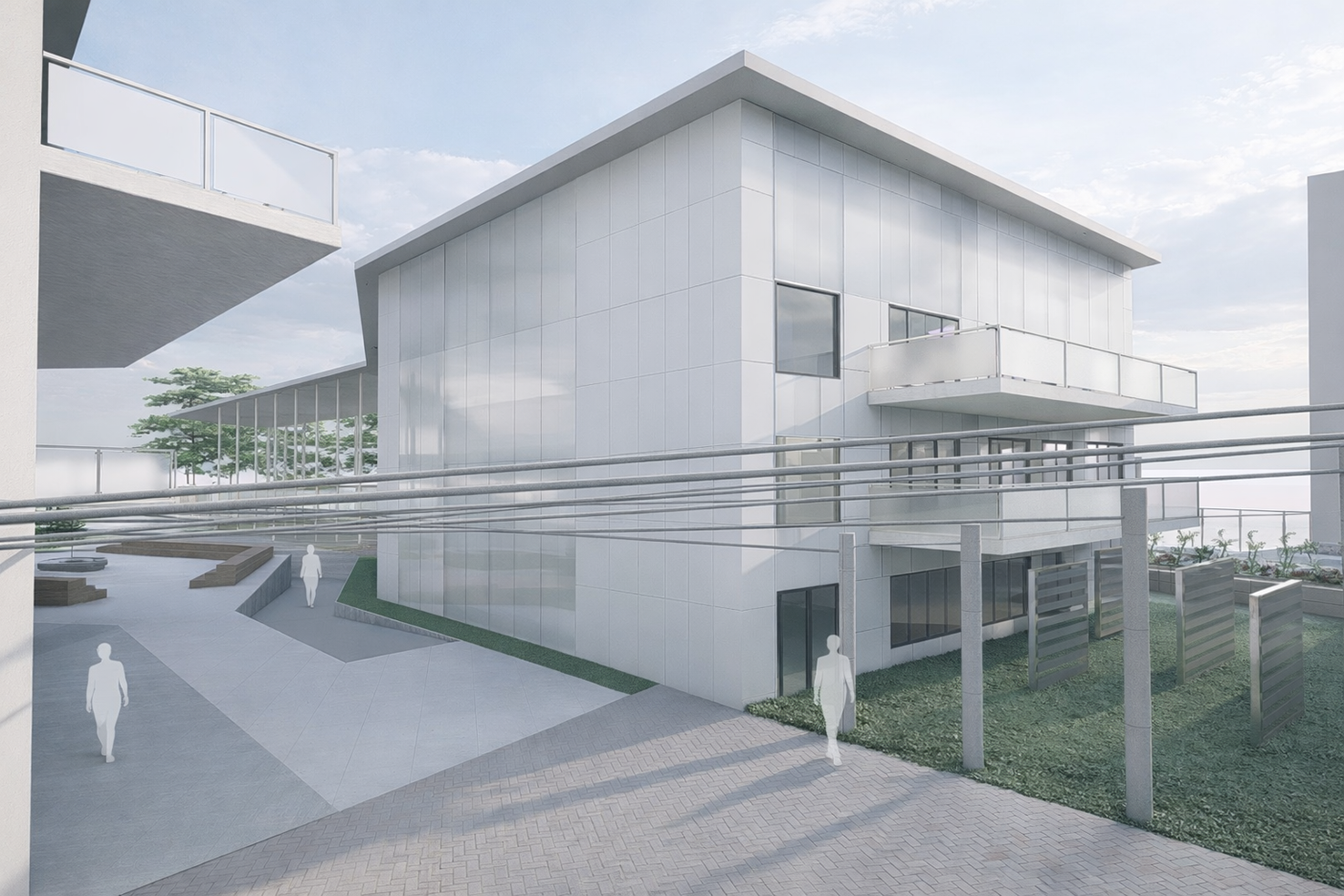
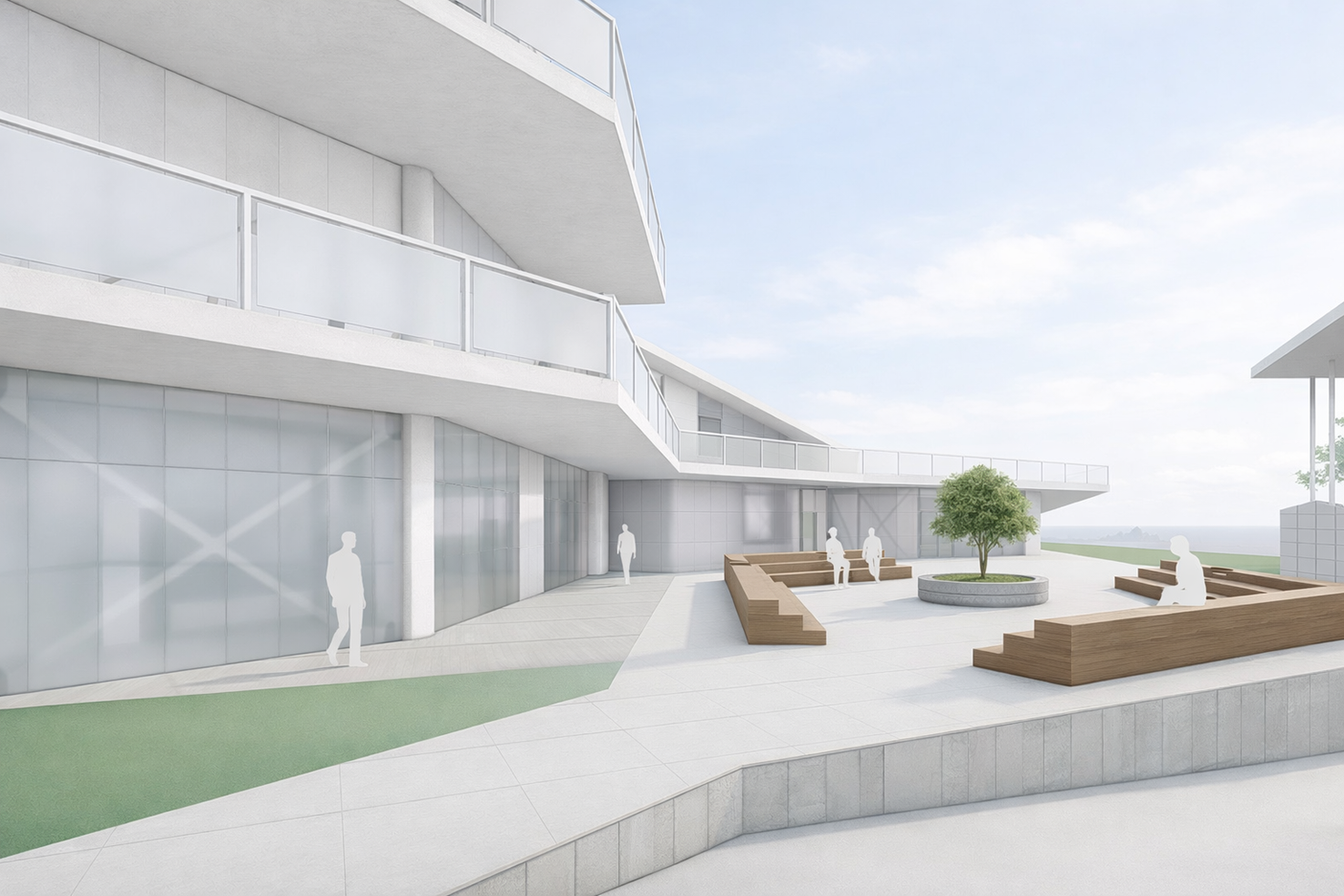
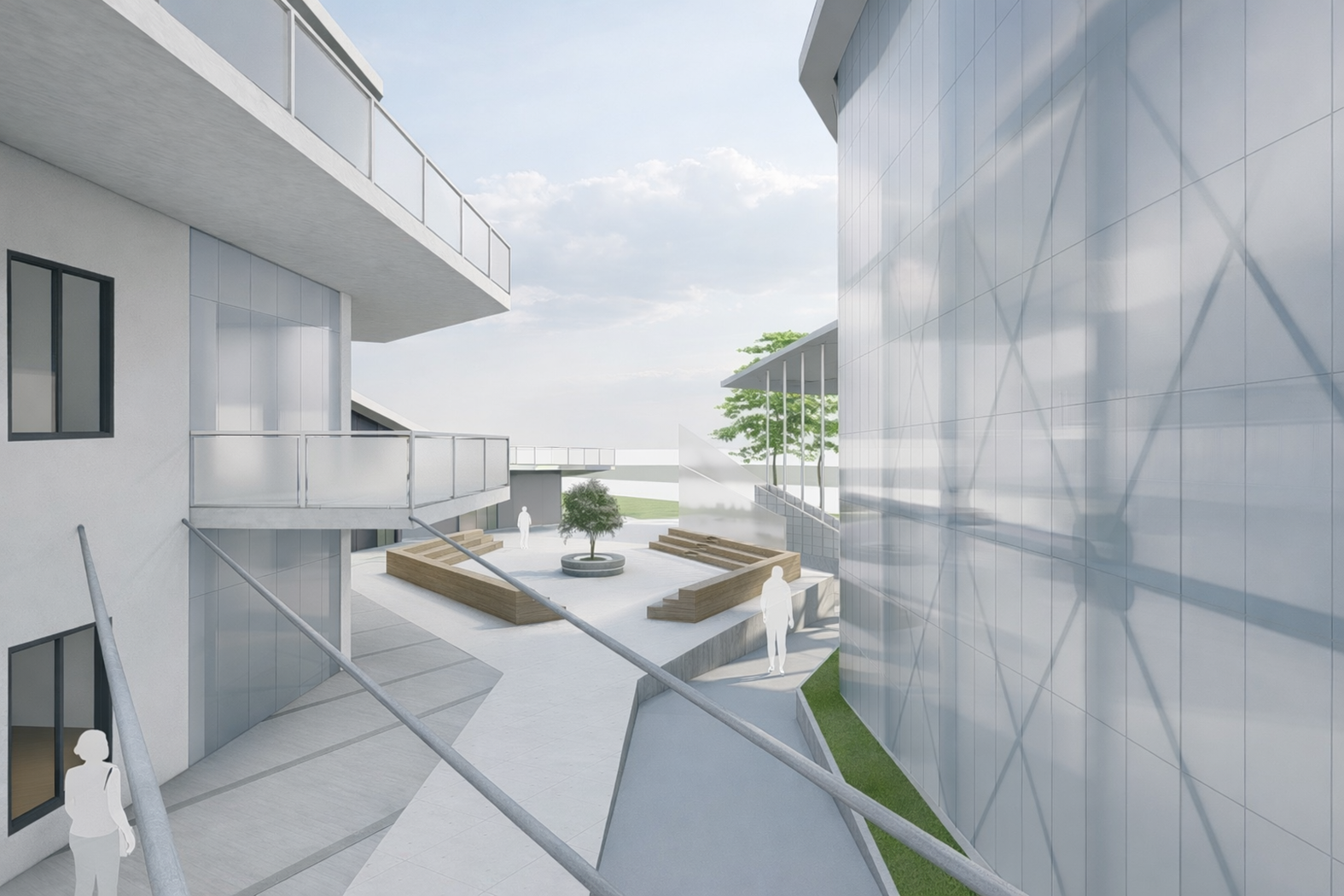
The architectural program includes a compact auditorium designed to host local performances, small concerts, talks, and community events. In addition to the performance hall, the project provides a series of flexible indoor spaces that support performing arts education, workshops, rehearsals, and small-scale creative production. These spaces enable the building to operate not only as a venue for performances but also as a place where artistic practices can be learned, developed, and shared.
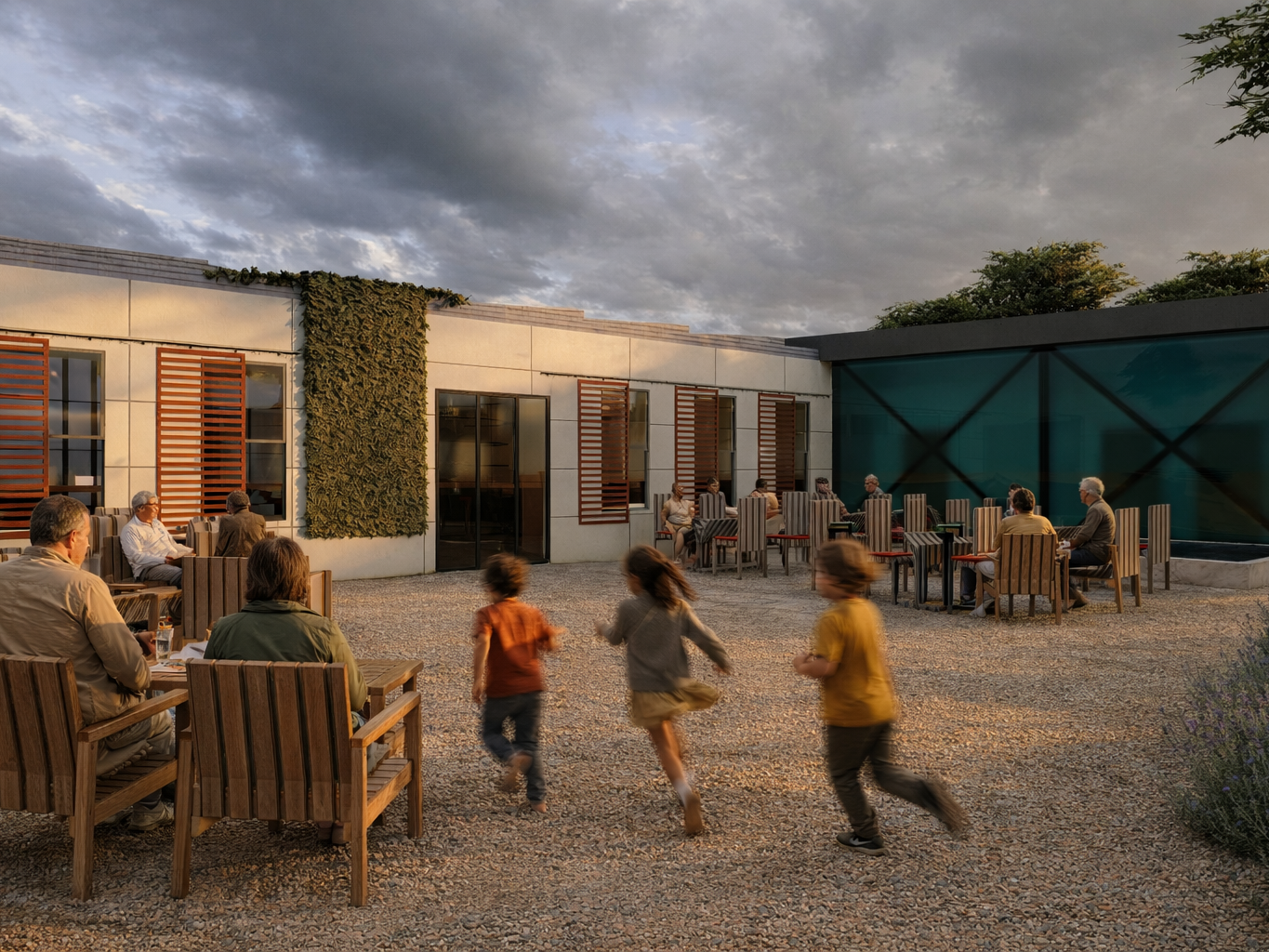
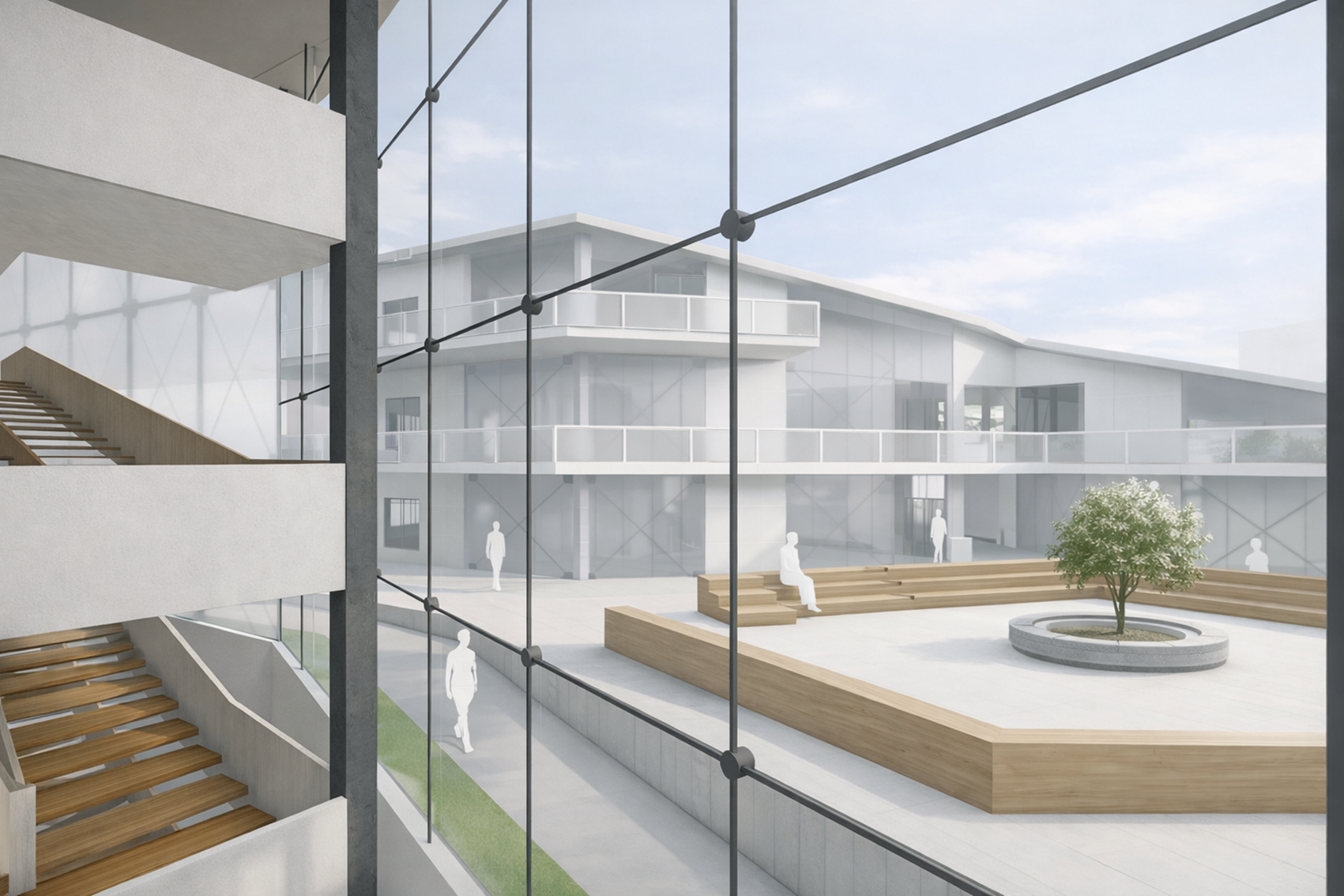
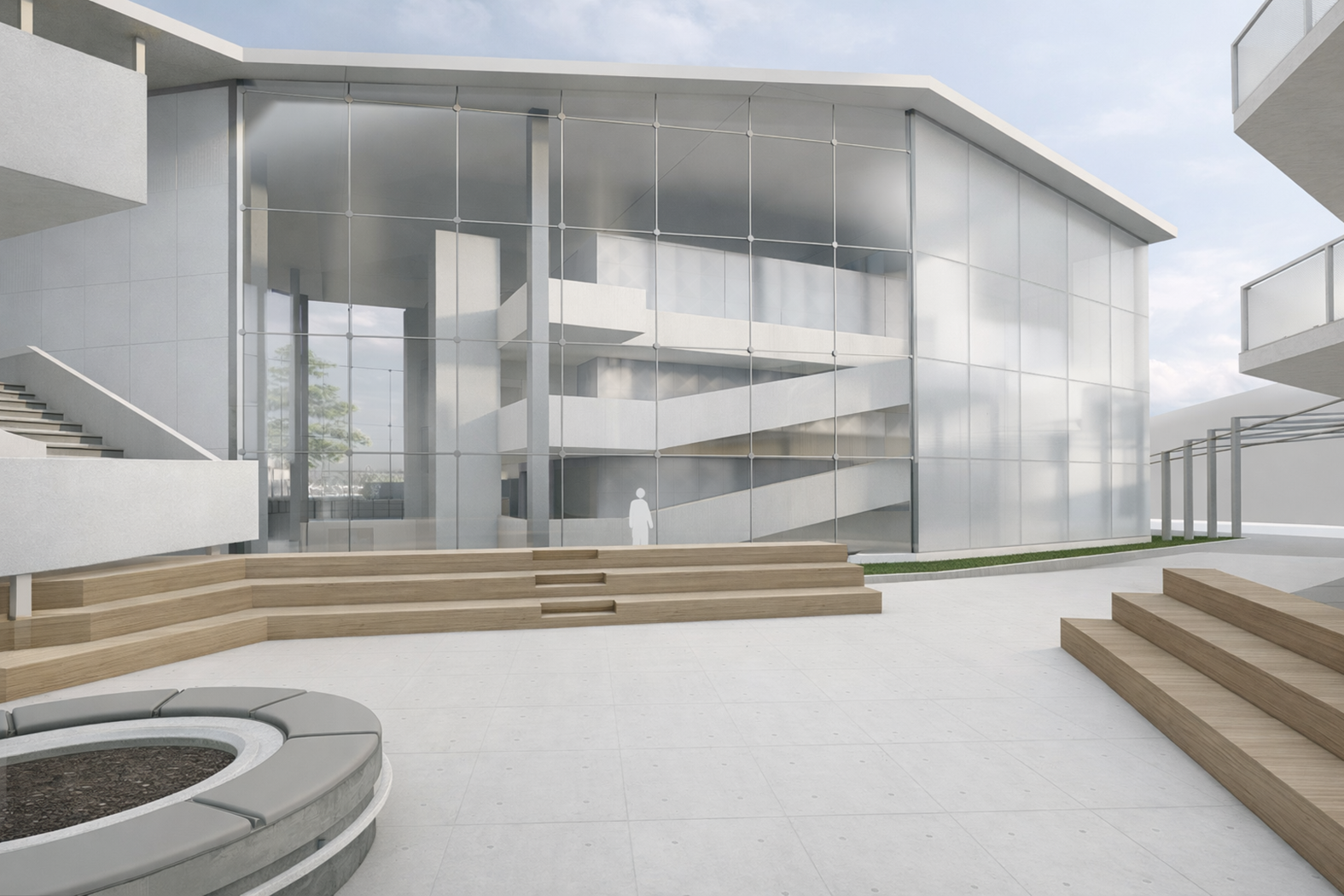
With a total built area of approximately 6,000 square meters, the complex is organized around a central courtyard that acts as the spatial and social core of the project. This open space is surrounded by terraces, stepped seating platforms, and semi-covered circulation areas that allow visitors to gather, rest, and observe activities within the complex. The design encourages informal occupation of the space, making it possible for people to use the project even outside scheduled performances.
Public circulation routes extend through the site, connecting different program elements while maintaining a strong relationship with the surrounding urban fabric. Landscaped areas and green connections reinforce this relationship and help integrate the complex within the existing context of the neighborhood.
1. This project was developed within the scope of the Integral Architectural Design Studio (III) at Yaşar University, under the guidance of Assoc. Prof. Dr. Eray Bozkurt.
2. The project was produced as a collaborative design work by a team of two.
3. AI tools were used during the post-production phase of the visualizations.
2. The project was produced as a collaborative design work by a team of two.
3. AI tools were used during the post-production phase of the visualizations.