INTRODUCTION
The increasing spatial segregation between living and working environments in contemporary cities has resulted in fragmented urban organizations in which production and habitation are located as discrete and often disconnected functions. This separation becomes particularly problematic in the context of creative production practices, which increasingly rely on collective modes of collaboration and spatial continuity. Under such conditions, the definition of a living environment that incorporates both residential and workplace functions necessitates reconsideration — not as a mere programmatic aggregation of uses, but as an integrated spatial framework in which everyday life and production processes are mutually embedded.
Conceptual Framework: Threshold Spaces
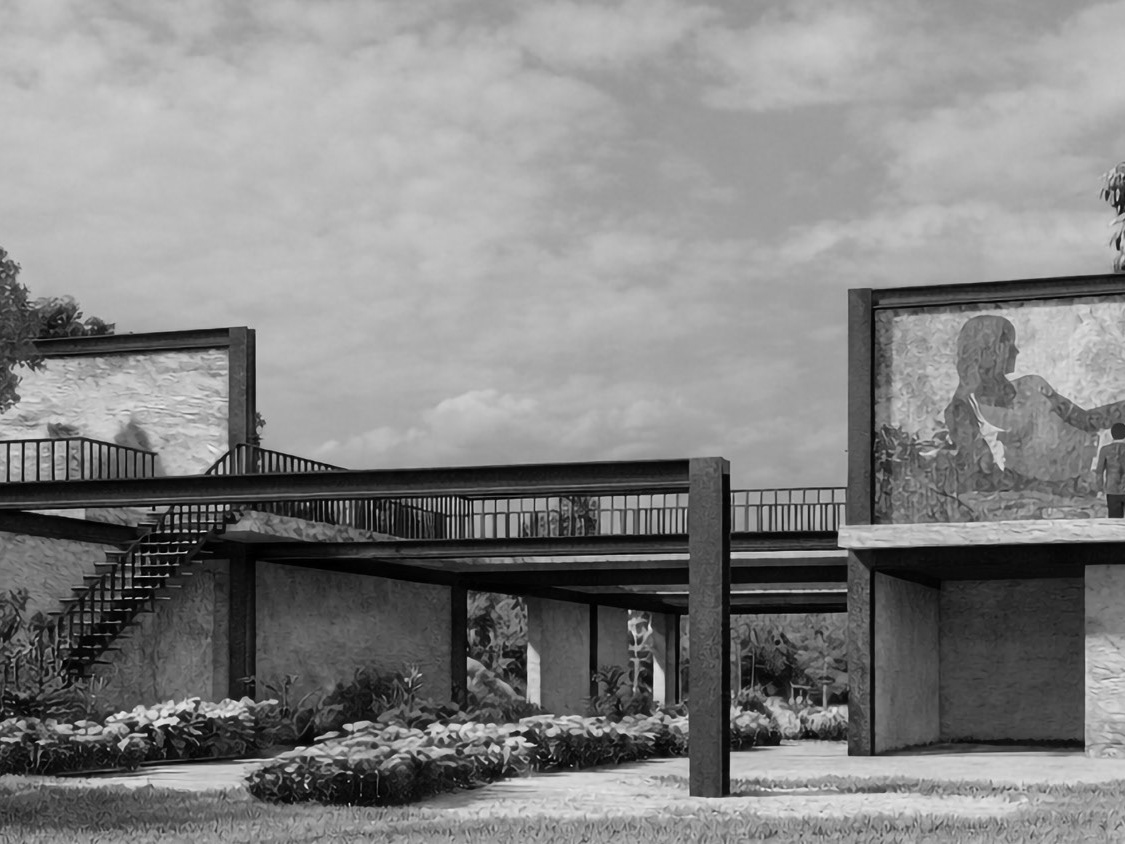
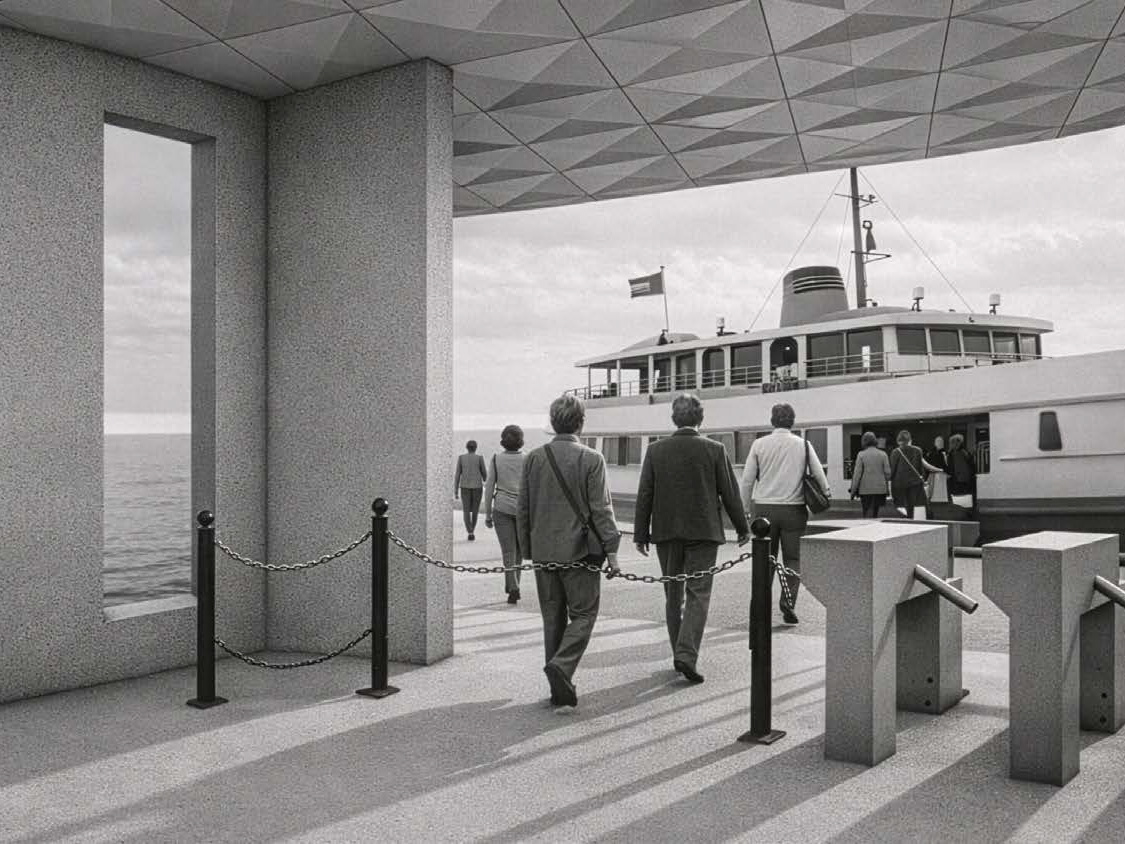
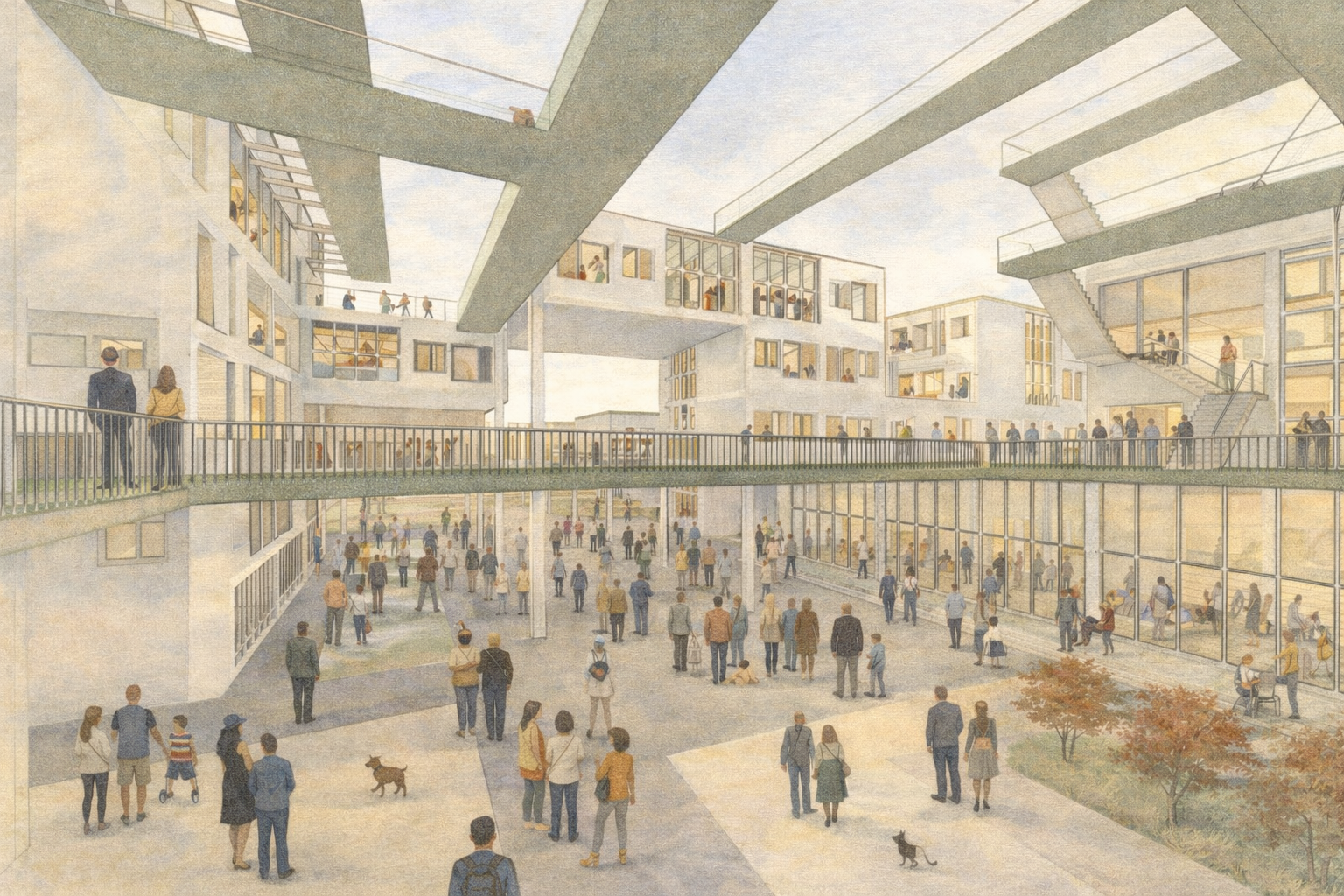
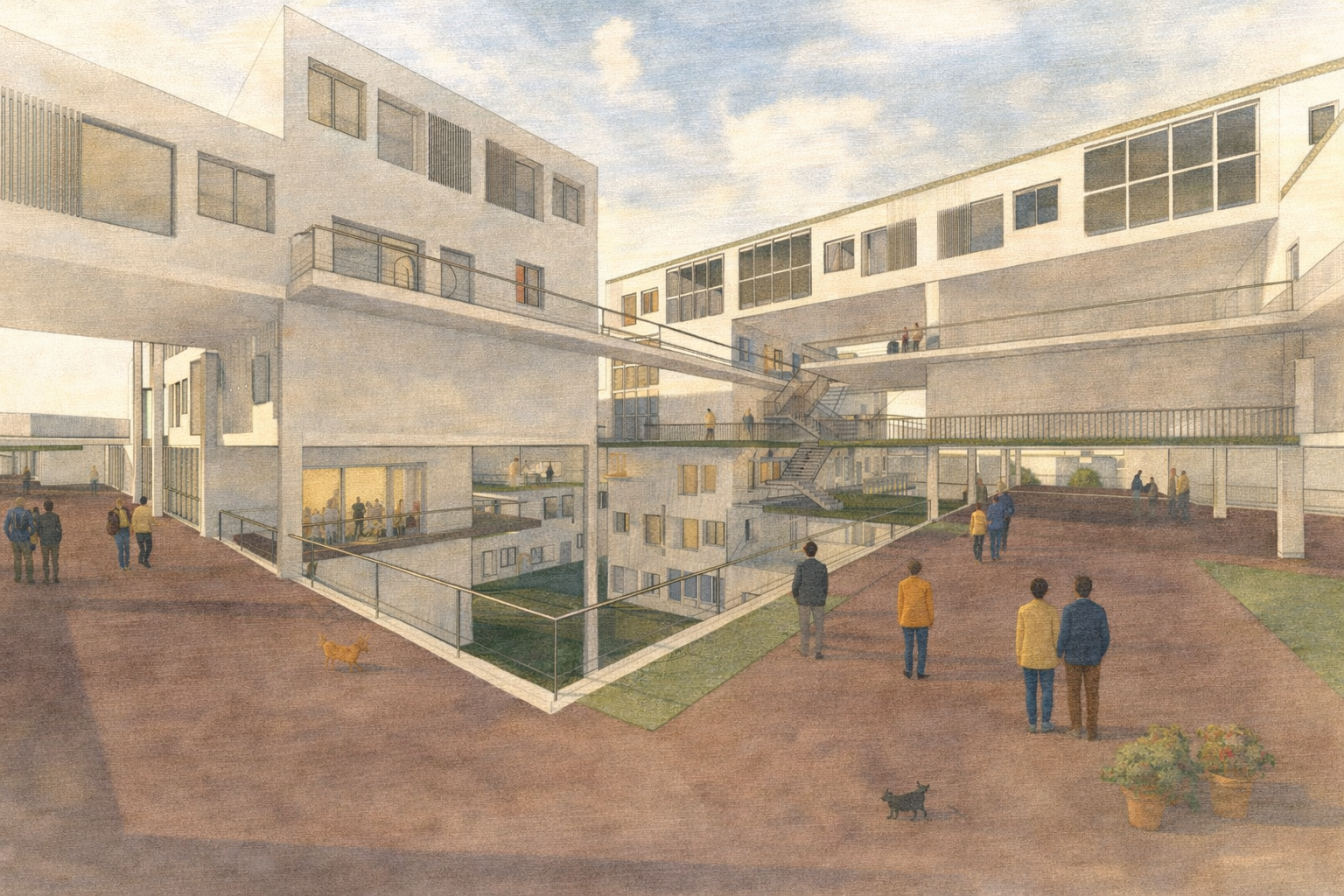
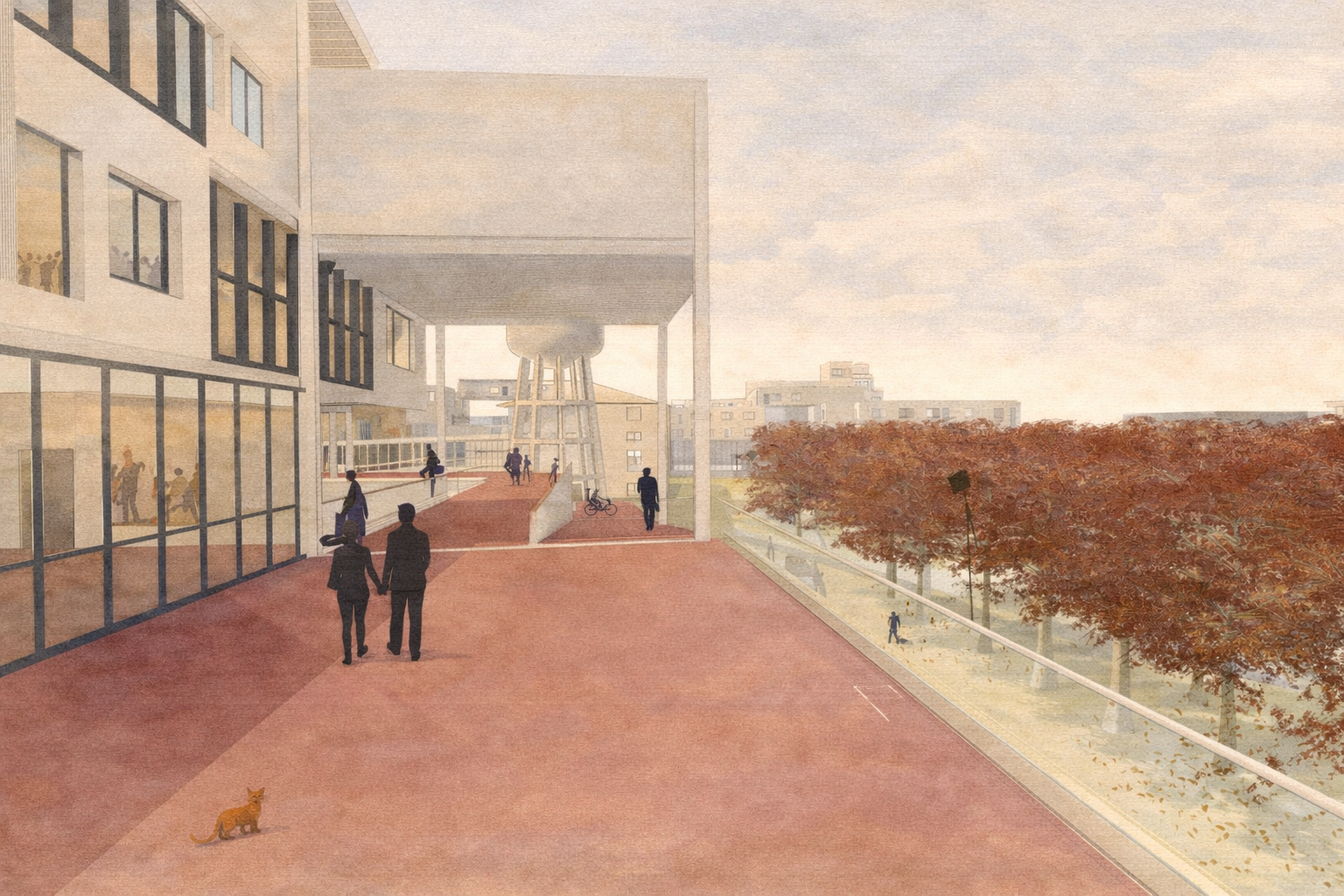
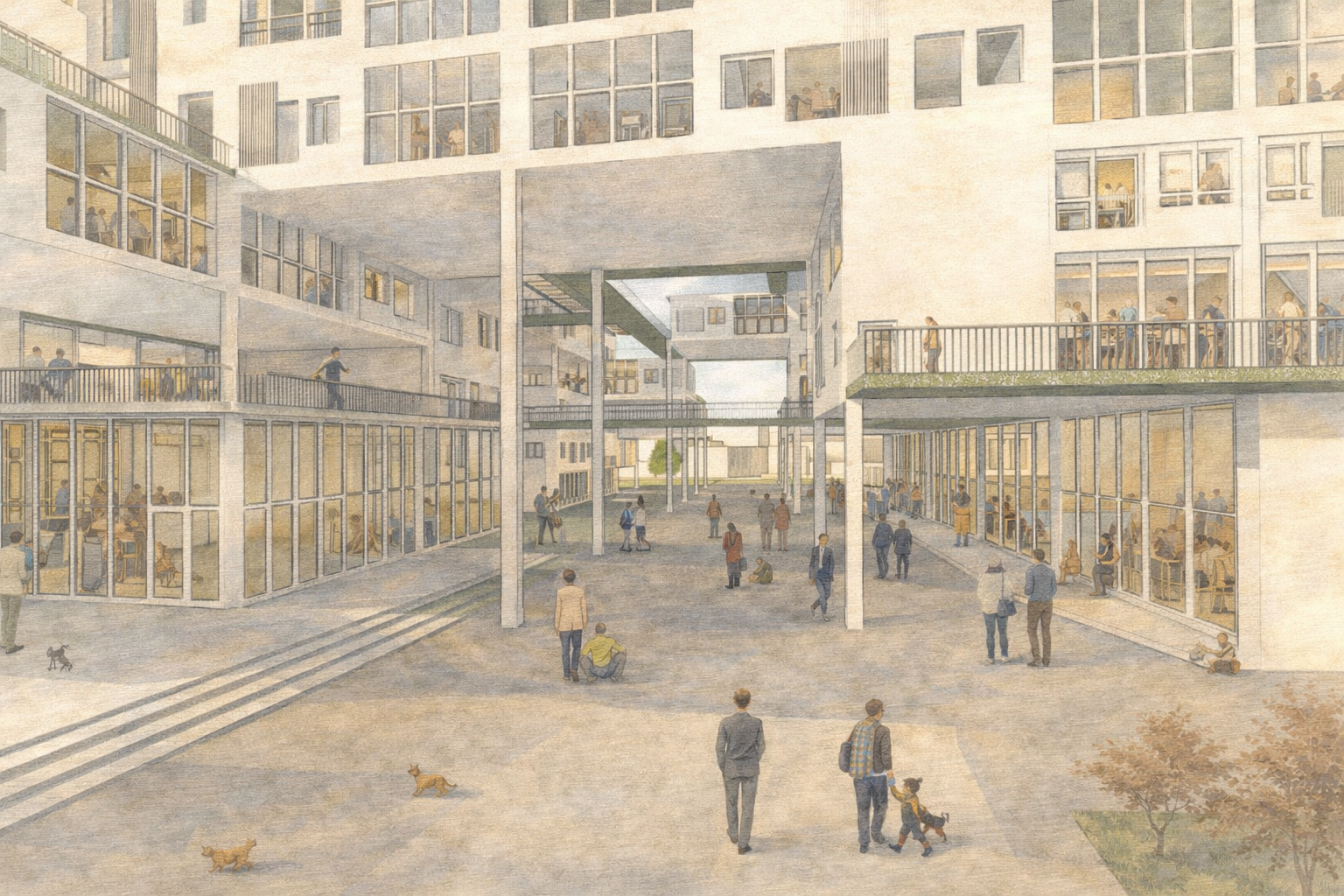
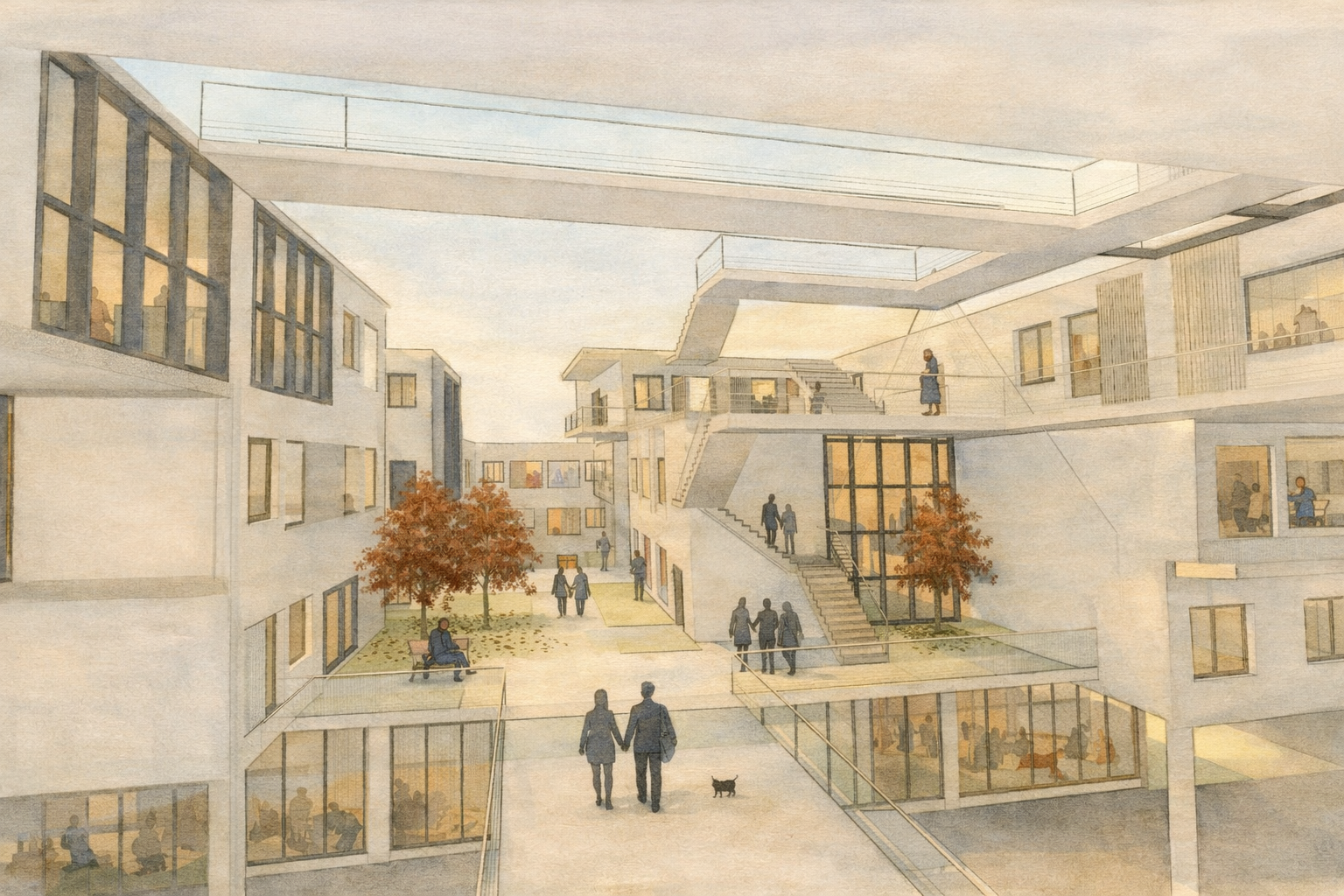
The primary conceptual framework of the project is structured around the notion of the threshold as a spatial interface that mediates between distinct yet interdependent domains, such as public and private, or production and presentation. In this regard, the threshold is not interpreted as a fixed boundary that separates spatial conditions, but rather as a transitional construct that enables relational continuity between them. Designed as a series of intermediate zones, threshold spaces facilitate gradual transitions between collective production environments and private residential units. These in-between conditions allow for varying degrees of interaction, visibility, and accessibility, thereby dissolving rigid spatial hierarchies while maintaining differentiated functional identities. As such, the threshold operates as an organizational device that enables spatial permeability without compromising the autonomy of distinct programmatic components.
DESIGN STRATEGY: A ProductIon-OrIented CO-LIVING ScenarIo
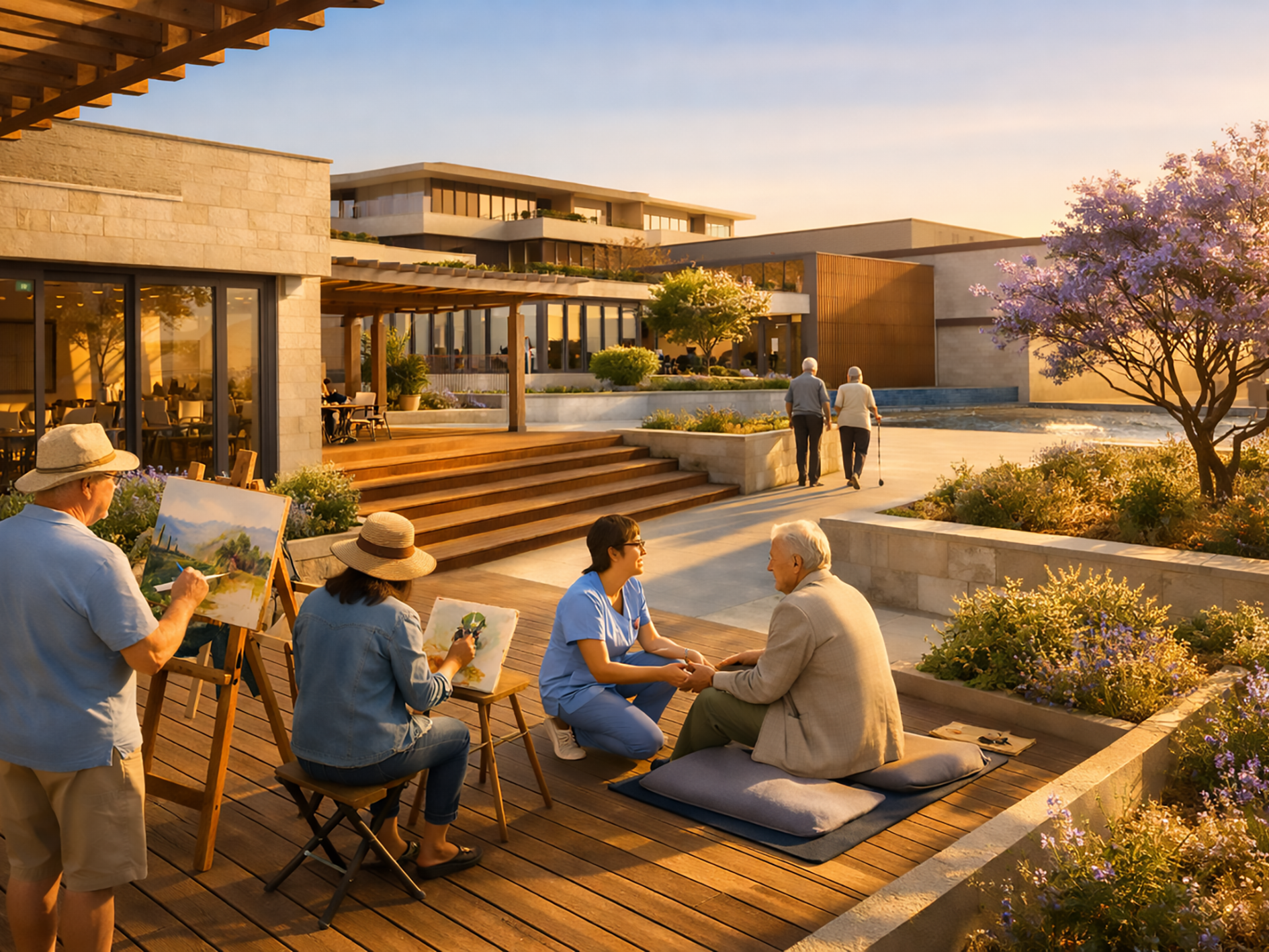
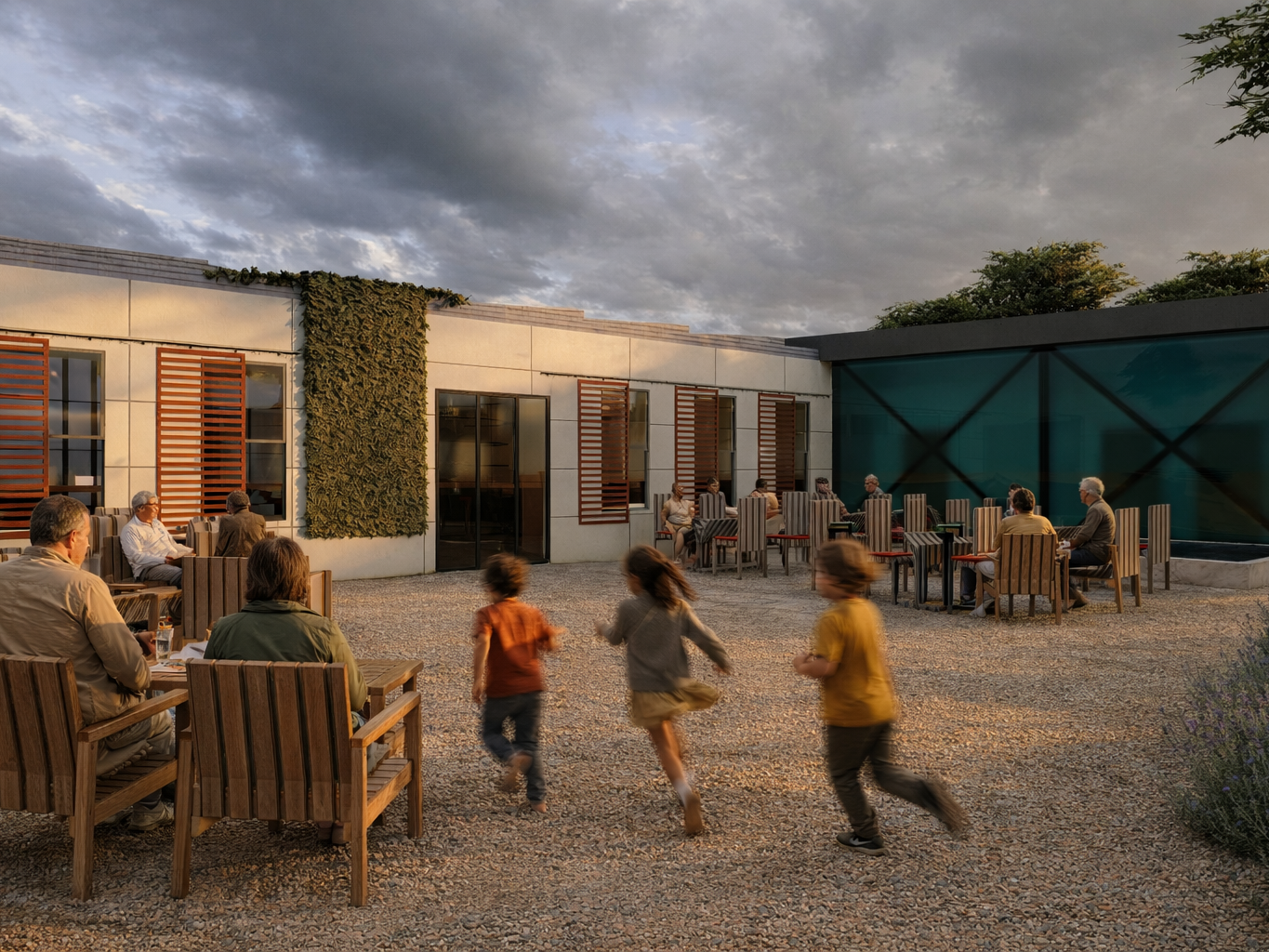
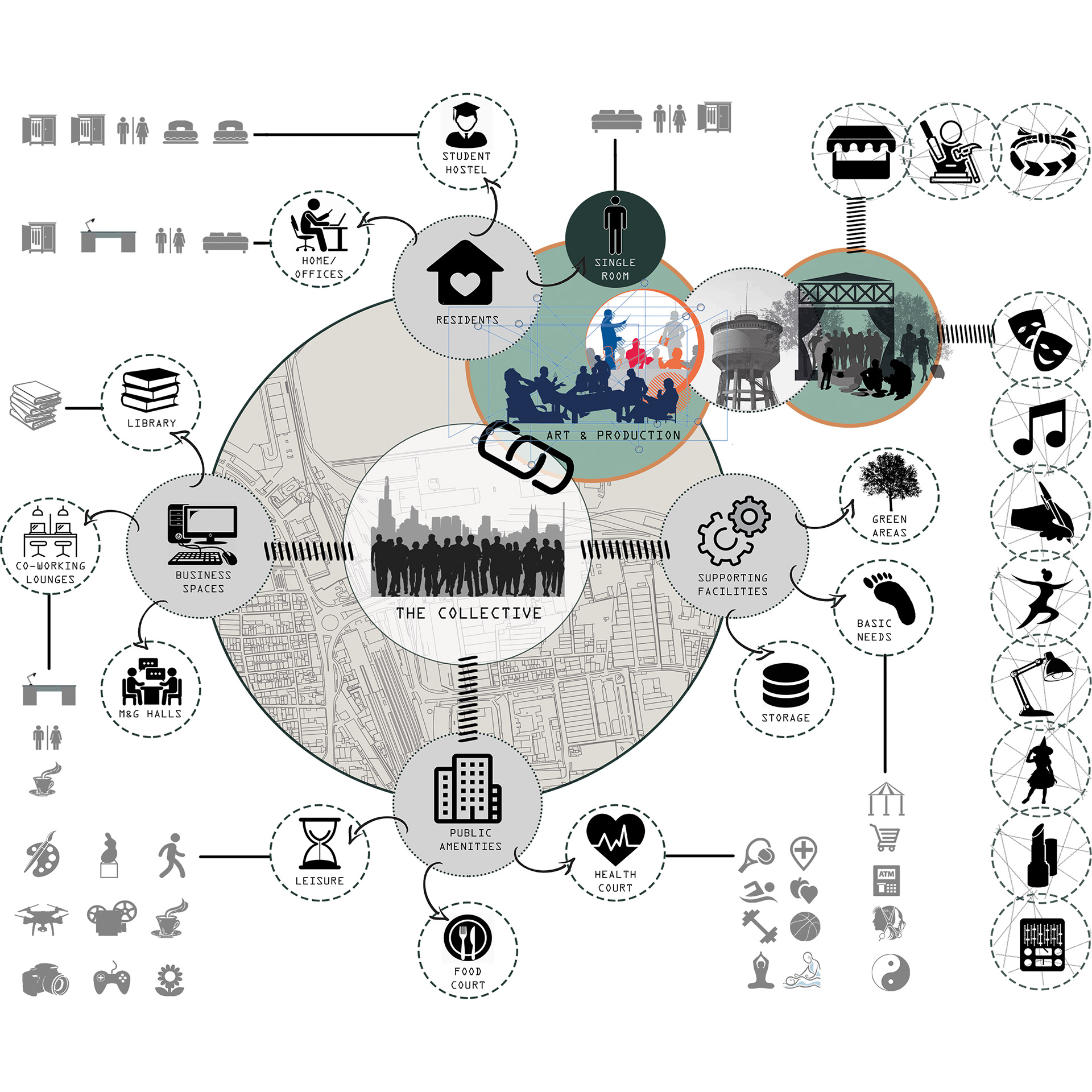
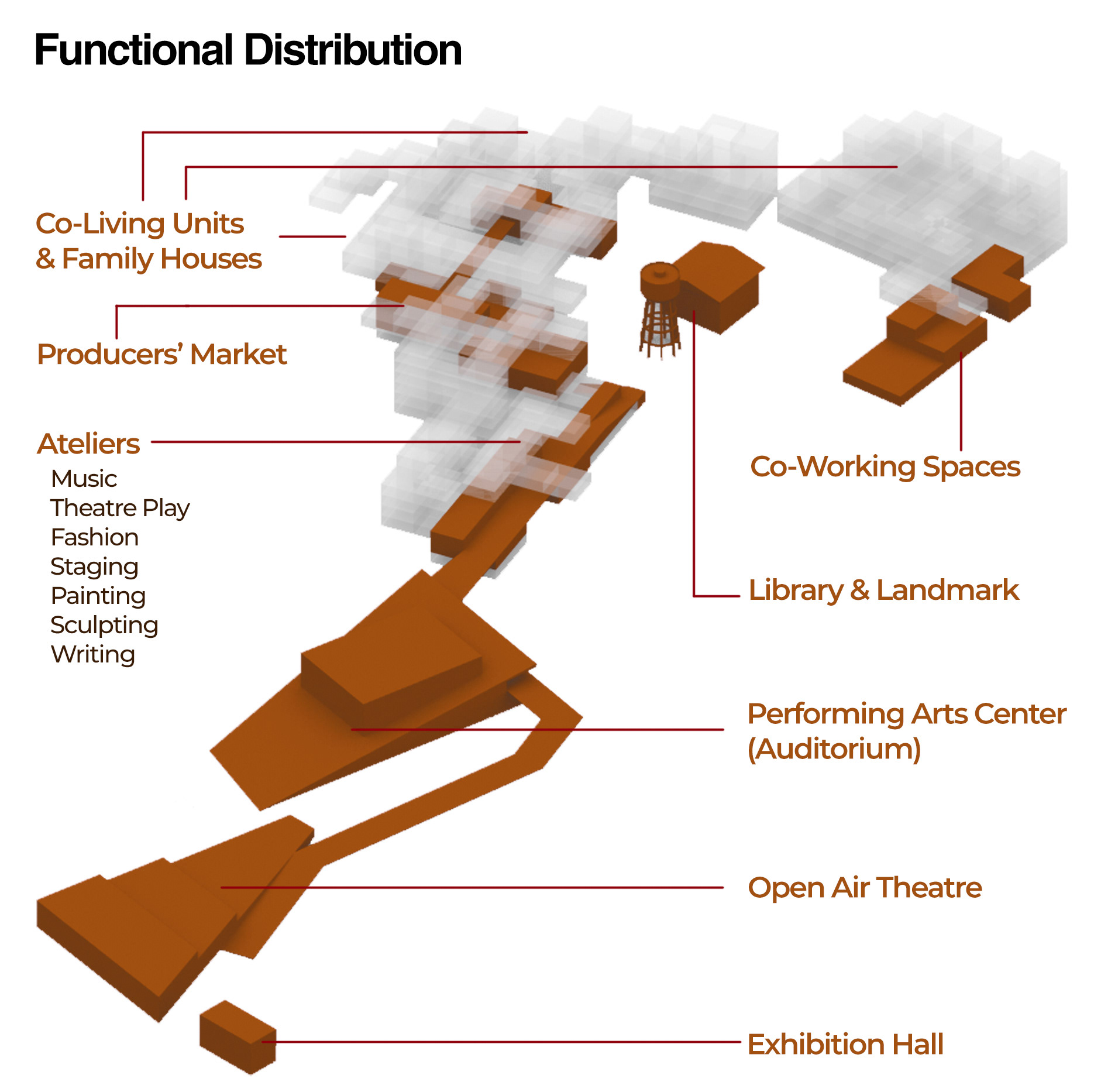
The proposed design strategy is grounded in a collective living scenario in which the notion of work is redefined through creative production practices. Within this framework, activities such as music production, painting, sculpture, stage design, theatre, and costume-making are integrated into the spatial structure of everyday life. Users are conceived not only as inhabitants but also as active participants in ongoing production processes that unfold within the same architectural environment. In this regard, the spatial organization of the project seeks to dissolve the conventional separation between domesticity and productivity by allowing creative practices to emerge as a continuous component of daily routines rather than as isolated or time-bound activities.
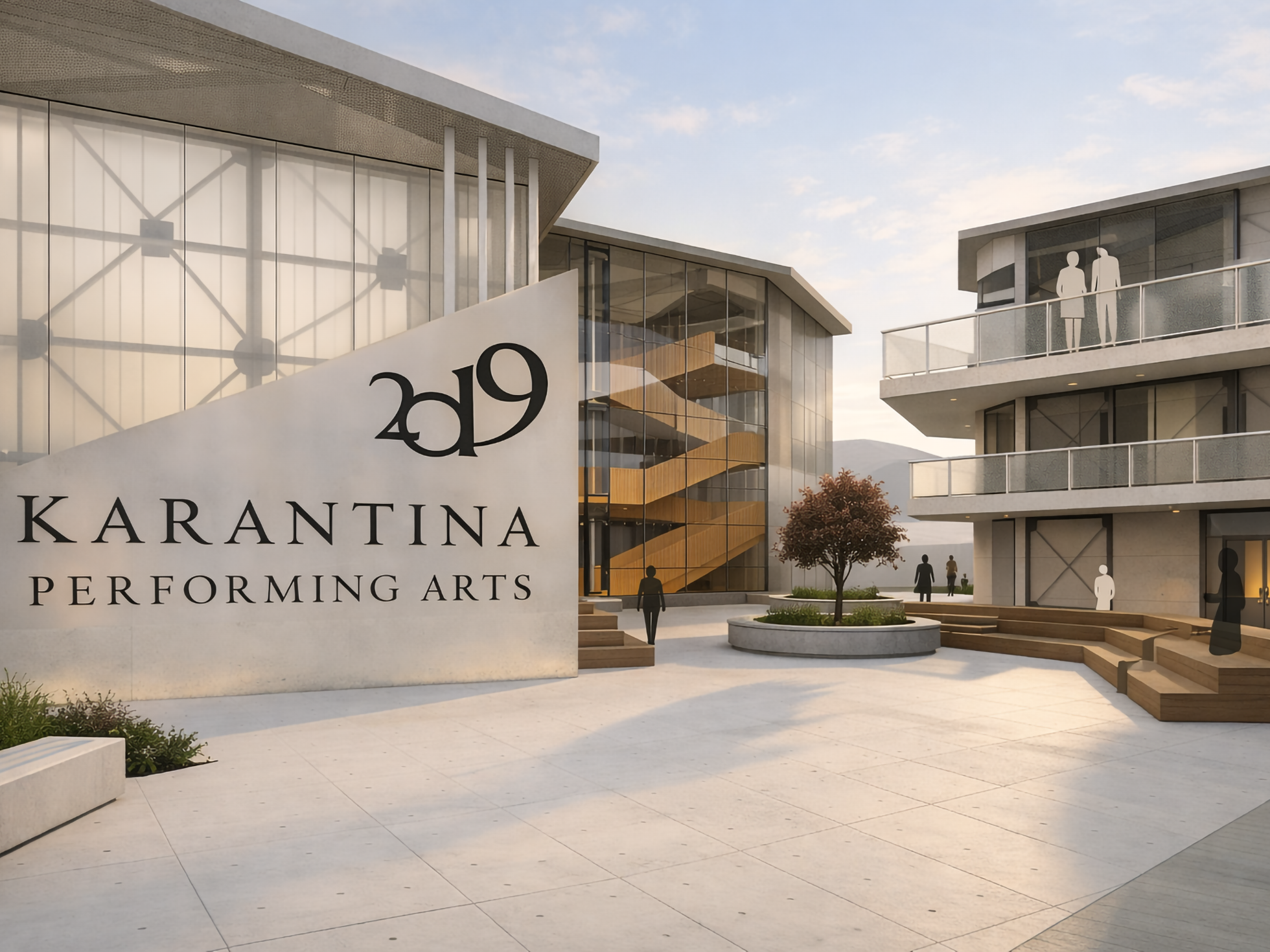
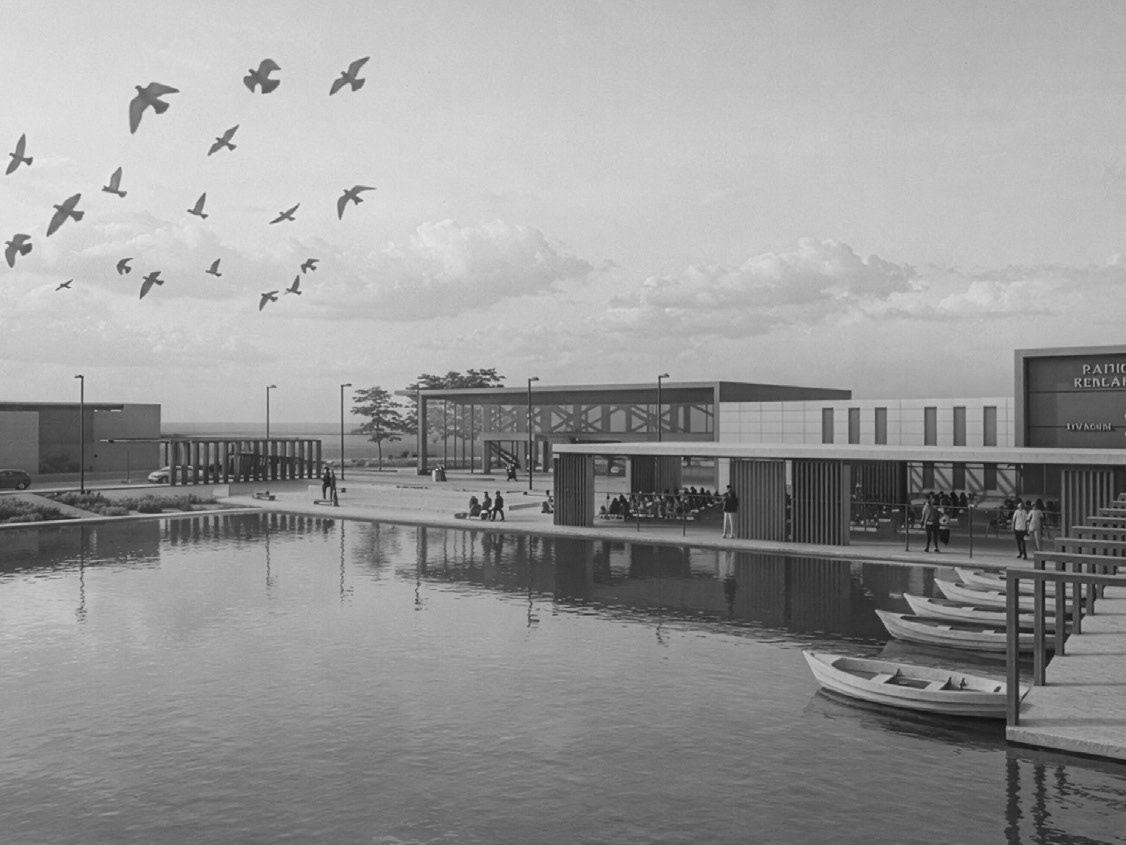
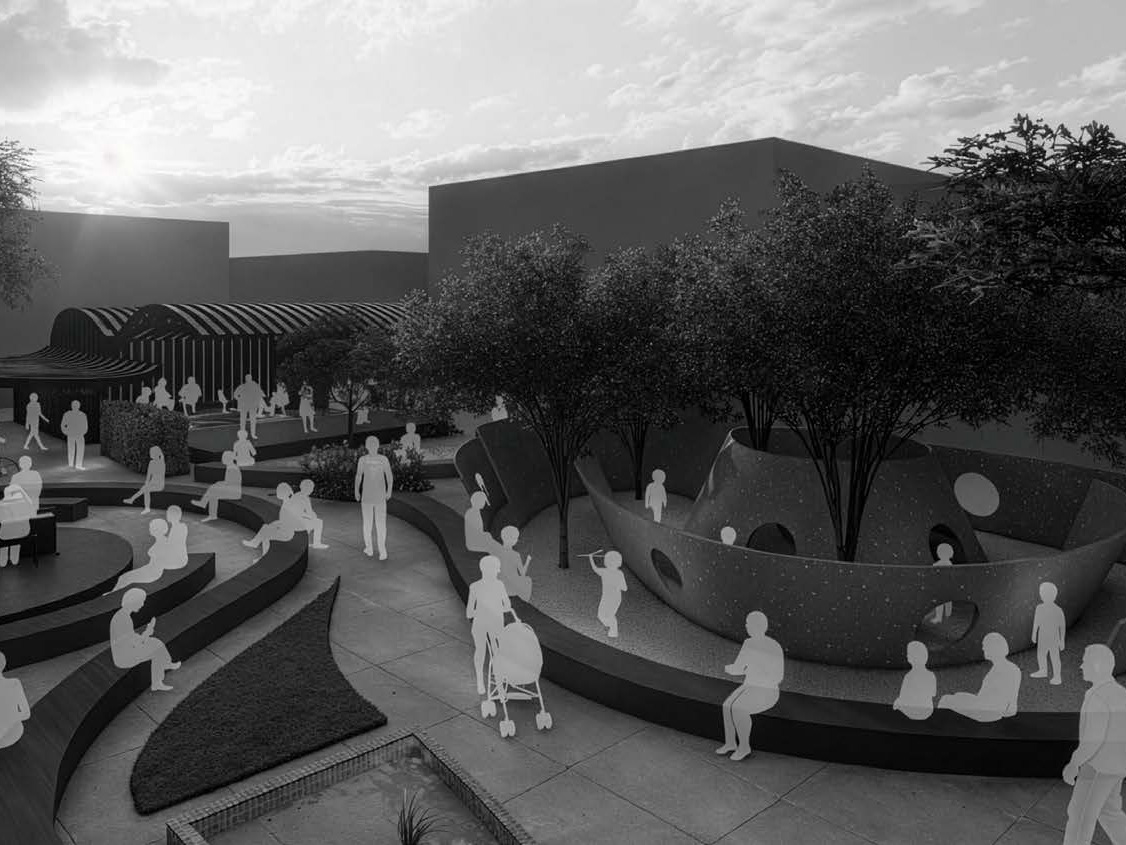
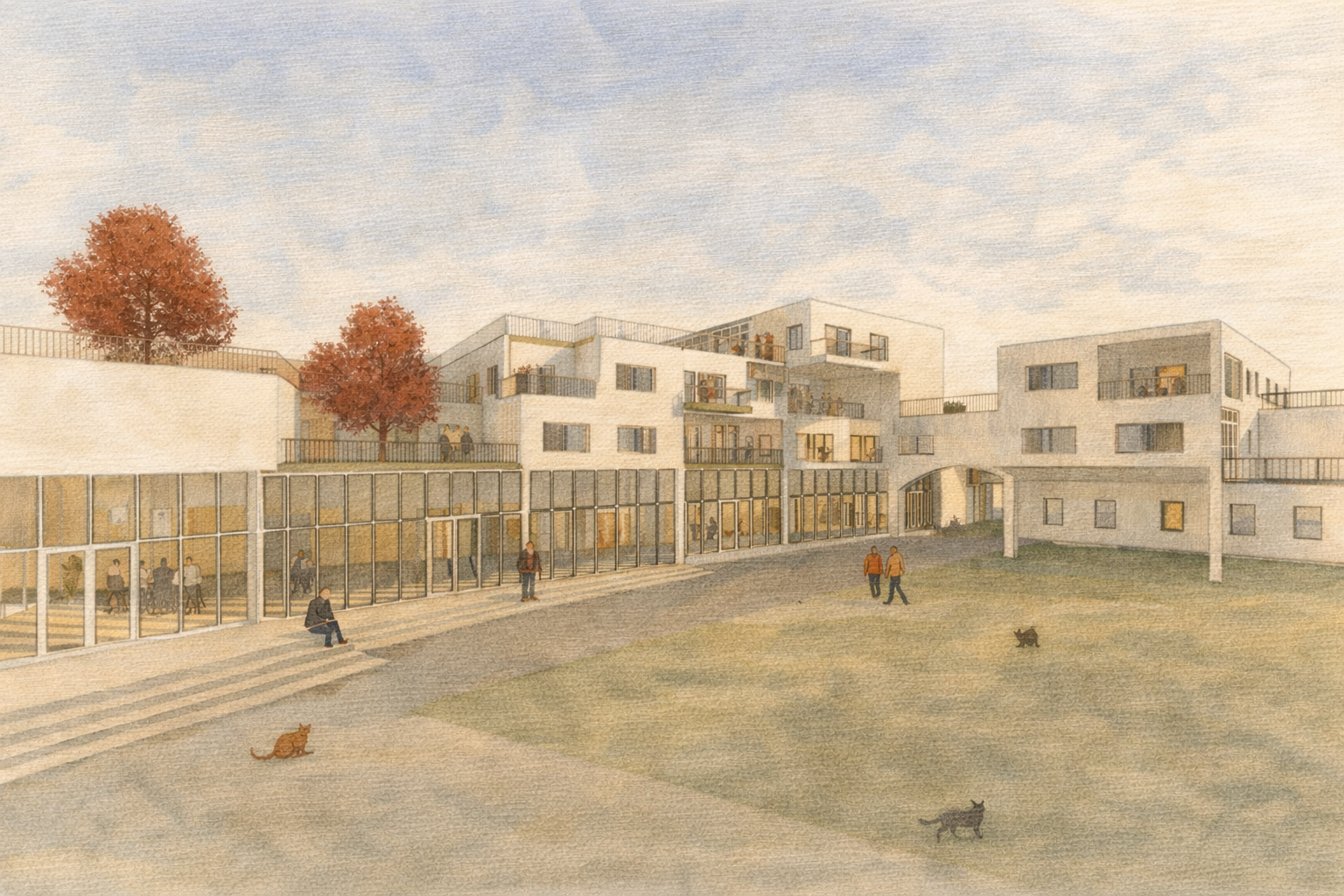
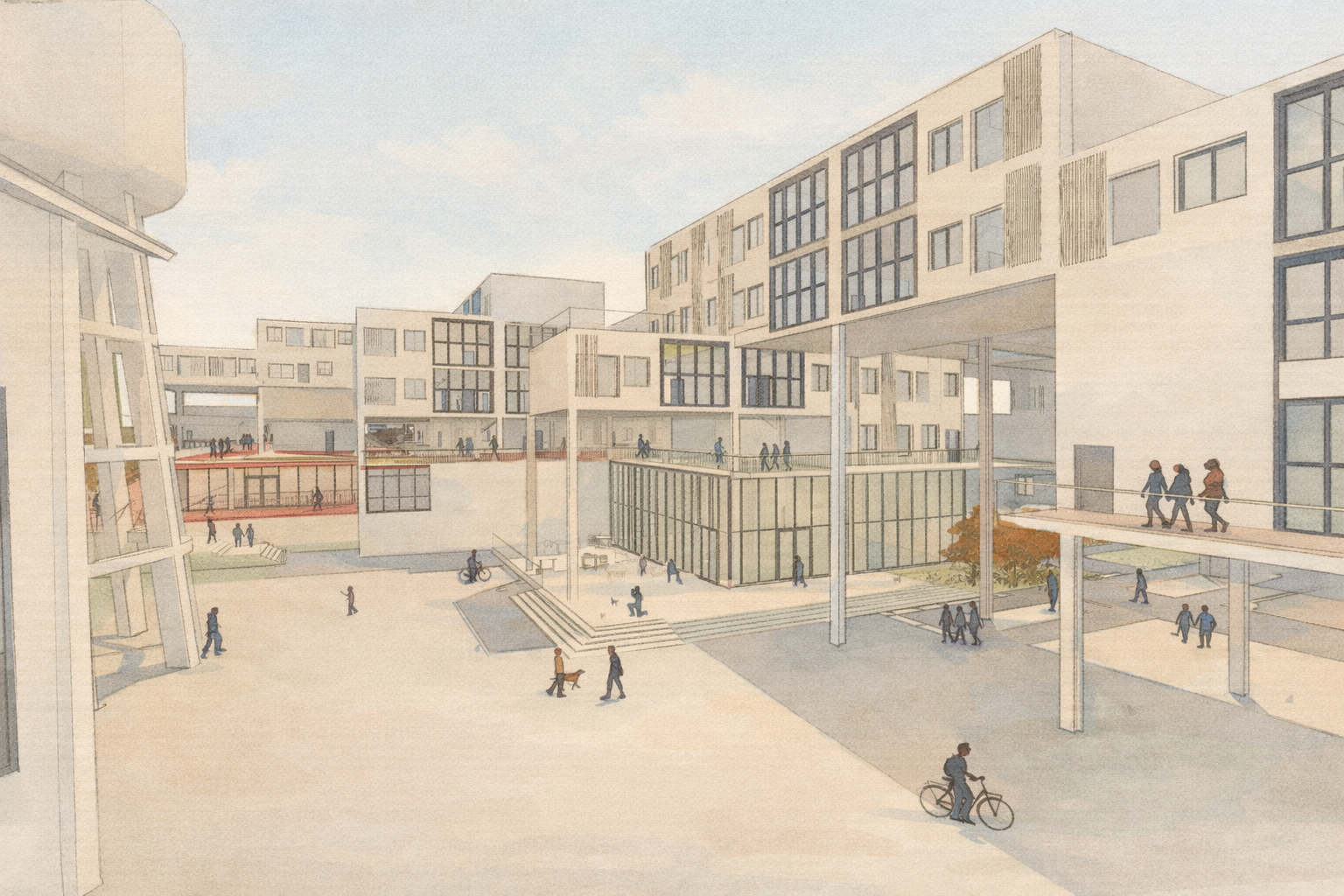
Publicly accessible programmatic elements —including producer markets, open-air stages, and enclosed auditoriums— serve to externalize these creative processes, enabling their presentation and engagement within the broader urban context. These spaces function not merely as venues for exhibition or performance, but as transitional environments that mediate between the internal dynamics of collective production and the external rhythms of urban life. In doing so, the project seeks to transform the site into a localized hub of artistic production that simultaneously accommodates habitation, collaboration, and public interaction, fostering a spatial ecosystem in which creative work, social exchange, and everyday living coalesce through shared infrastructural and programmatic frameworks.
SITE ANALYSIS & URBAN CONTEXT
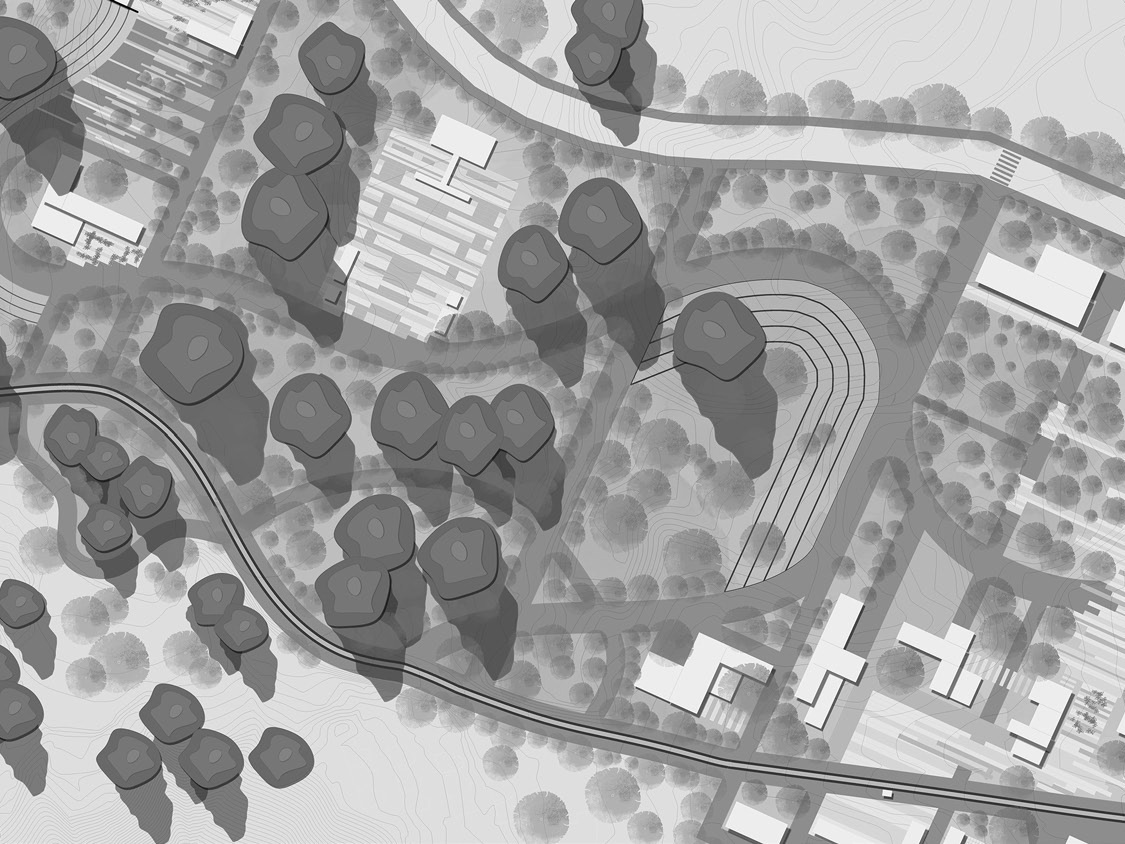
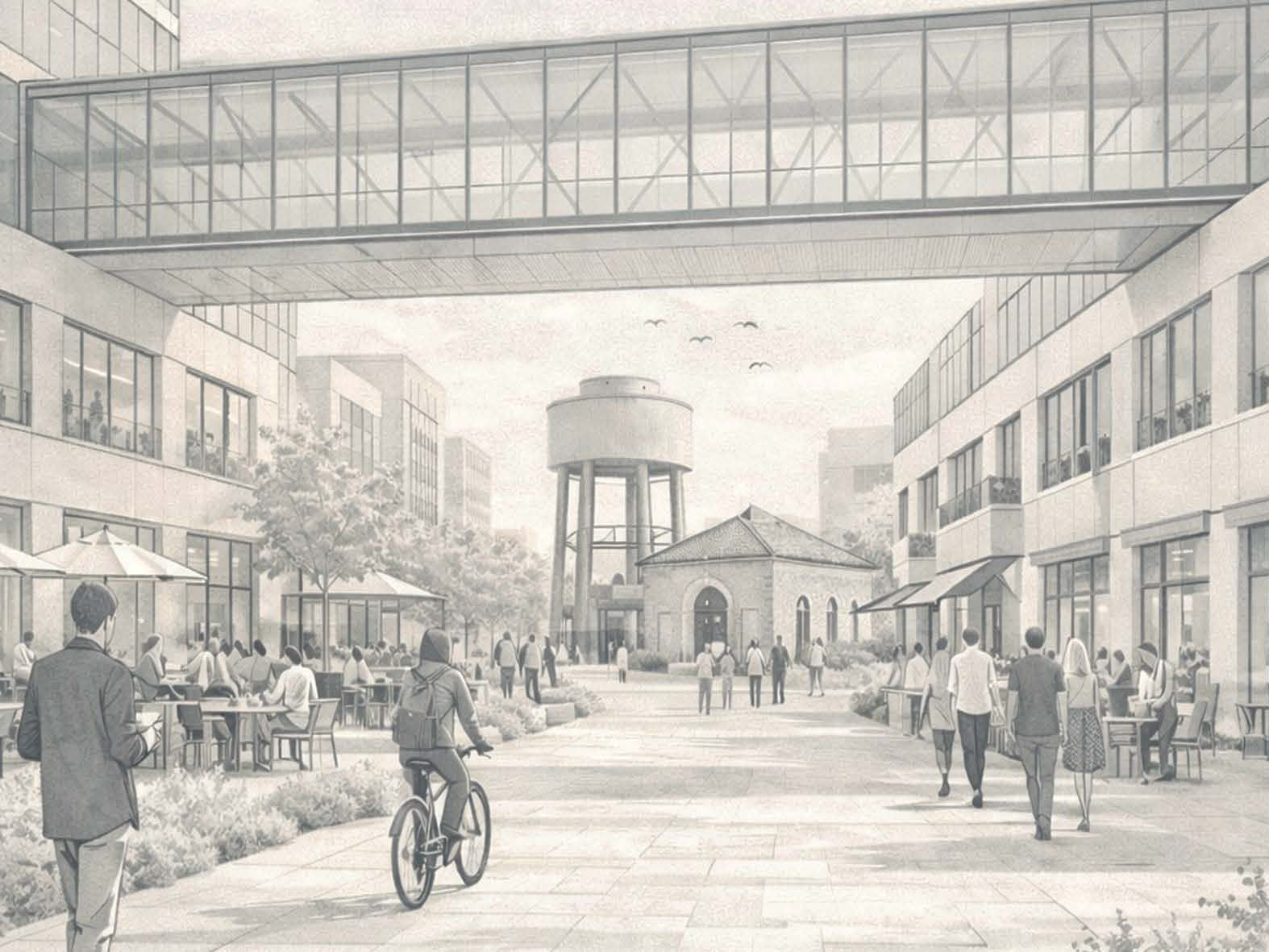
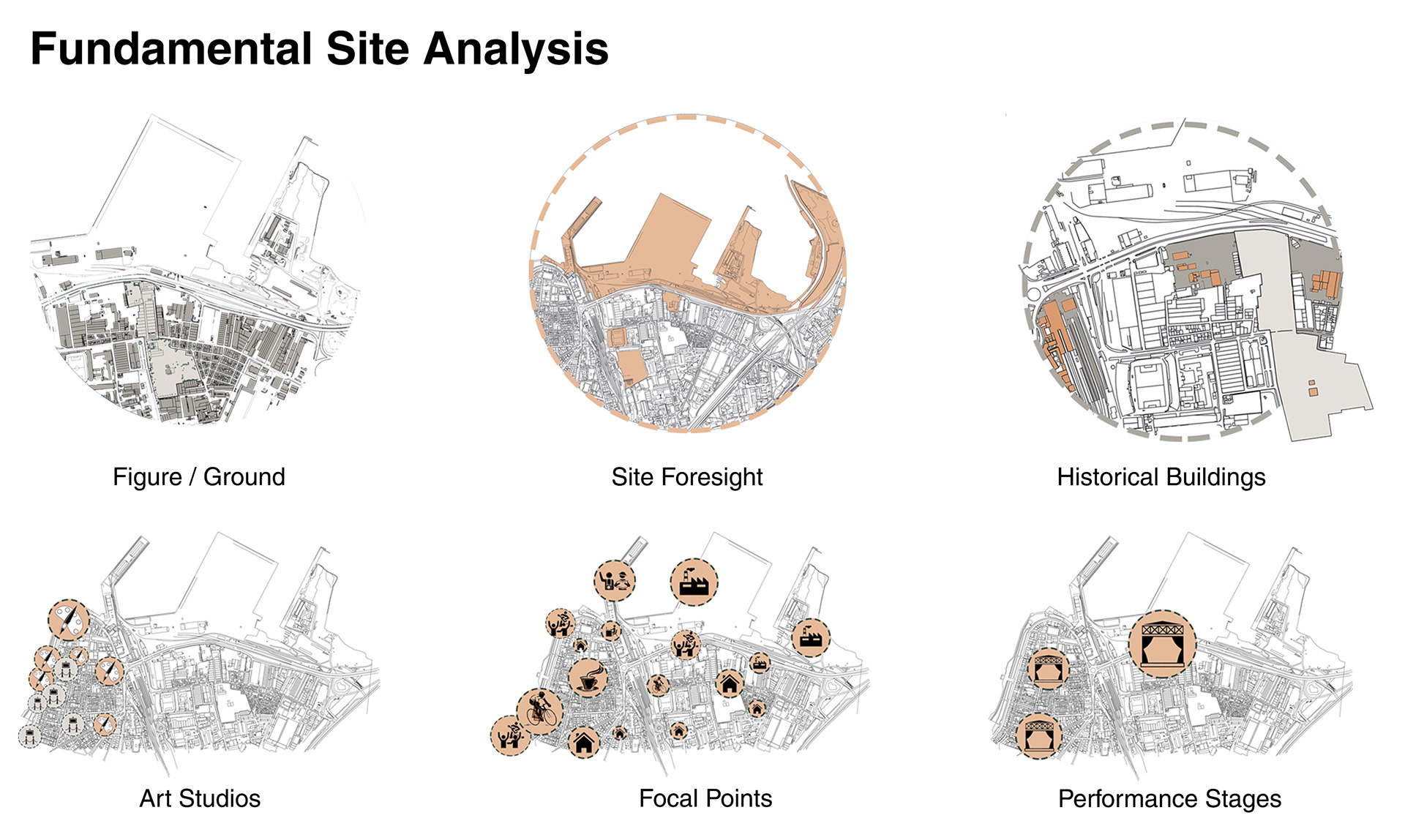
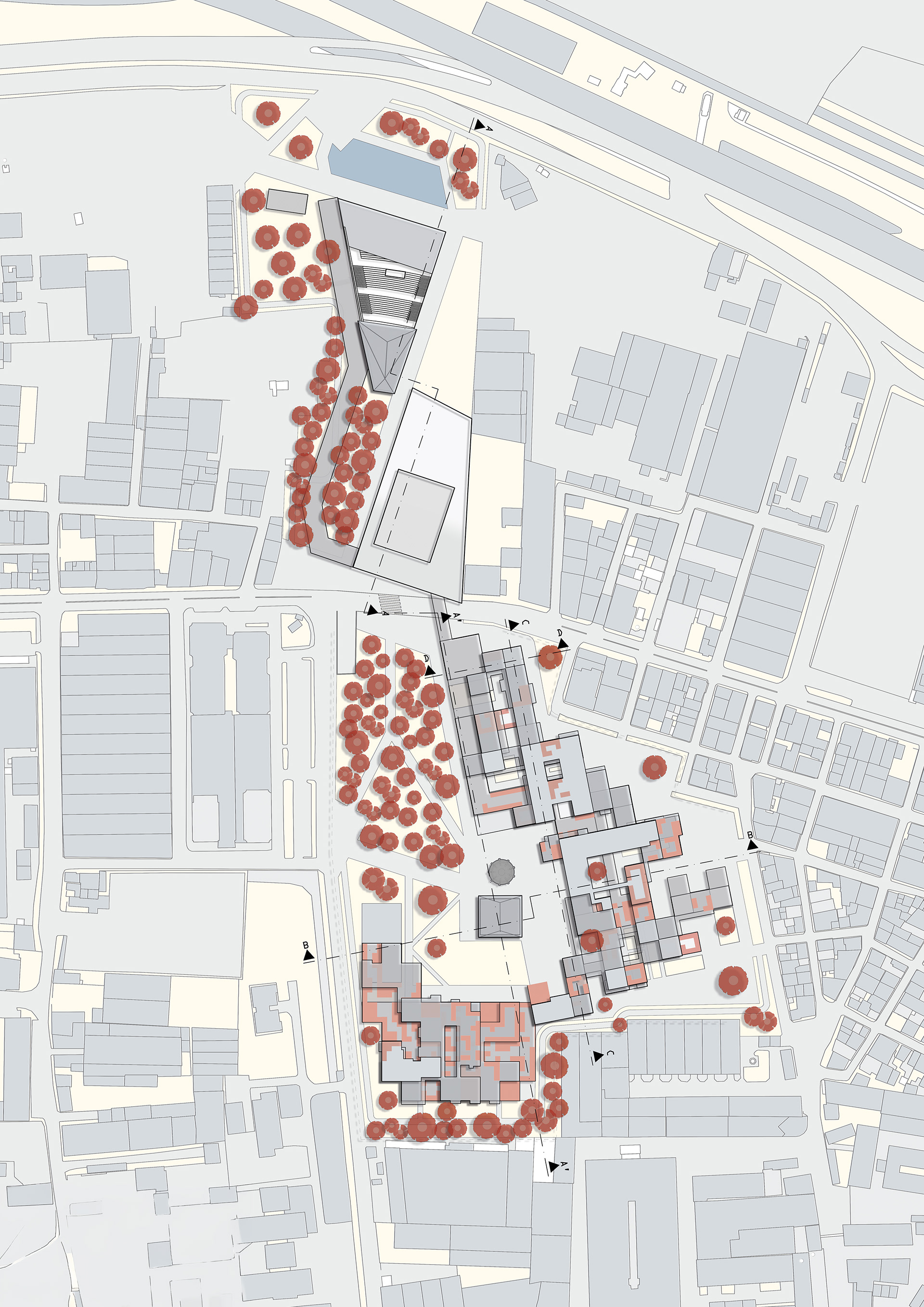
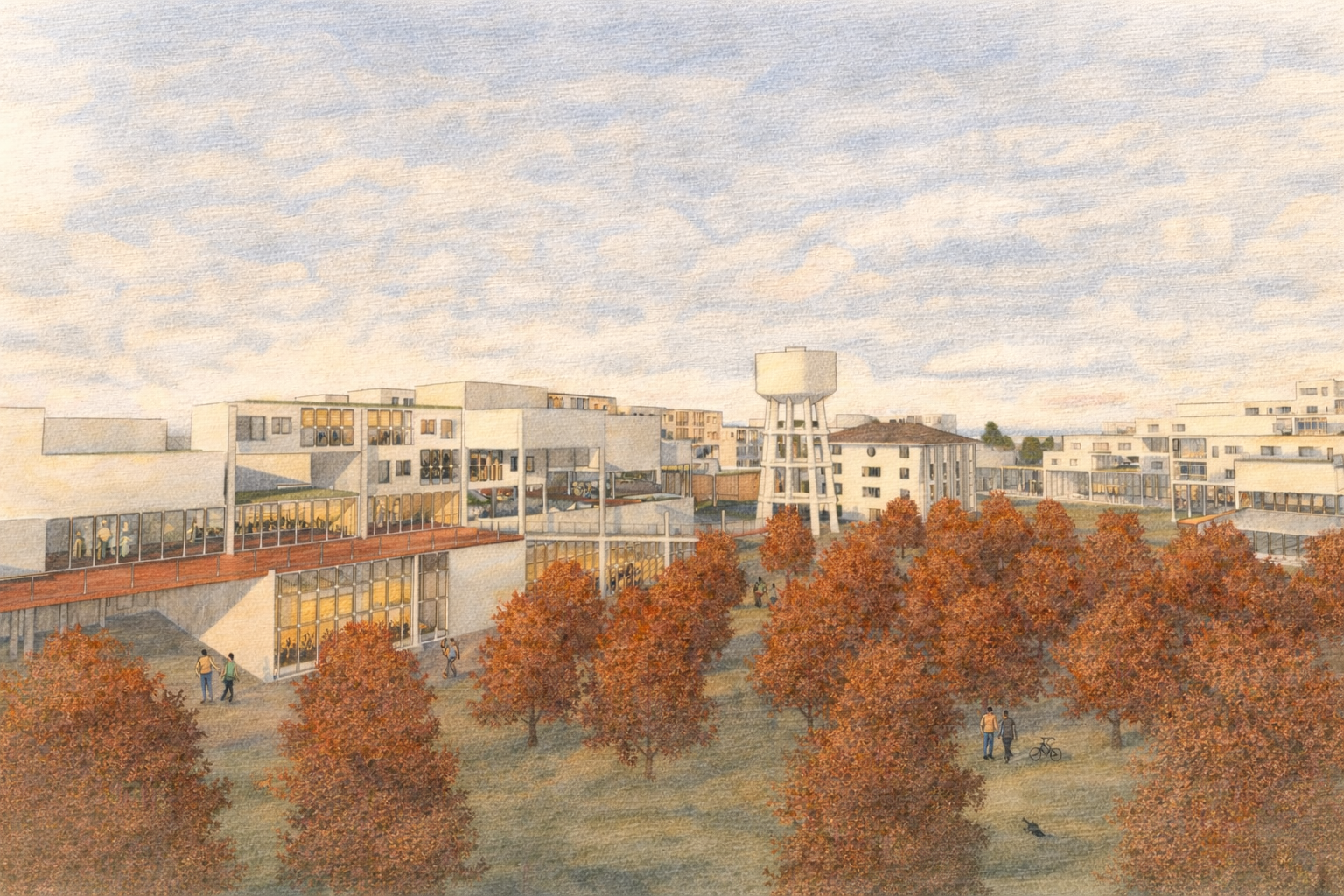
The project site is located within the Limanarkası district of Alsancak in İzmir, in proximity to the former Şark Industry complex. Defined as an approximately 100,000-squaremeter underutilized urban void, the site represents a spatial residue of the area’s industrial past. Within this context, the site is approached as an opportunity to spatialize contemporary creative practices by integrating production and presentation processes into the everyday dynamics of urban life.
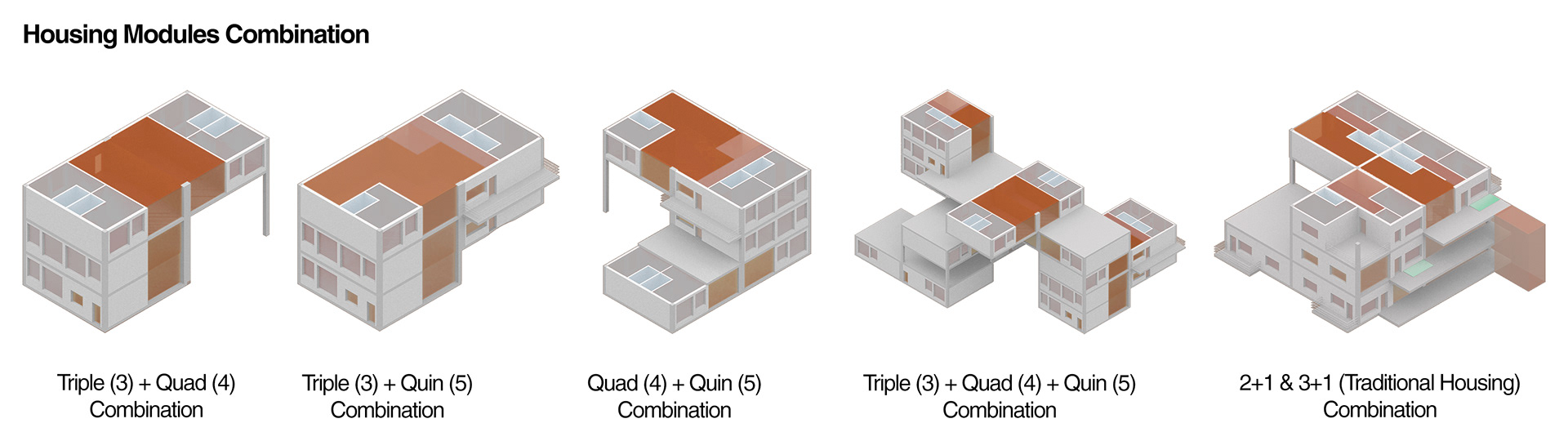
Housing Module Combination
Triple Housing
Quad Housing
Quin Housing
2+1 Traditional Housing
3+1 Traditional Housing
HousIng Typology: Co-LIvIng Model
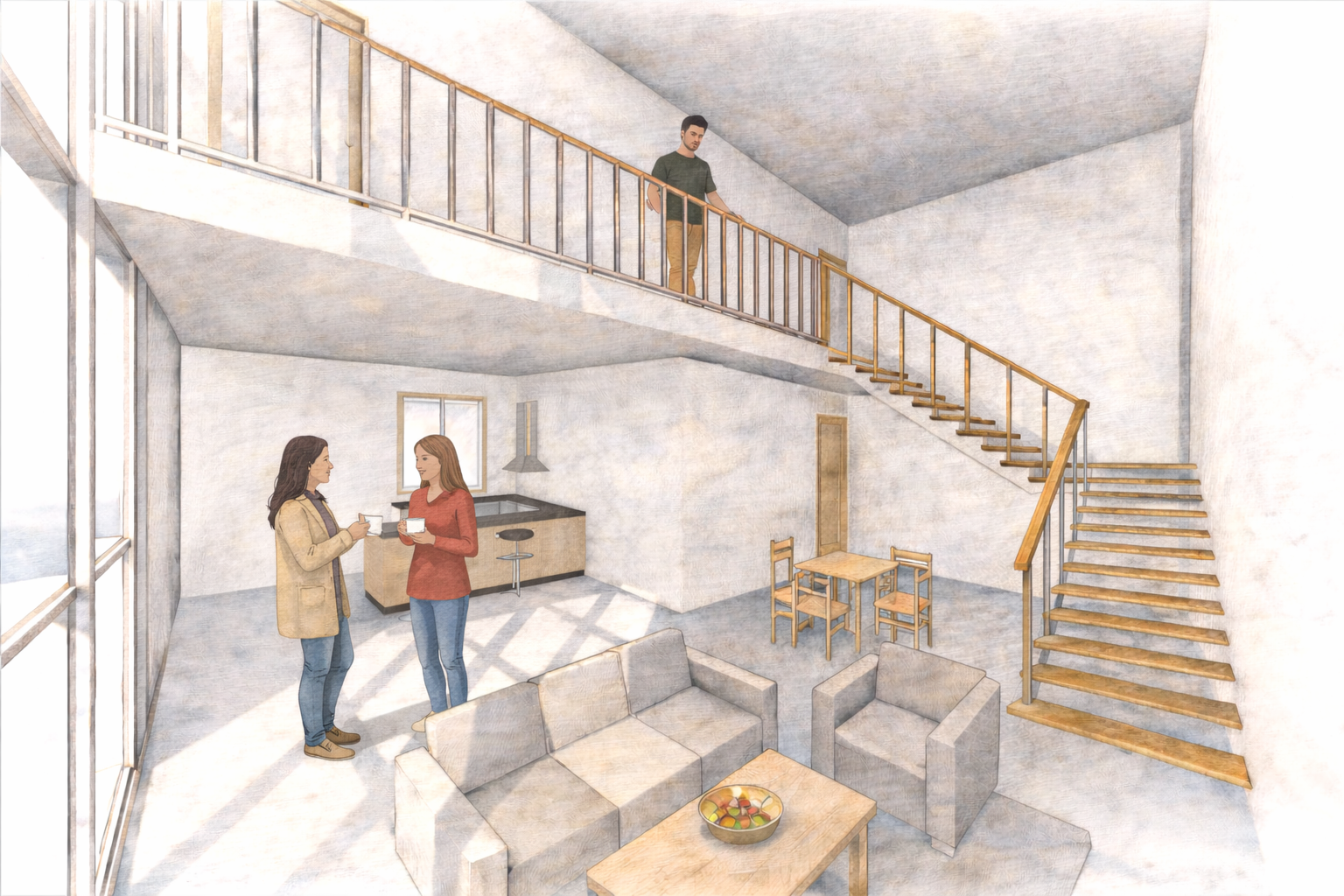
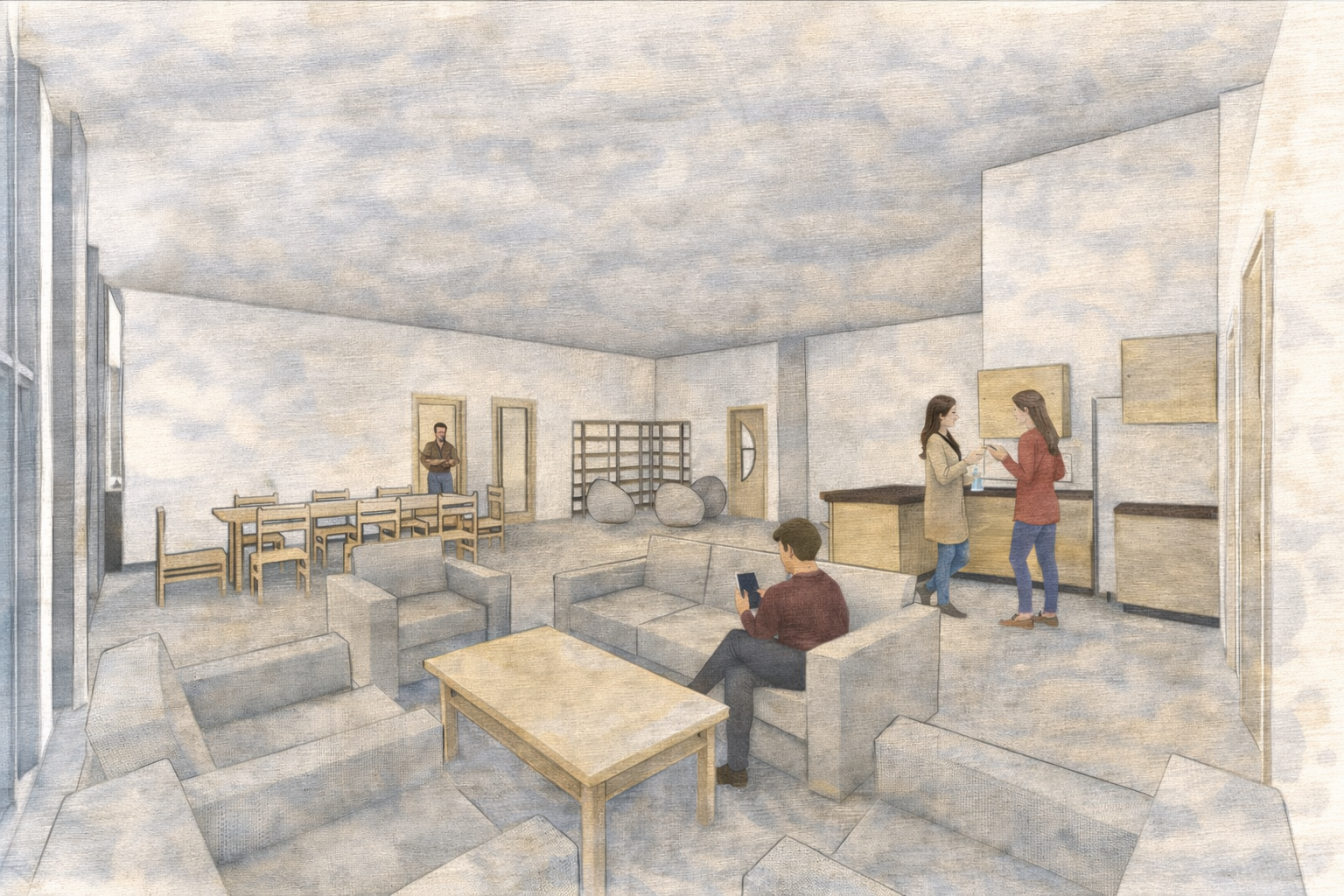
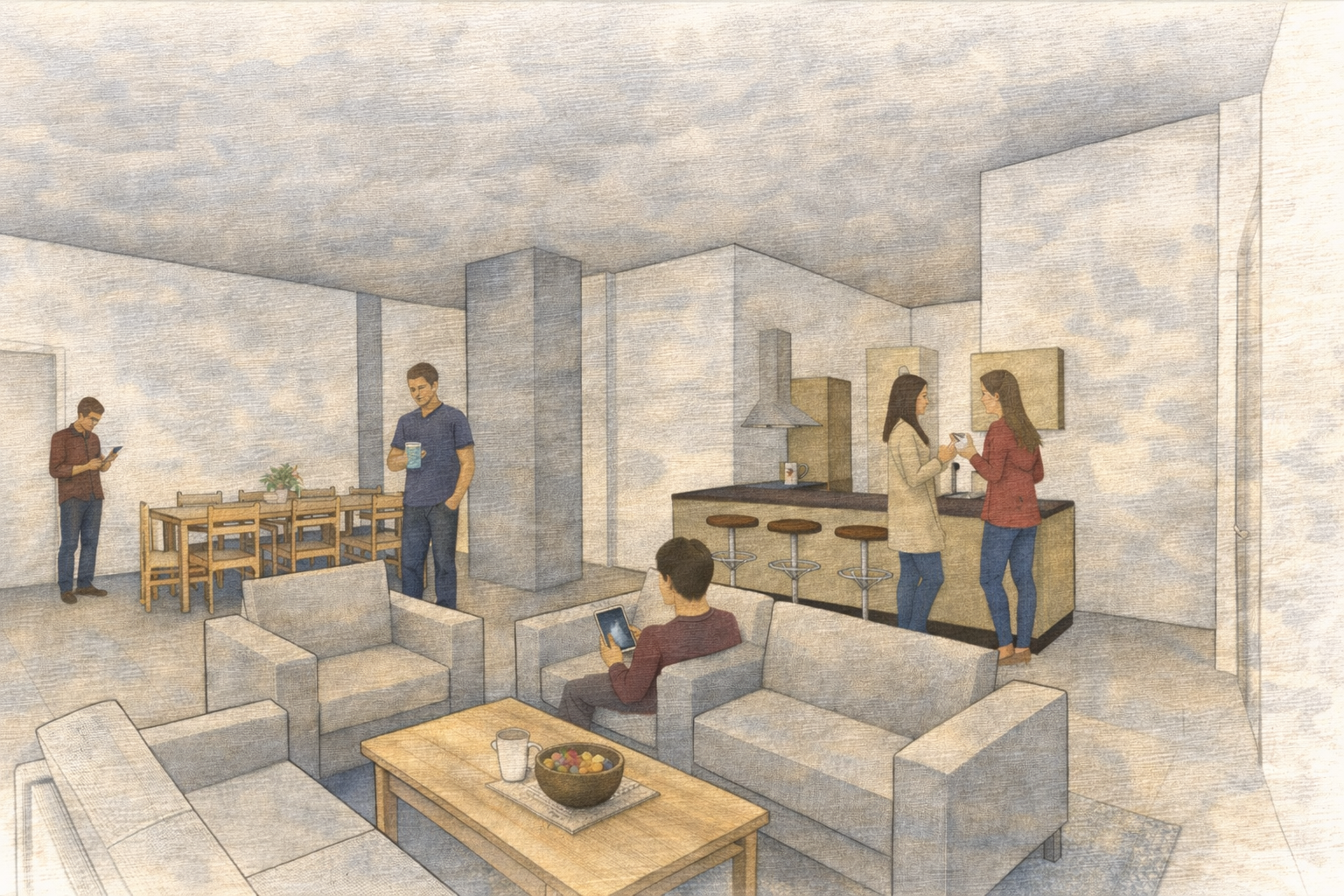
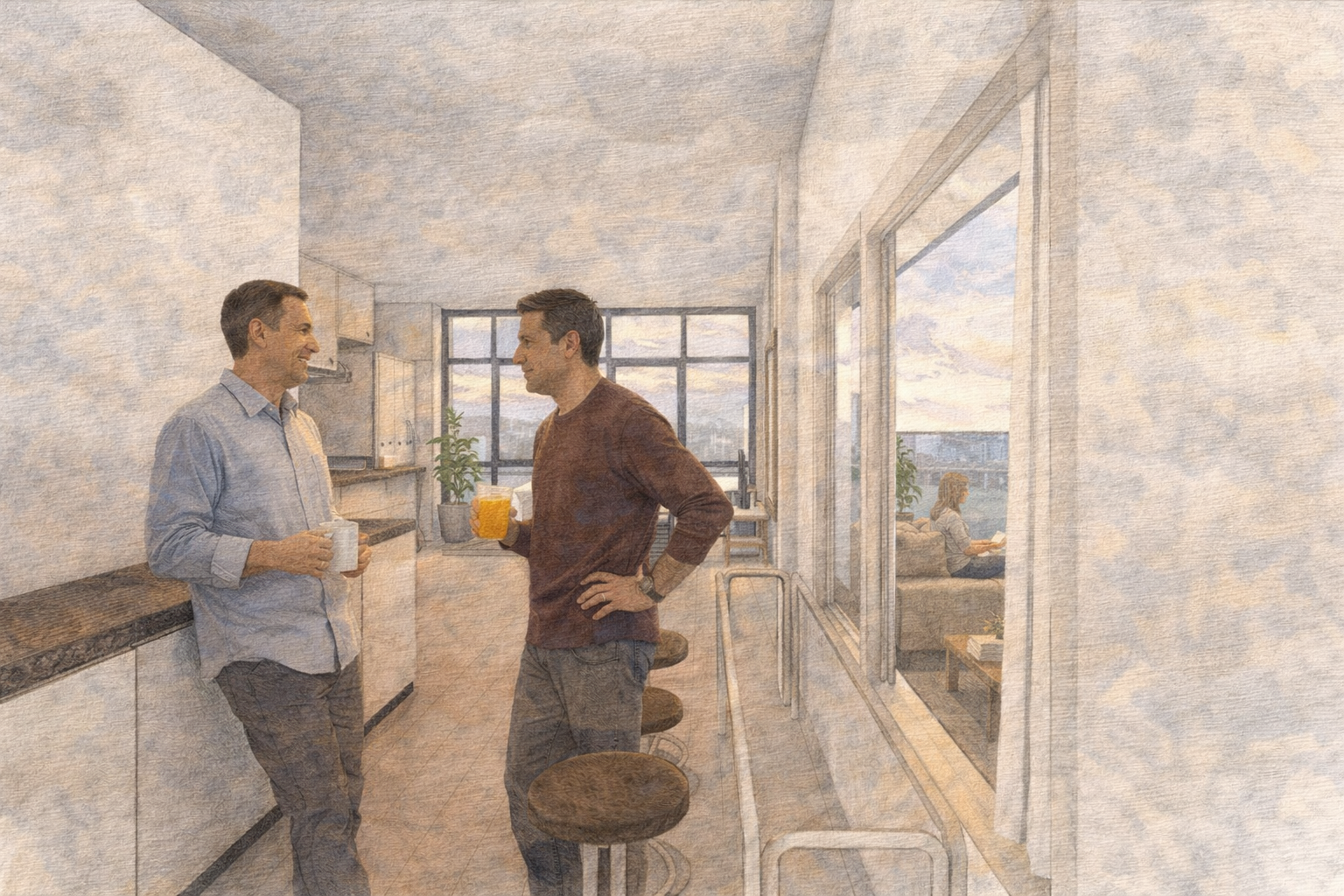
The residential component of the project is developed through a co-living model inspired by contemporary co-working and co-production environments. This model introduces modular housing units designed to accommodate three, four, or five individuals engaged in collaborative creative practices. These units are conceived as combinatory modules capable of forming diverse spatial configurations through multiple aggregation strategies.
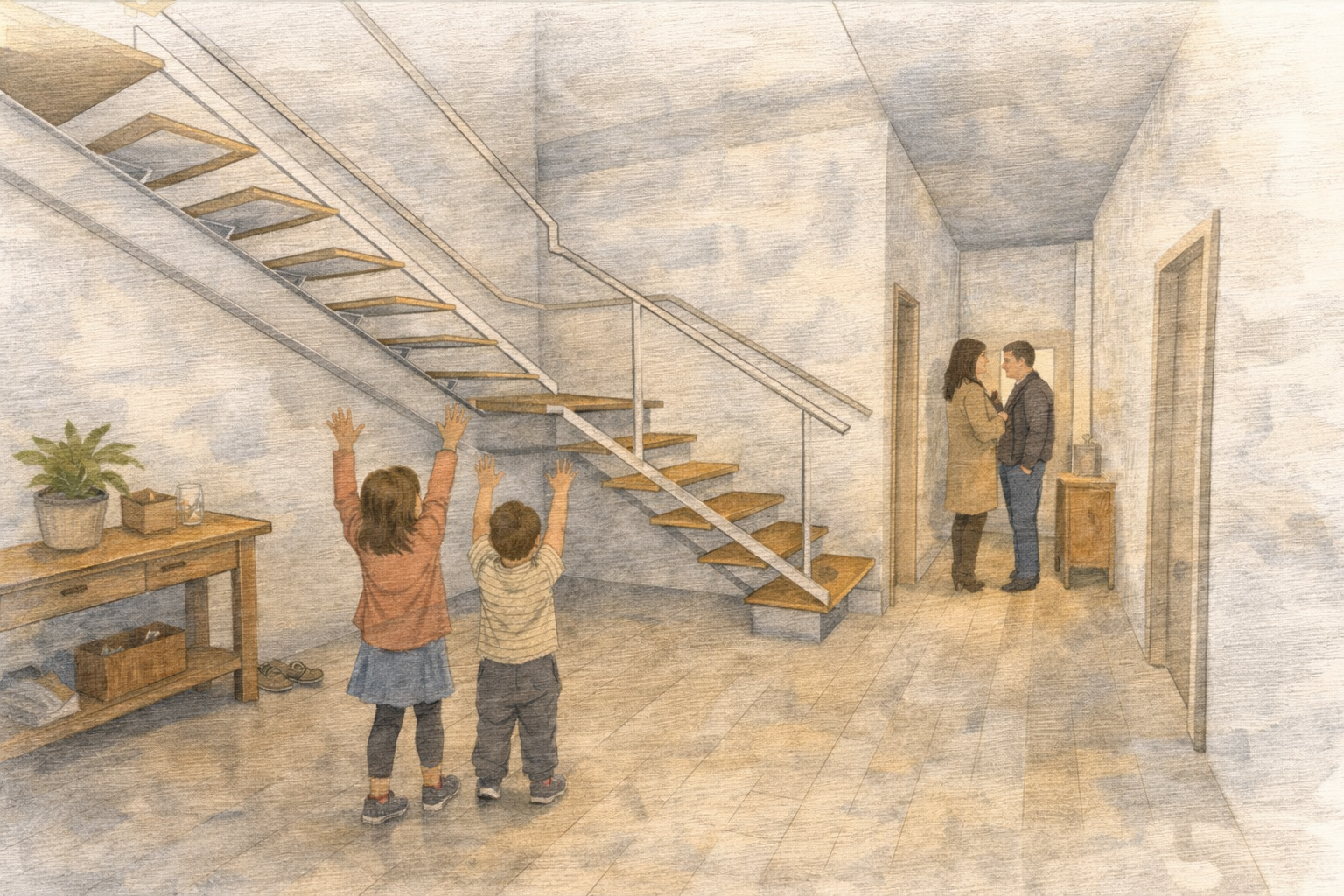
While conventional family-oriented typologies such as two-and three-bedroom apartments are also incorporated into the complex, they occupy a secondary role within the overall housing scheme. Instead, the project prioritizes alternative domestic arrangements that support shared modes of living and production, thereby challenging traditional definitions of the household as a purely nuclear entity.
SpatIal OrganIzatIon: "The SpIne" ConfIguratIon
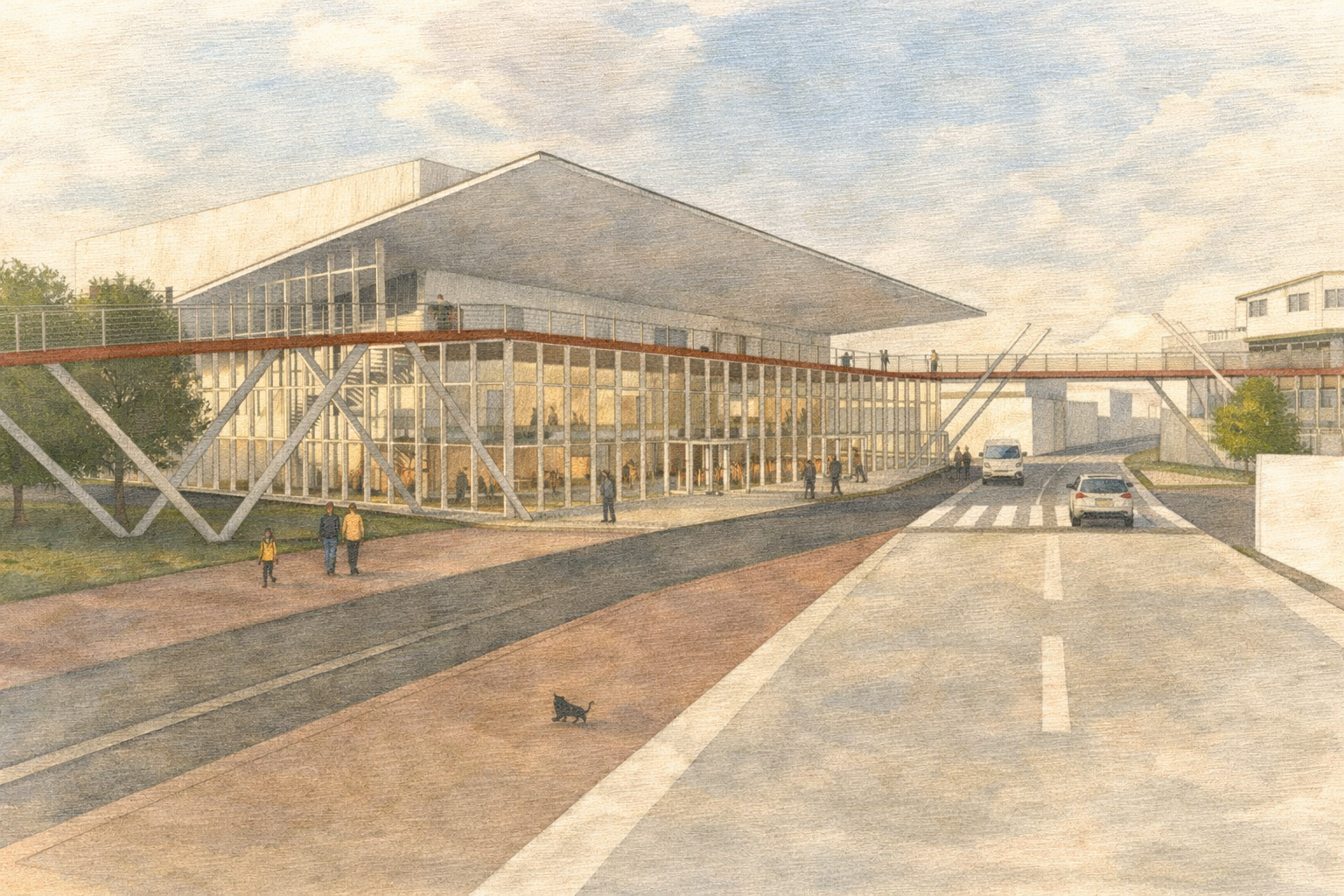
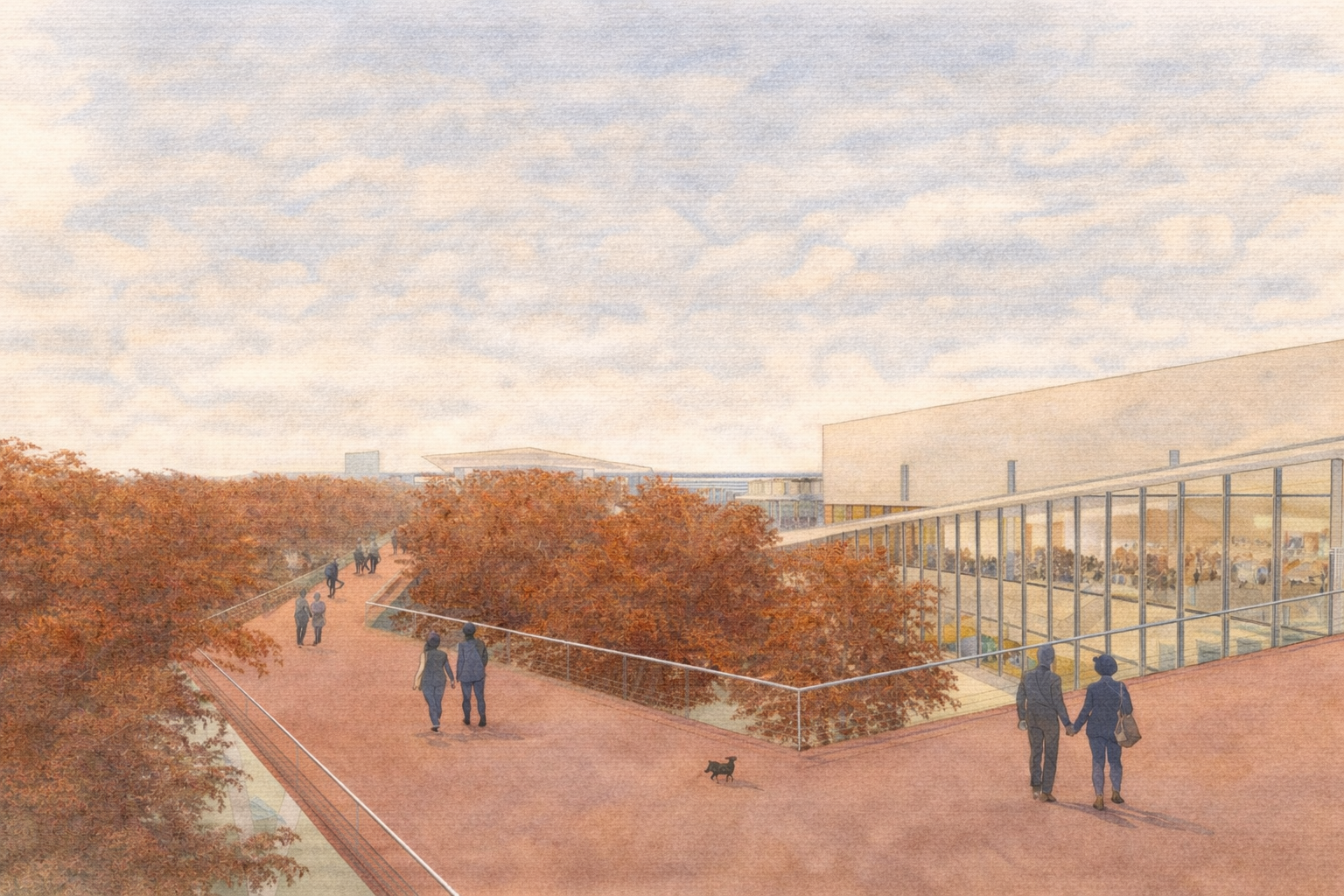
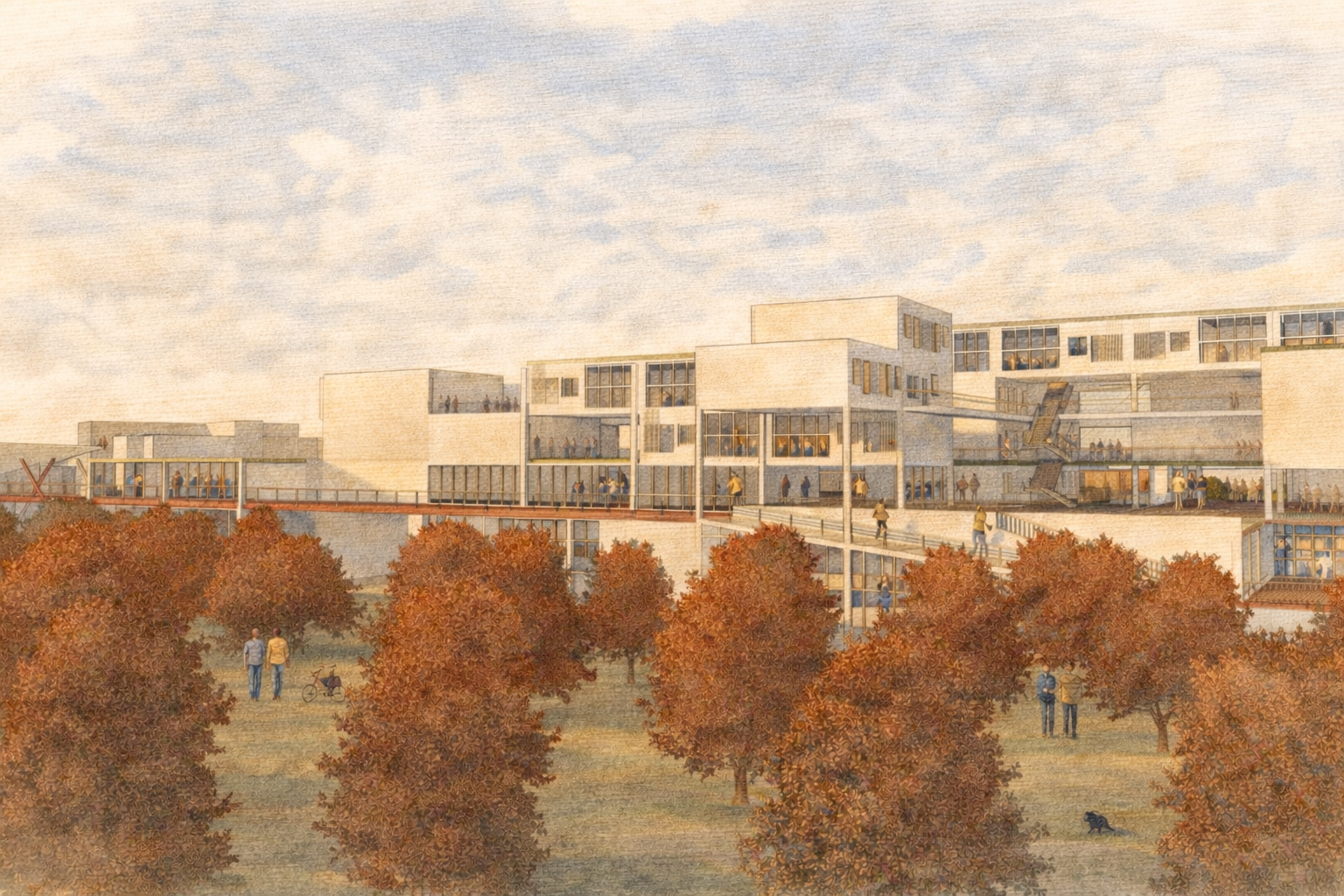
The spatial organization of the project is articulated through a linear spine system that traverses the site and functions as the primary structuring element for both circulation and programmatic distribution. Beyond its role as a connective pathway, the spine operates as a spatial filter that negotiates the relationship between public and private domains.
By physically separating residential units from publicly accessible production and presentation spaces, the spine prevents direct intrusion into private living environments while maintaining visual continuity between different user groups. This controlled visibility allows creative activities to remain perceptible to visitors without compromising the spatial integrity of domestic zones. Consequently, the spine not only organizes movement but also establishes a calibrated gradient of accessibility that reinforces the project’s threshold-based spatial logic.
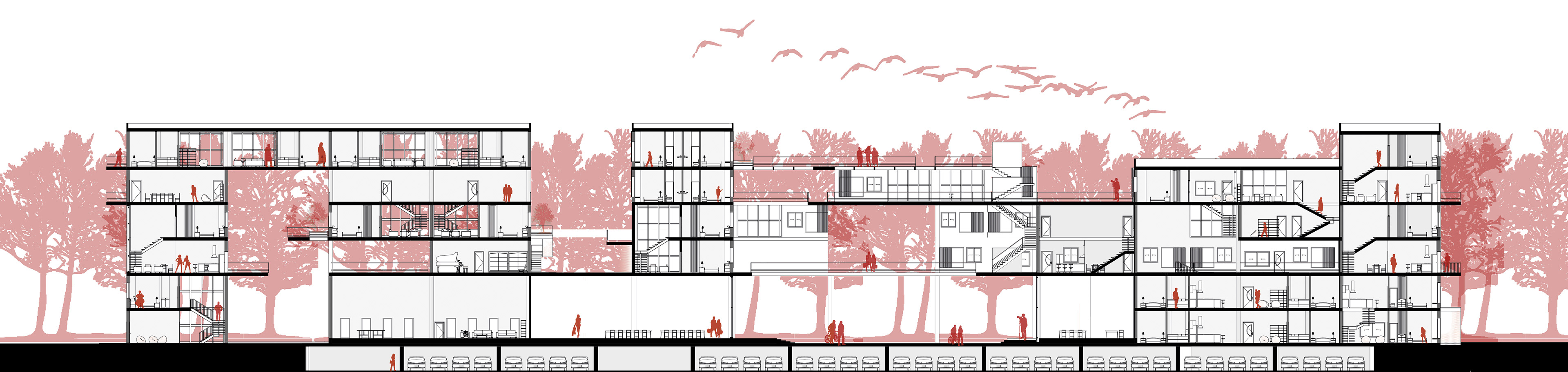
Section CC'

West Elevation
ContInuIty Across Scales
By integrating living, working, and leisure functions within a unified spatial framework, the project establishes a continuous interface between architectural and urban scales. The threshold spaces and spine system collectively function as a mediating infrastructure that connects individual production practices with broader forms of public engagement. In this sense, the proposed complex is positioned not merely as a residential or workplace environment, but as a spatial node within emerging networks of urban creativity and collective cultural production.
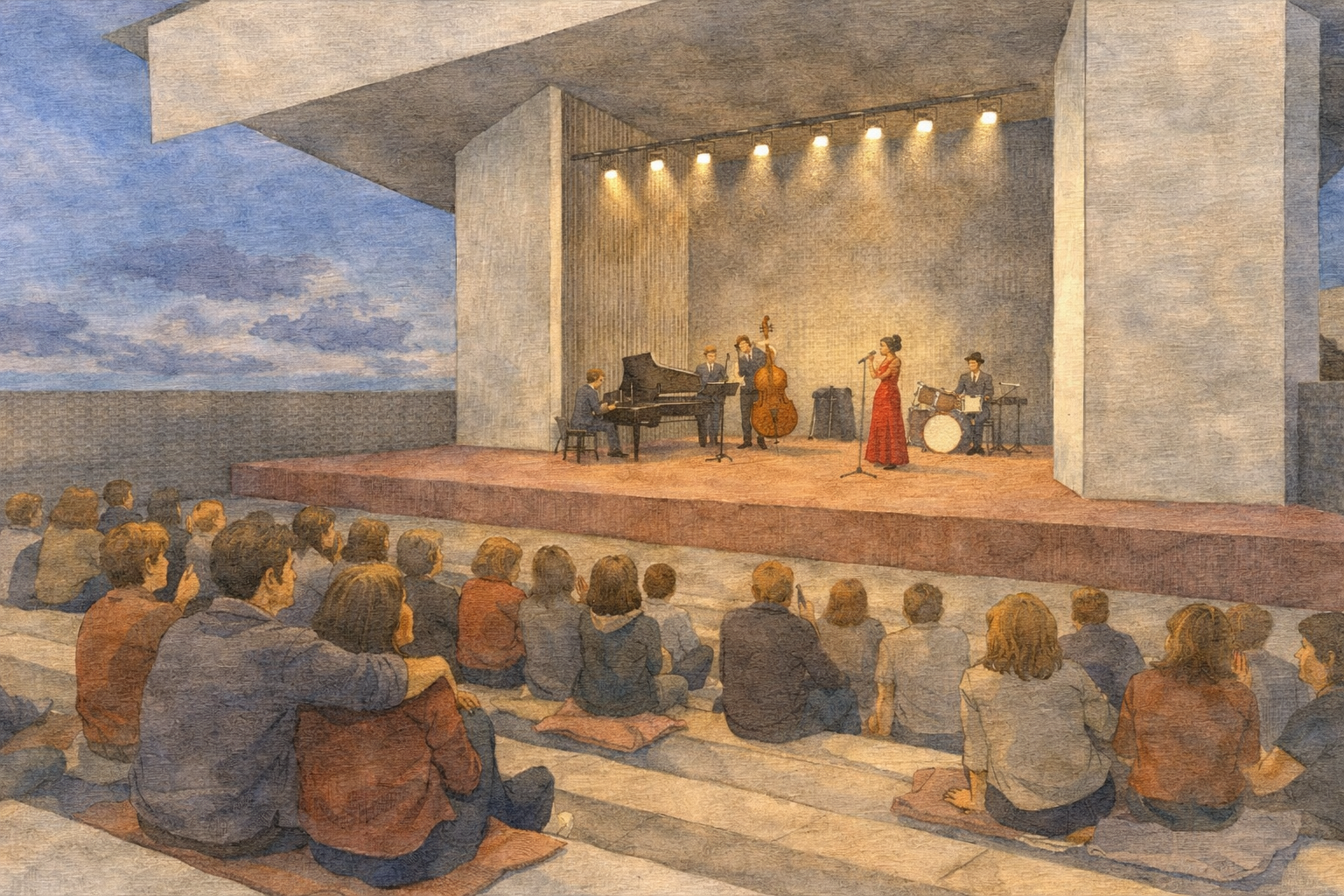
Open-Air Theatre
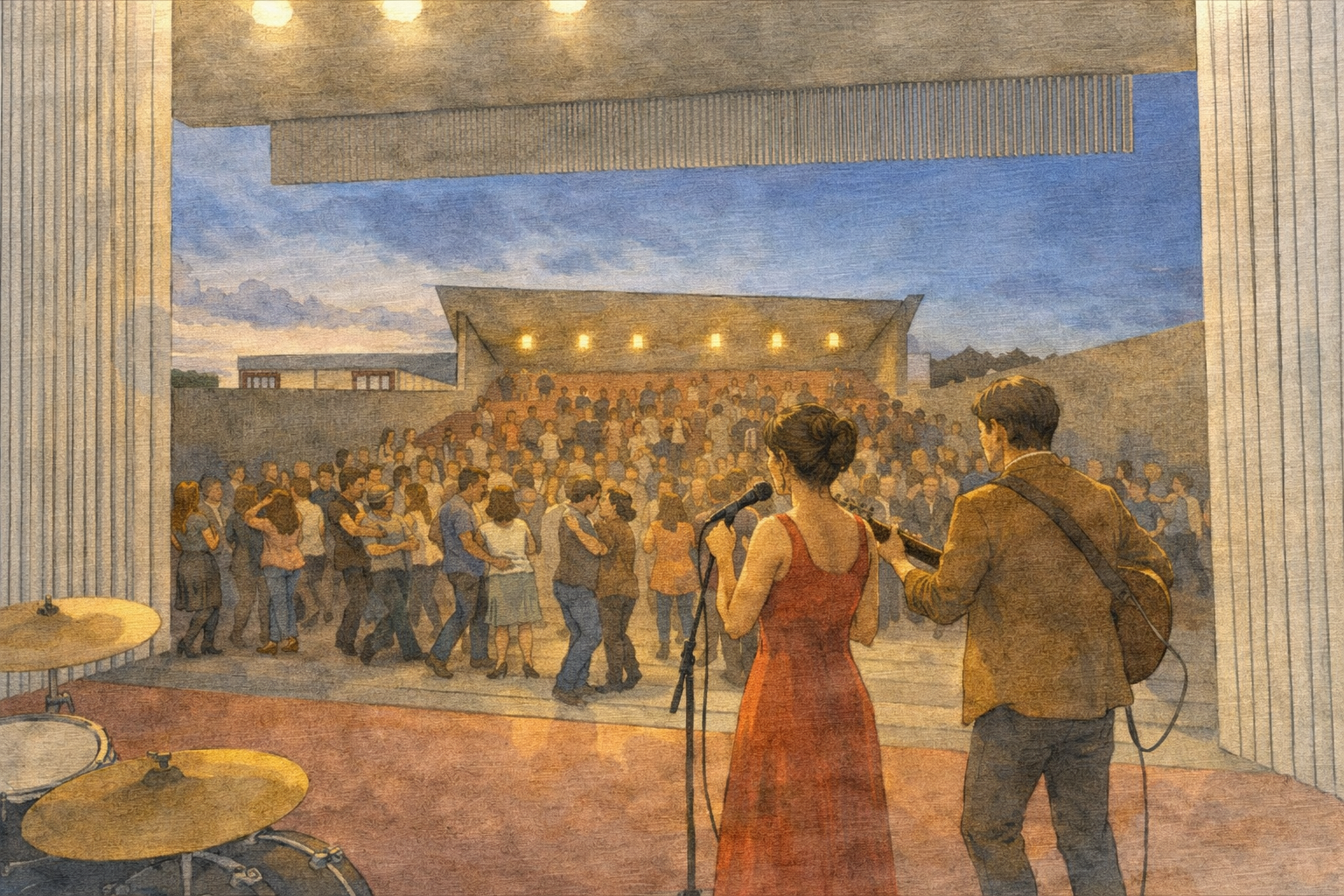
Open-Air Theatre
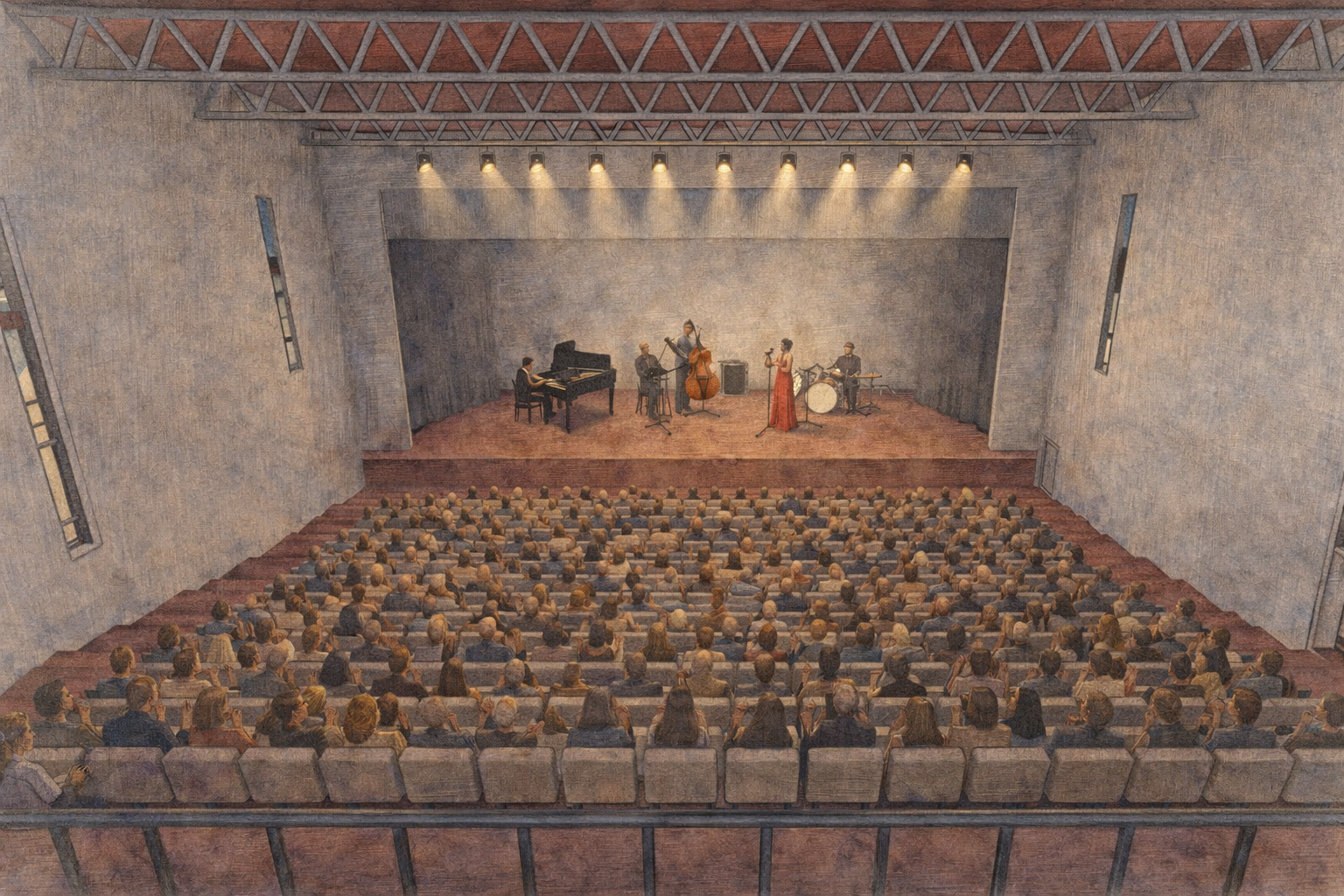
Auditorium
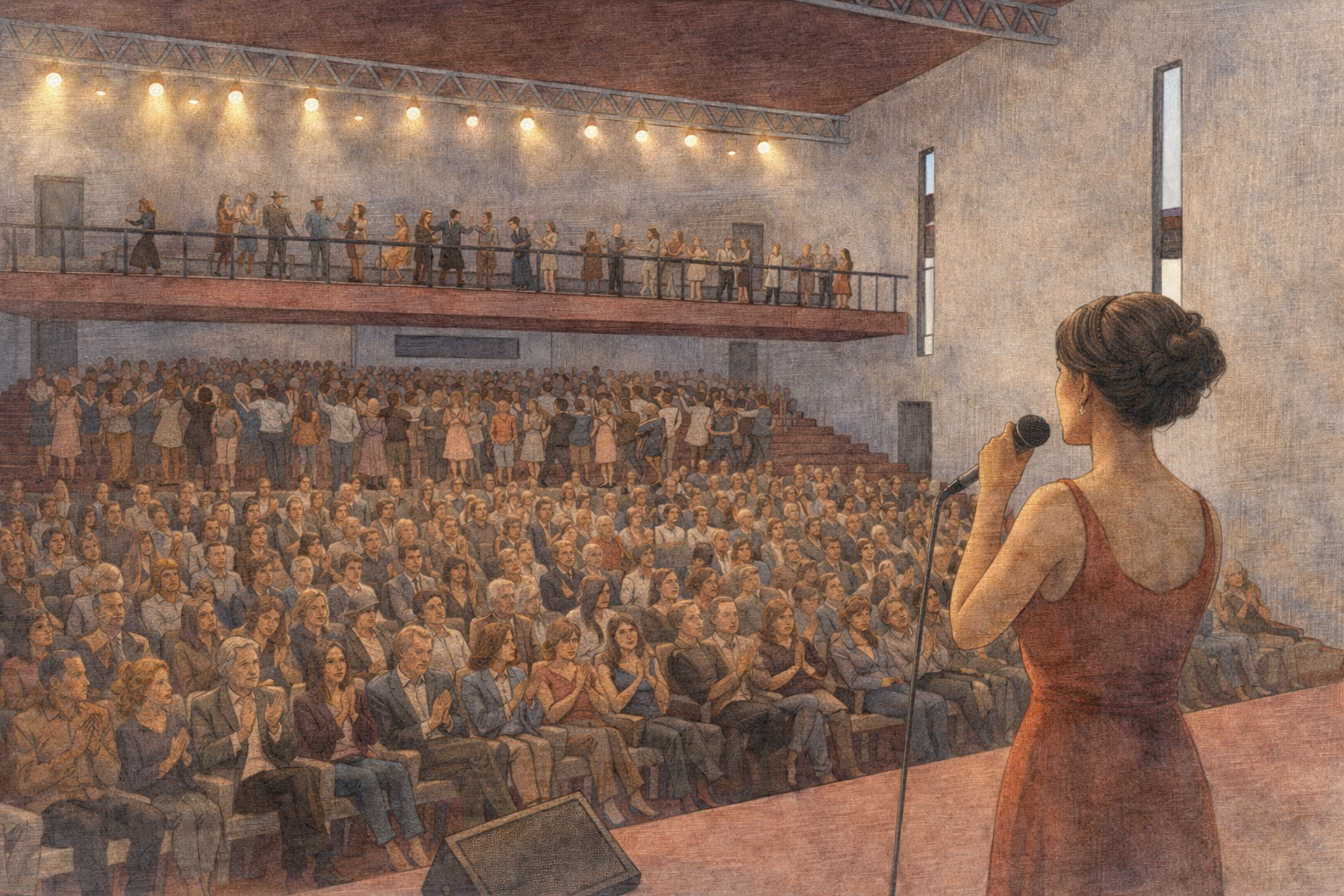
Auditorium
conclusION
The proposed project reconceptualizes the conventional living–working complex by situating creative production at the core of everyday spatial practices. Through the integration of residential, productive, and performative environments within a unified architectural framework, the design challenges the spatial segregation that typically characterizes contemporary urban development. The incorporation of threshold spaces as mediating interfaces enables a calibrated negotiation between public and private domains, while the spine configuration establishes an organizational structure that regulates accessibility, interaction, and visual continuity across the site. Together, these spatial strategies facilitate a production-oriented living environment in which collaborative creative practices are embedded into daily life without compromising the spatial integrity of domestic space. By accommodating alternative domestic arrangements through a modular co-living model, the project expands the definition of habitation beyond traditional family structures and aligns it with emerging modes of collective production. Ultimately, operating across multiple scales, the intervention constructs a continuous urban–architectural interface that links individual acts of creative production with broader forms of public engagement, repositioning the underutilized site not only as a place of residence and work but also as a localized catalyst for cultural production within the urban fabric of Alsancak.
Notes:
1. AI tools were utilized during the post-production phase for the enhancement and development of visual materials and renderings associated with the project.
2. The project was developed collaboratively by a team of two. The author of this text contributed to the conceptual framework of the proposal, its diagrammatic development, and the production of architectural drawings, including plan representations.
3. The project was carried out within the scope of the Architectural Design Studio (V) at Yaşar University, under the supervision of Prof. Dr. Seçkin Kutucu.
2. The project was developed collaboratively by a team of two. The author of this text contributed to the conceptual framework of the proposal, its diagrammatic development, and the production of architectural drawings, including plan representations.
3. The project was carried out within the scope of the Architectural Design Studio (V) at Yaşar University, under the supervision of Prof. Dr. Seçkin Kutucu.