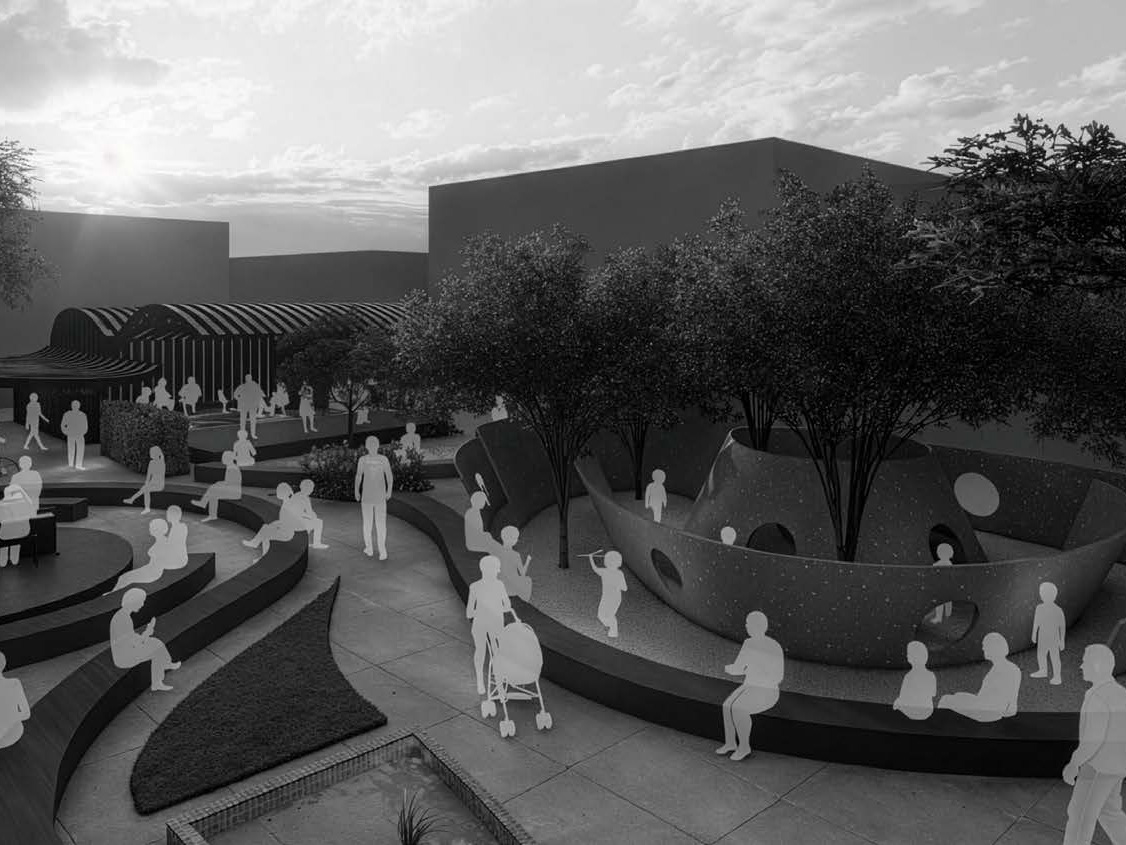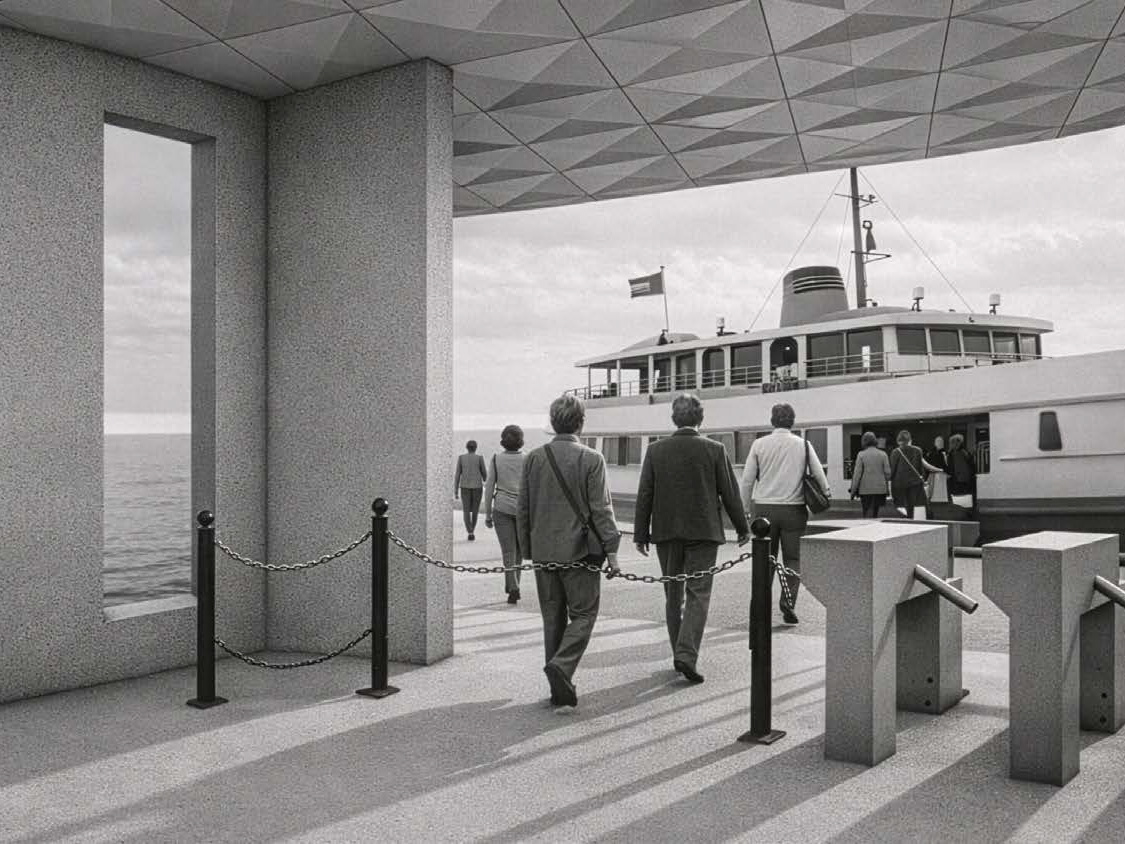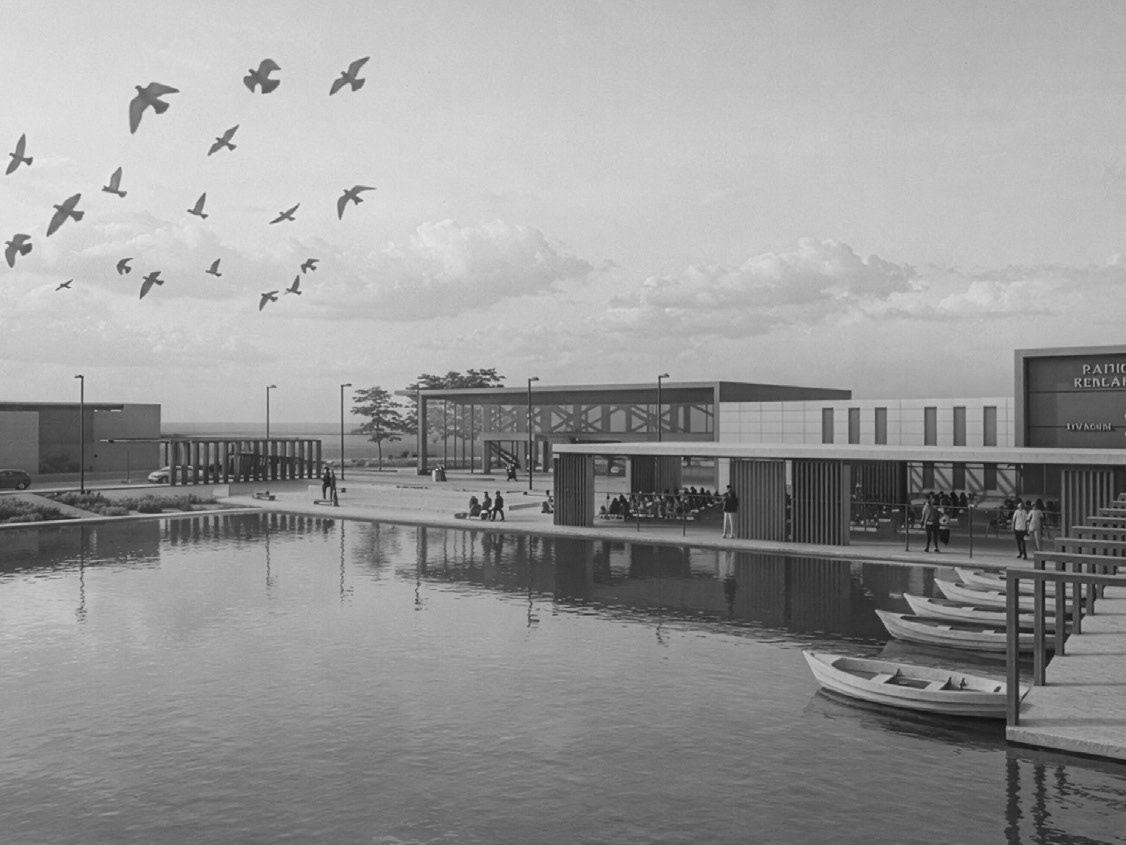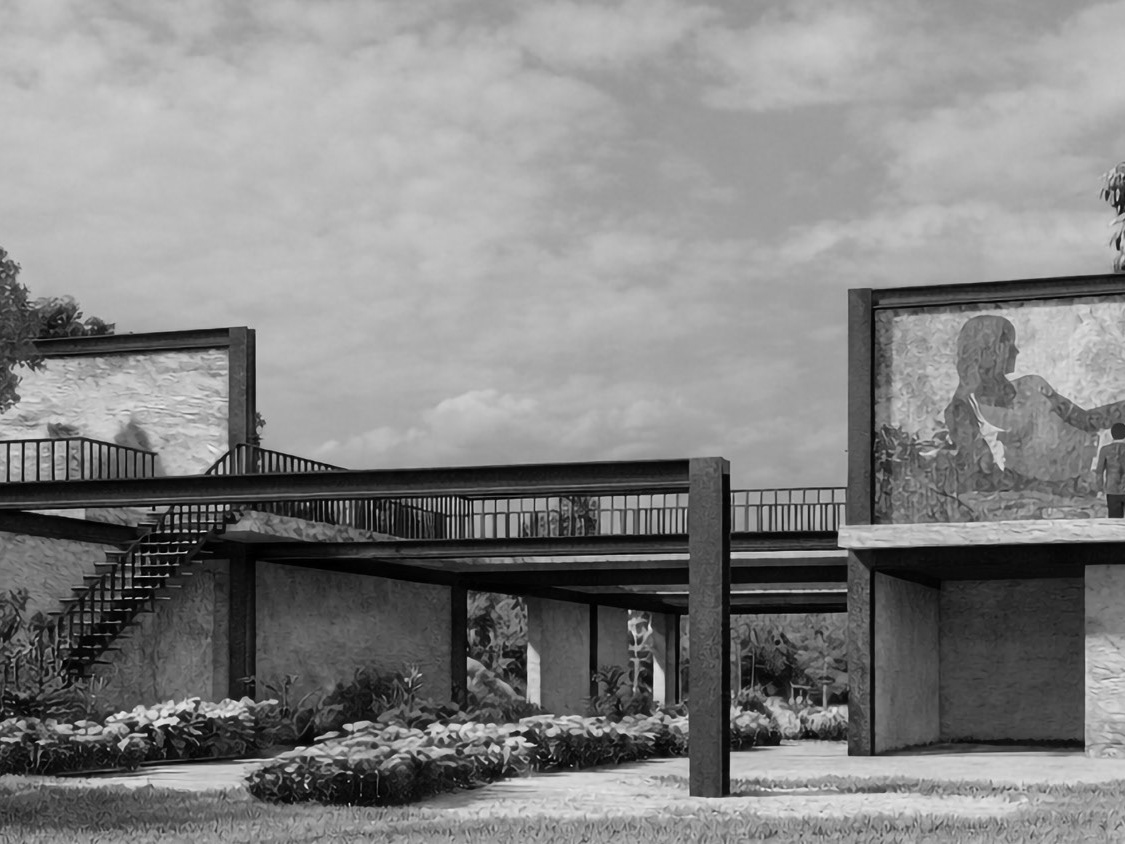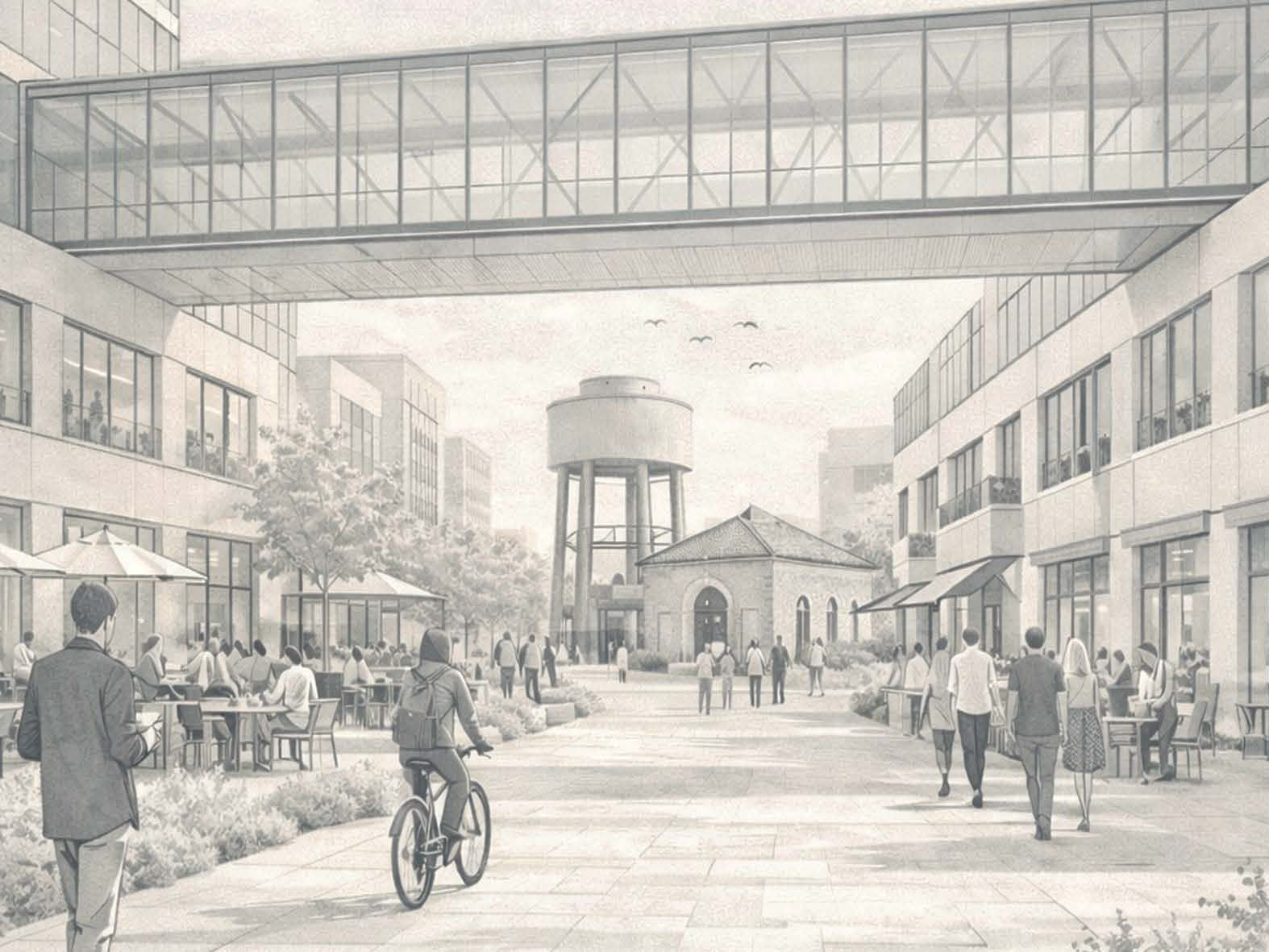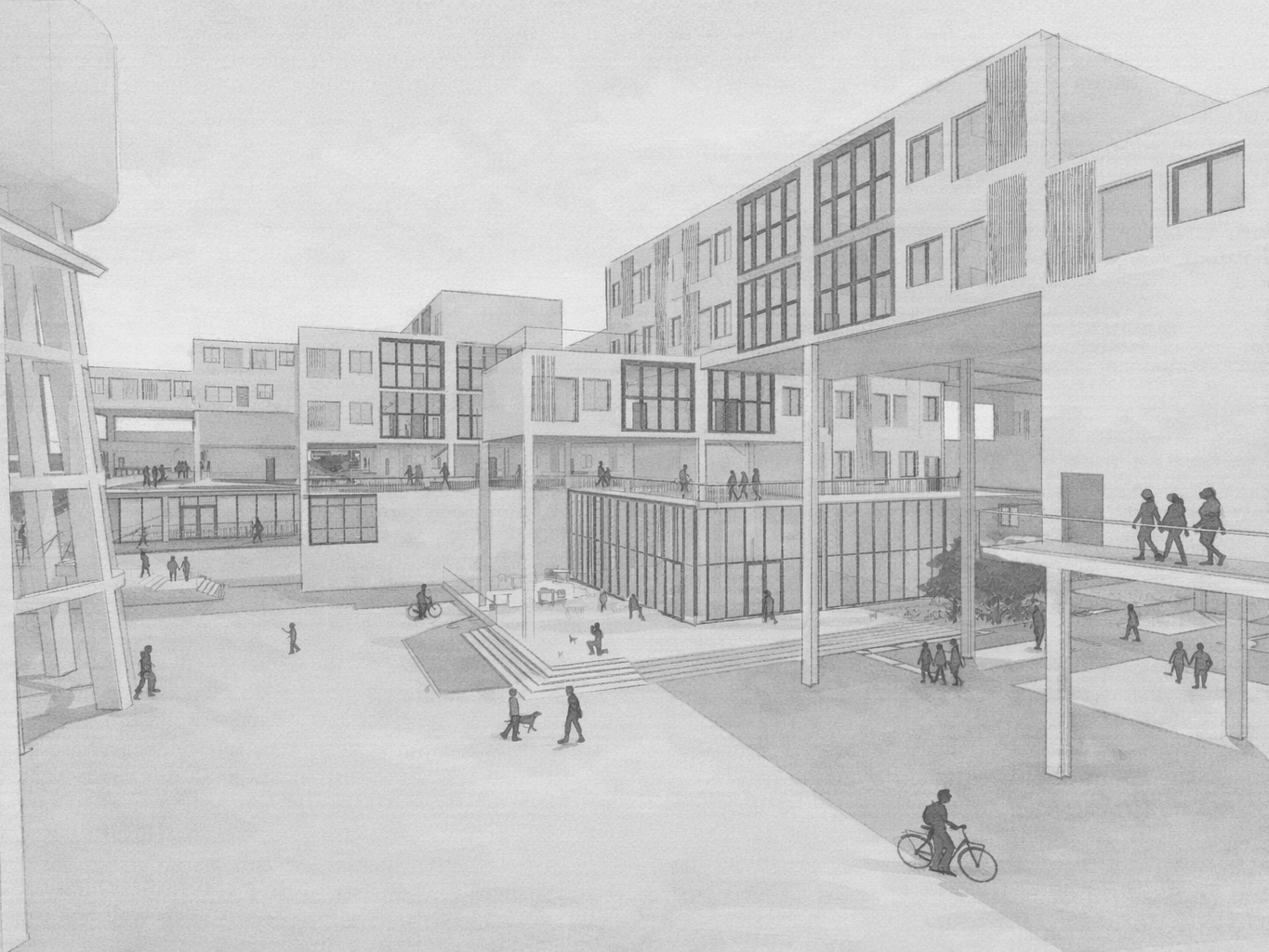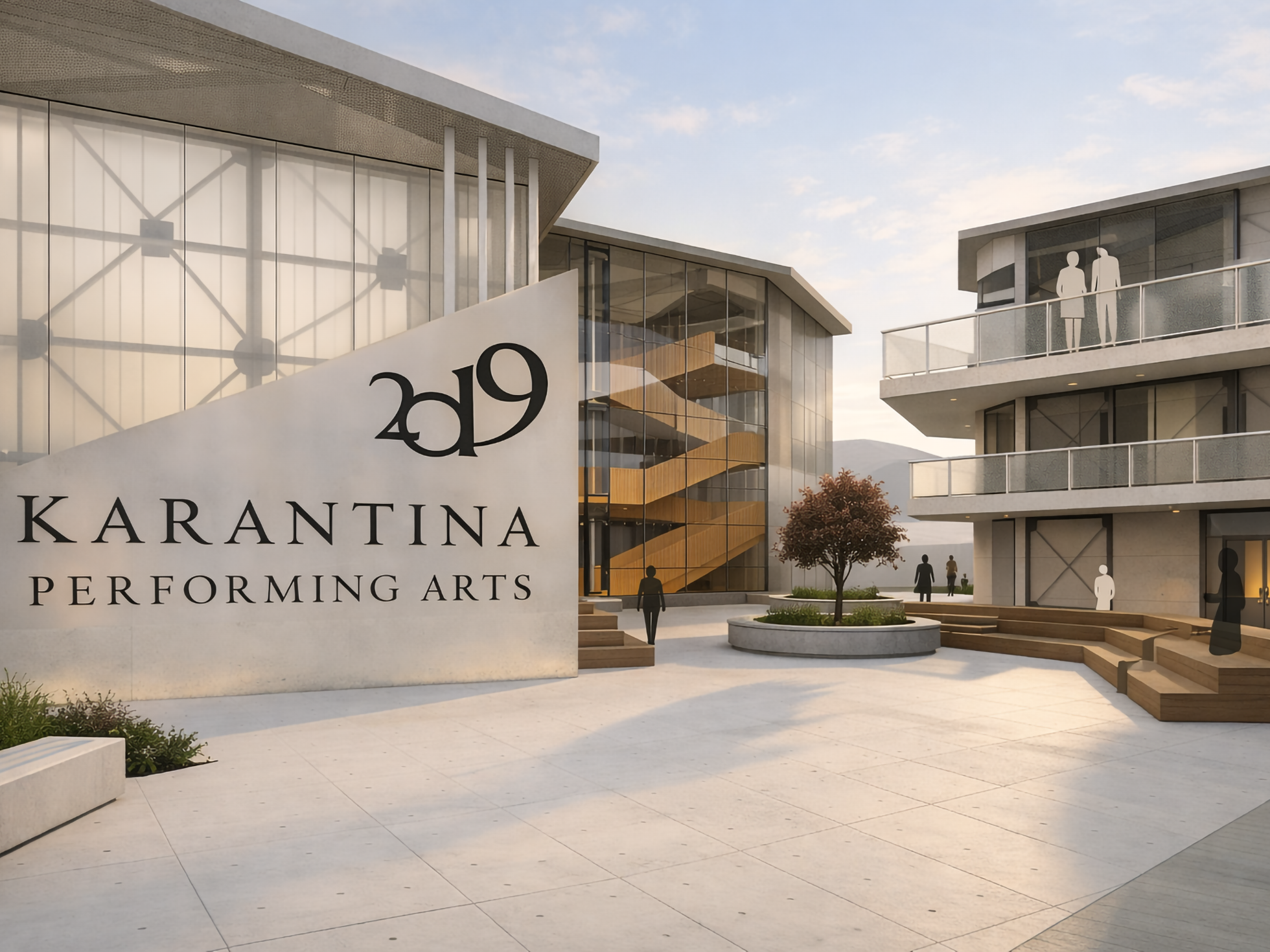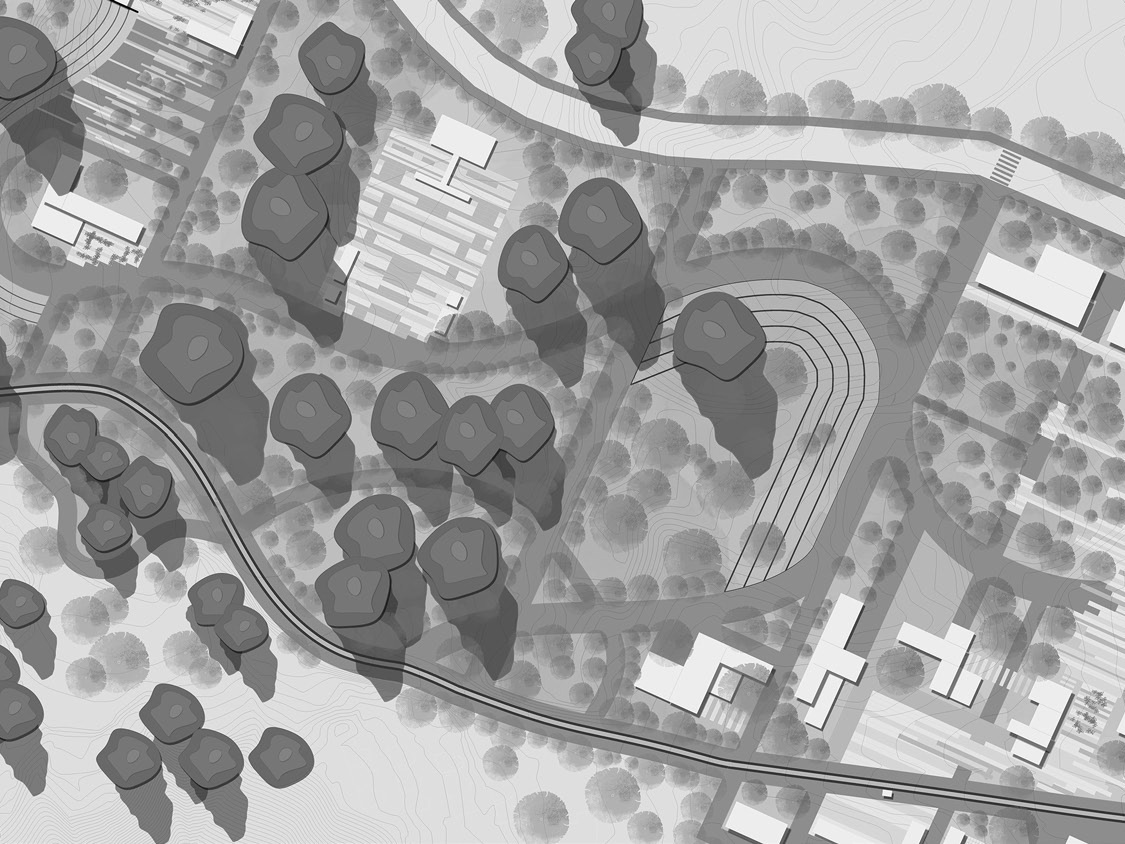
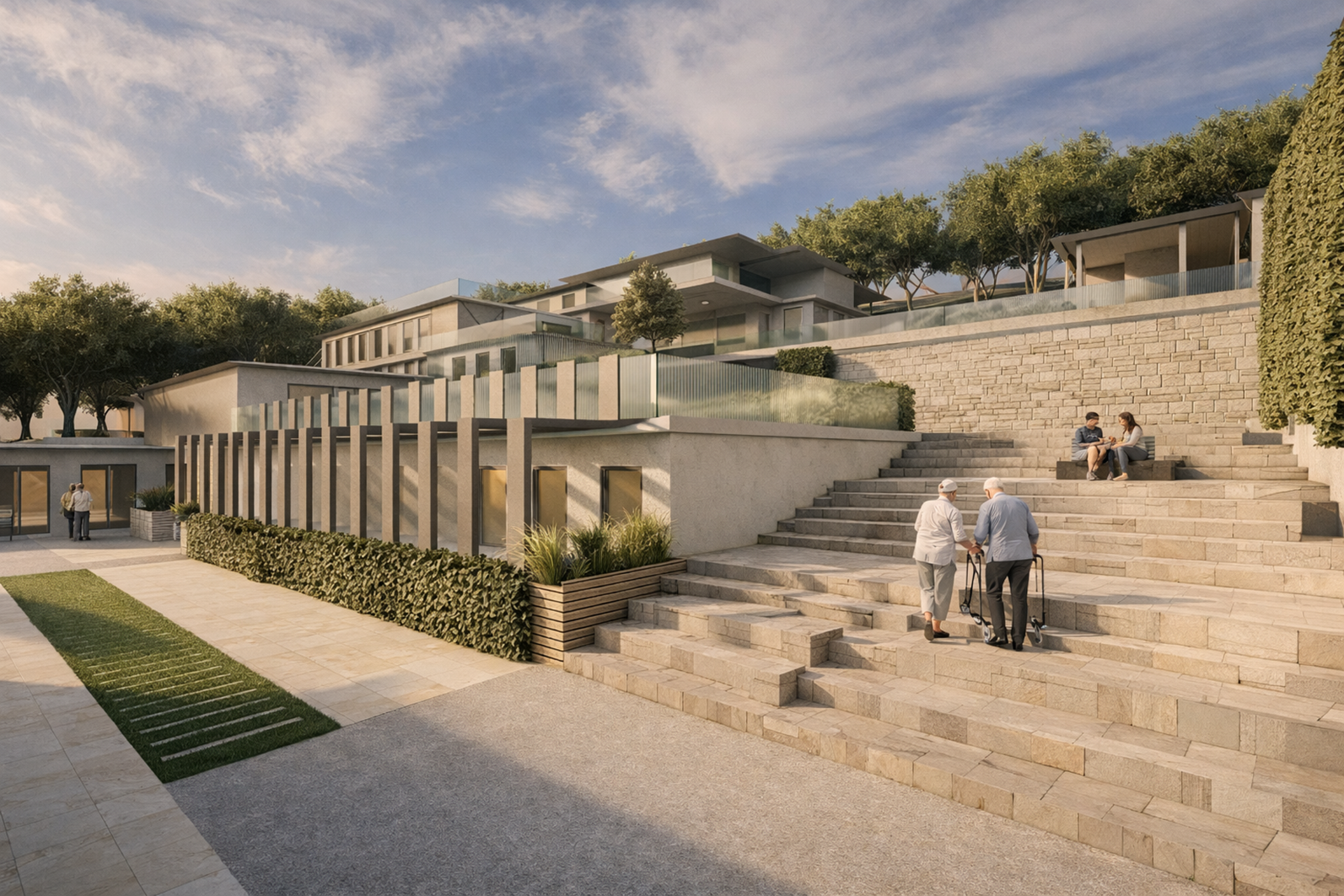
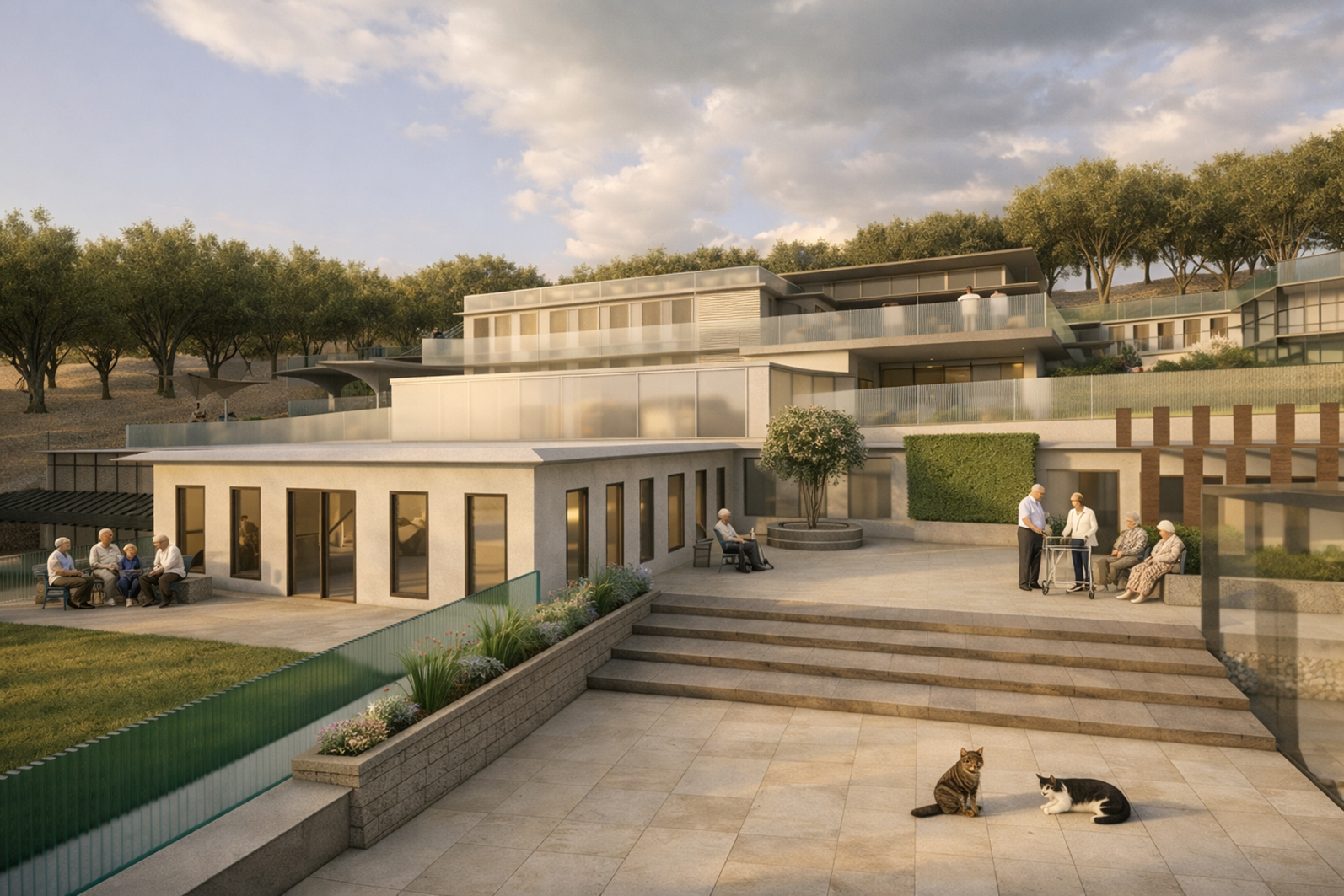
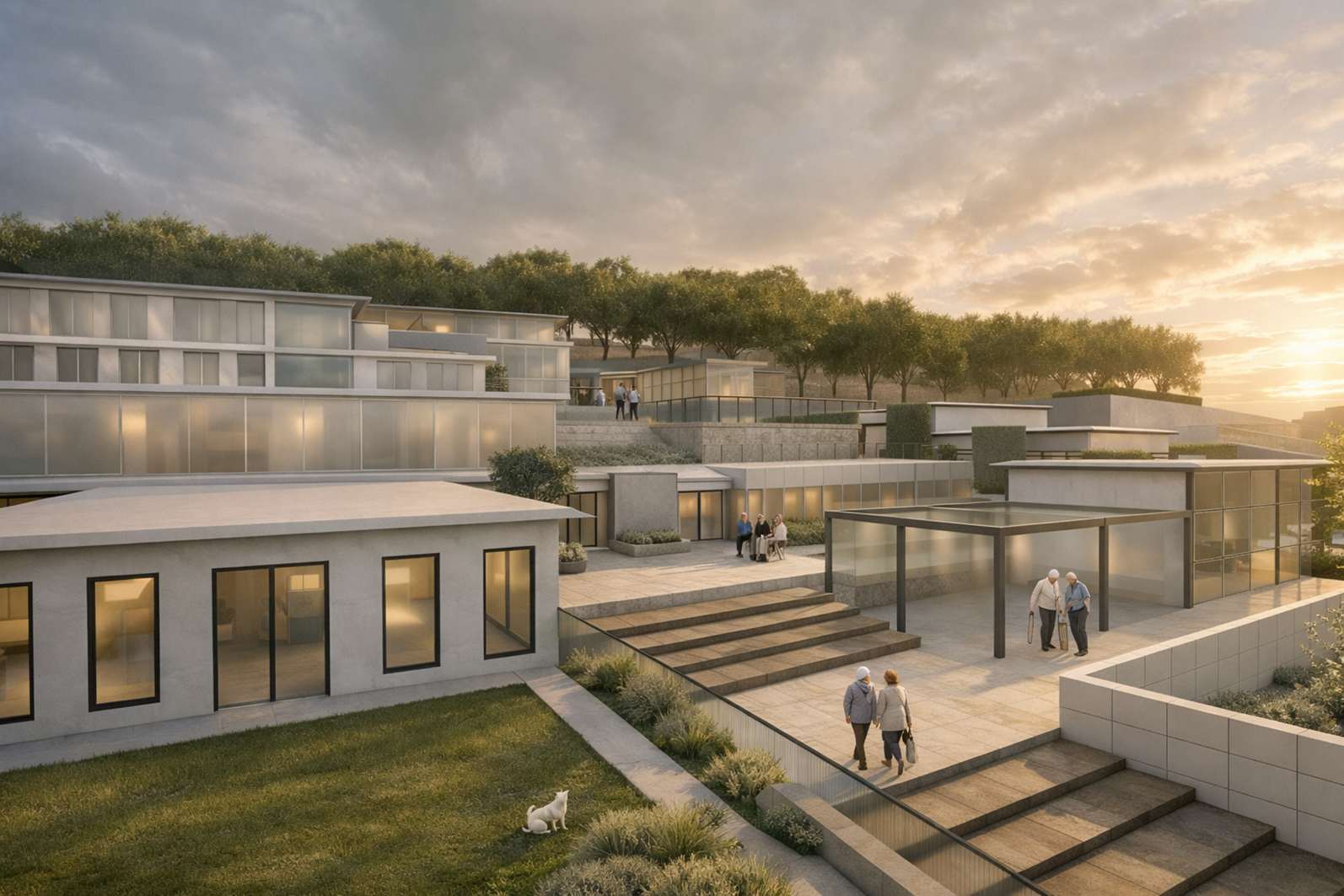
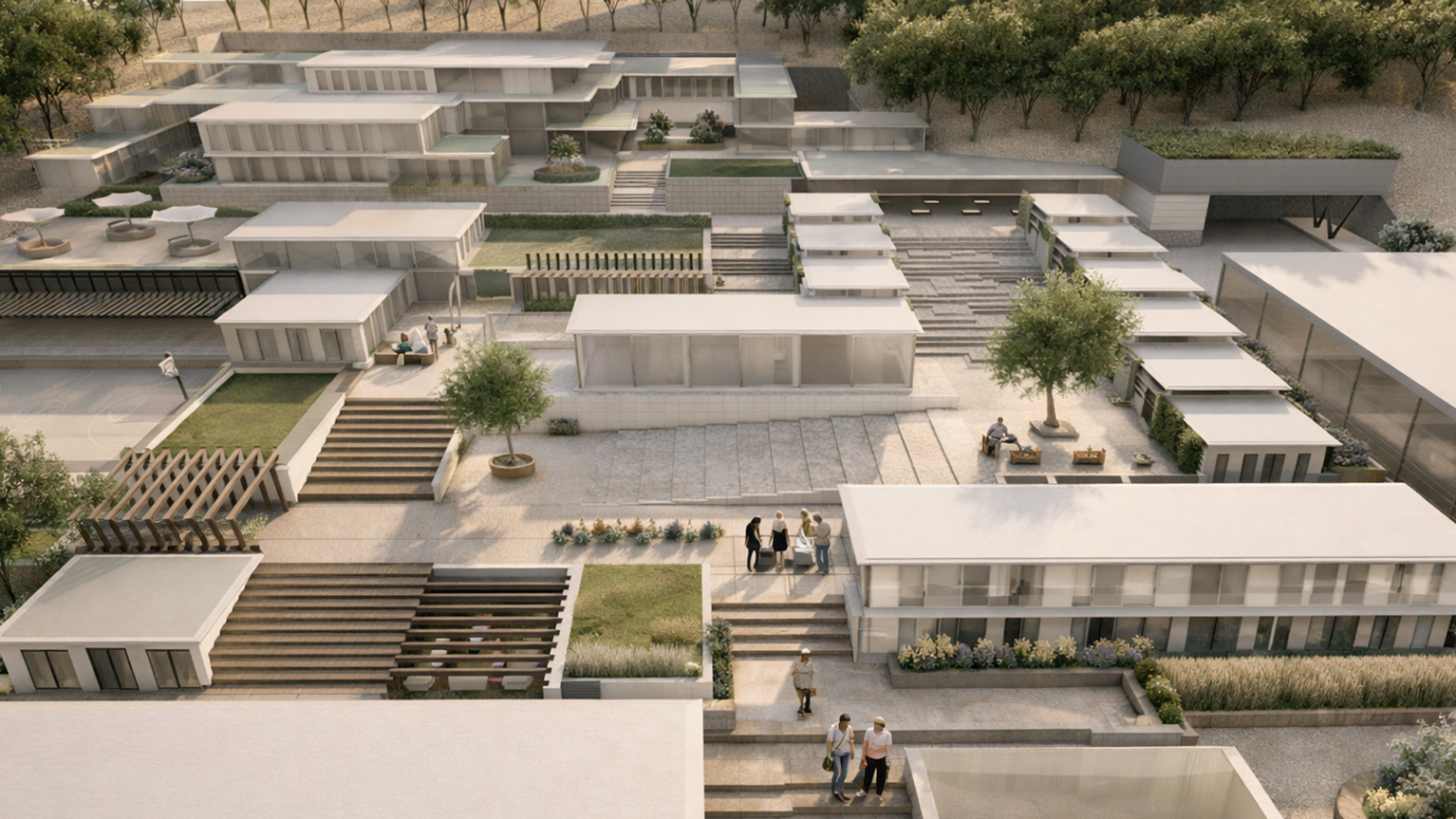
Located on a gently sloping hillside in Narlıdere, İzmir, this 18,000 m² therapeutic health campus reimagines healthcare as a spatial experience rooted in calmness, creativity, and collective wellbeing. The site—previously an undermaintained terrain of dry grasslands and scattered trees—offers a quiet topography overlooking the broader landscape of the district. Rather than imposing a singular monumental structure, the project unfolds as a terraced ensemble of interconnected volumes embedded within the natural slope.
The design departs from the conventional hospital typology. Instead of a purely clinical environment, the campus is conceived as a hybrid environment where healthcare, art, and everyday life coexist. Physical and mental wellbeing are approached not only through medical treatment, but through spatial experience, social interaction, and creative engagement.
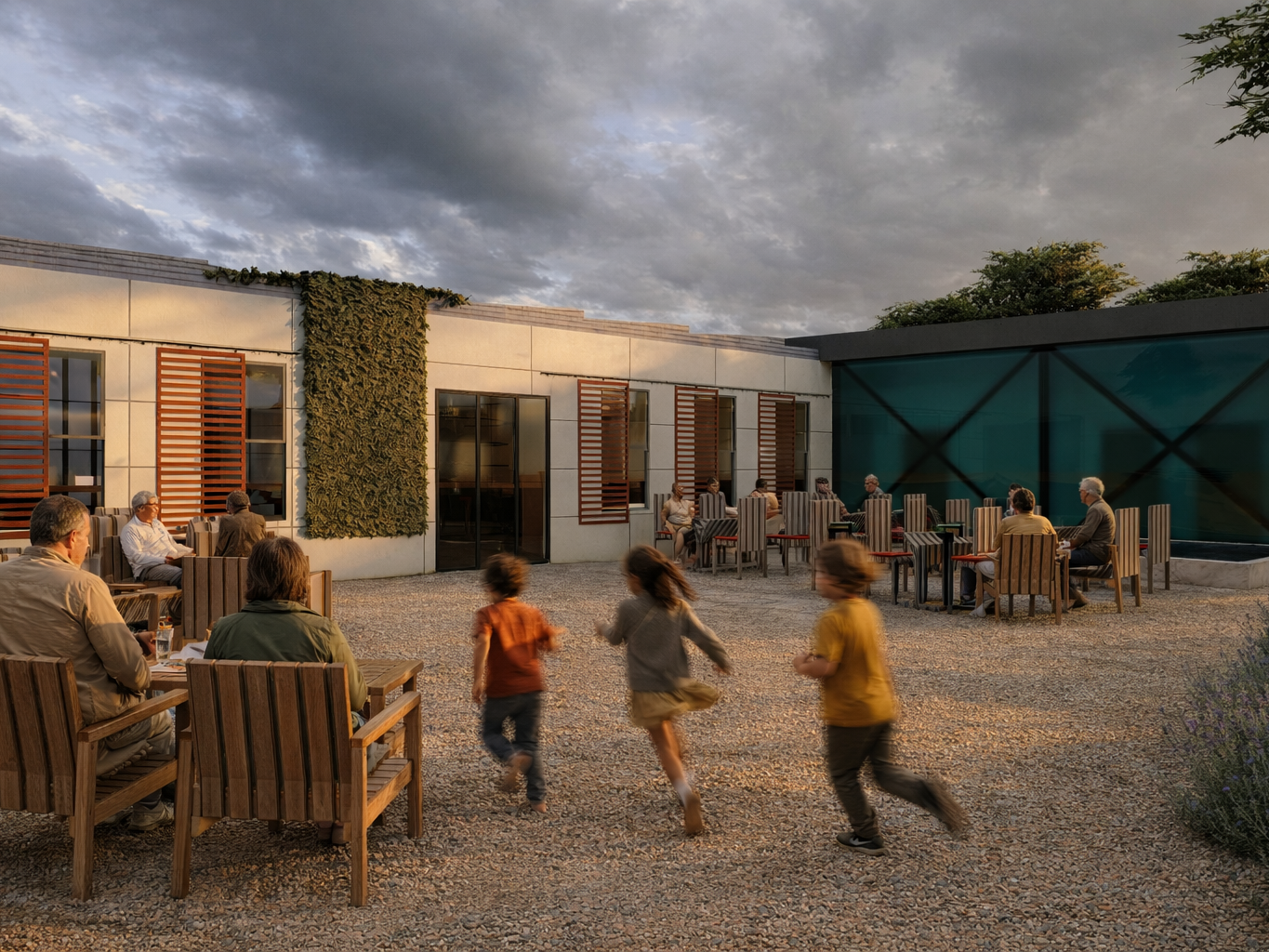
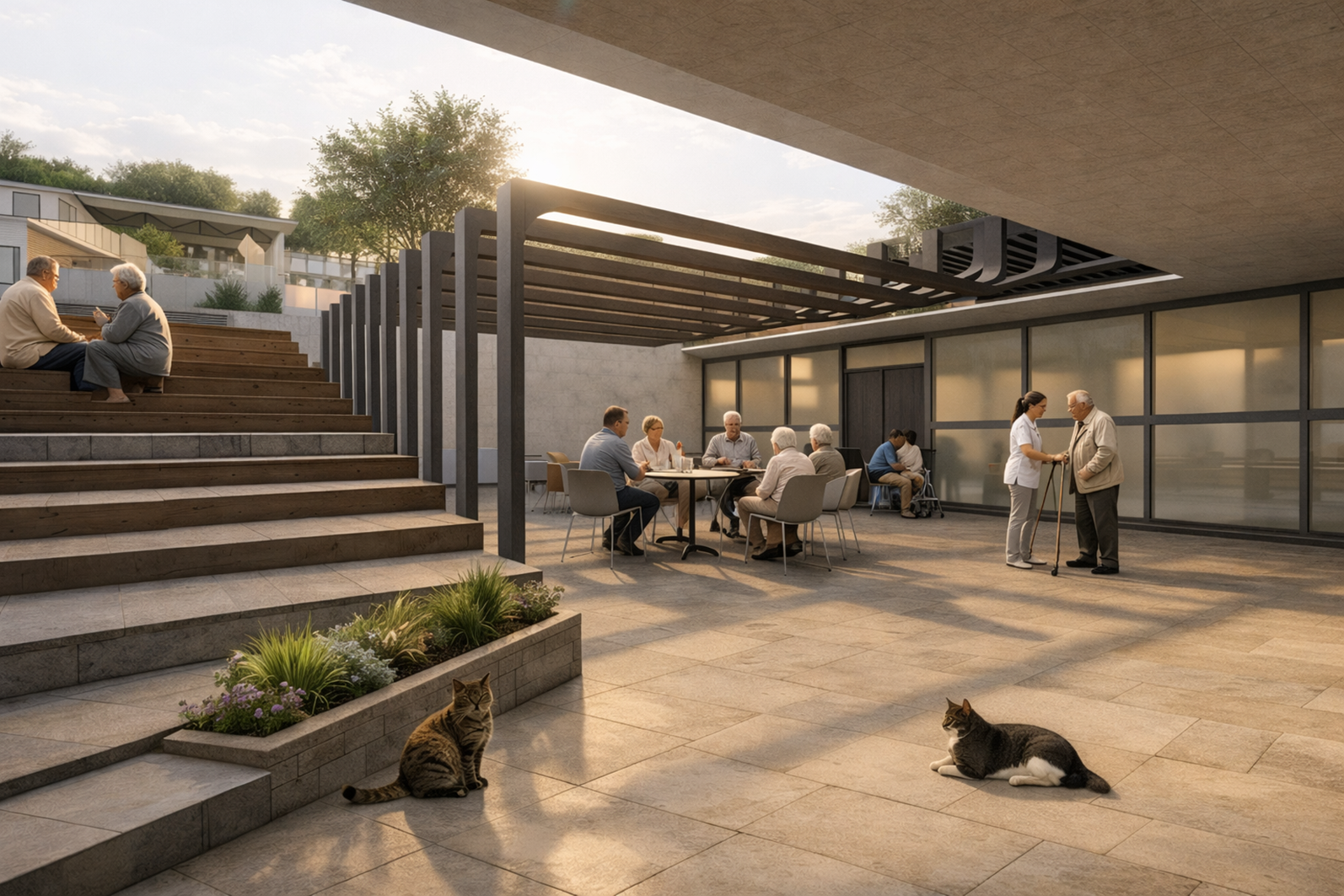
The program is primarily oriented toward an elderly user group, many of whom reside within the campus for extended periods. Complementing them are doctors, nurses, therapists, and visiting family members who participate in the daily rhythms of the complex. This mixture of permanent and temporary users generates a layered social structure, where moments of solitude coexist with collective activities.
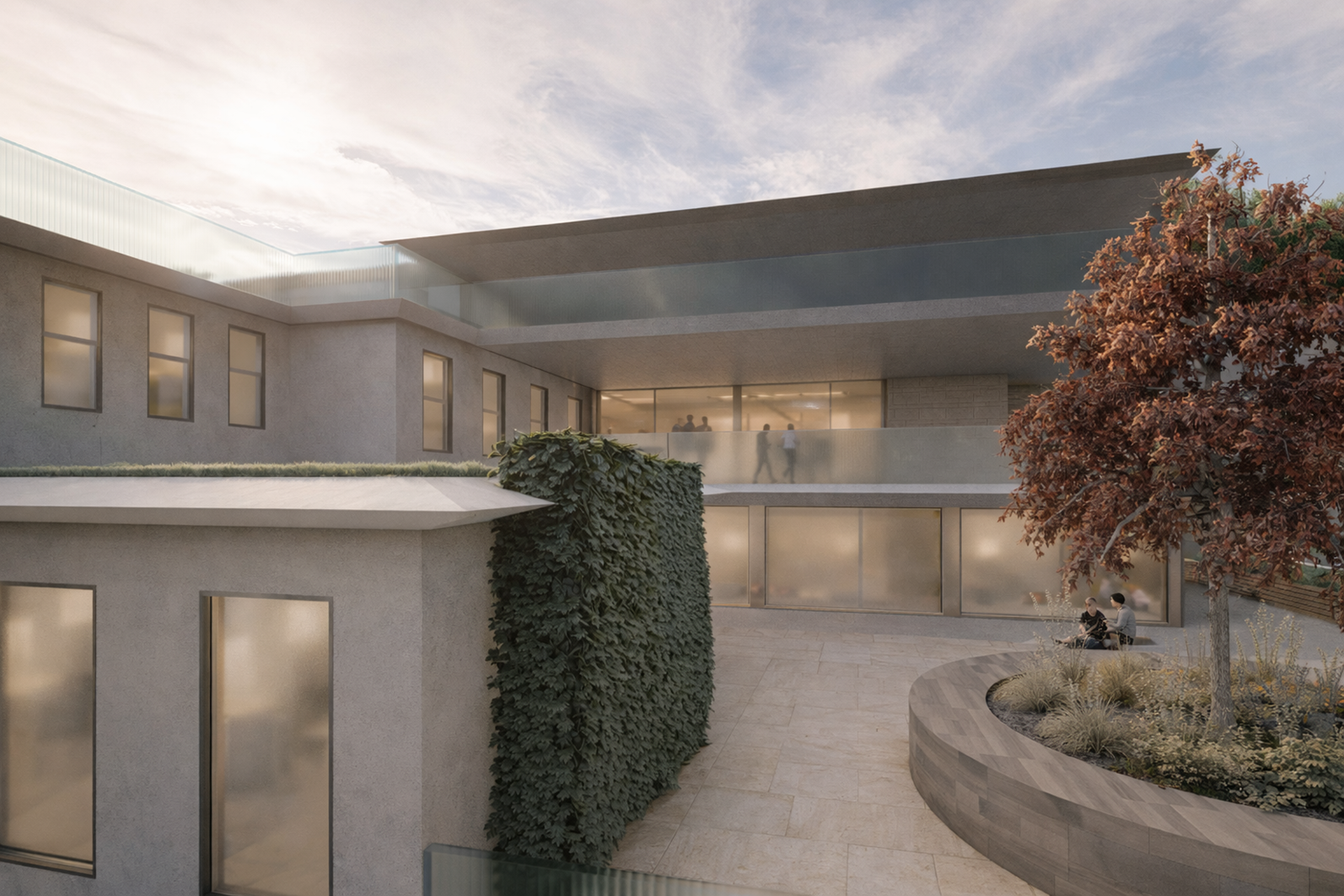
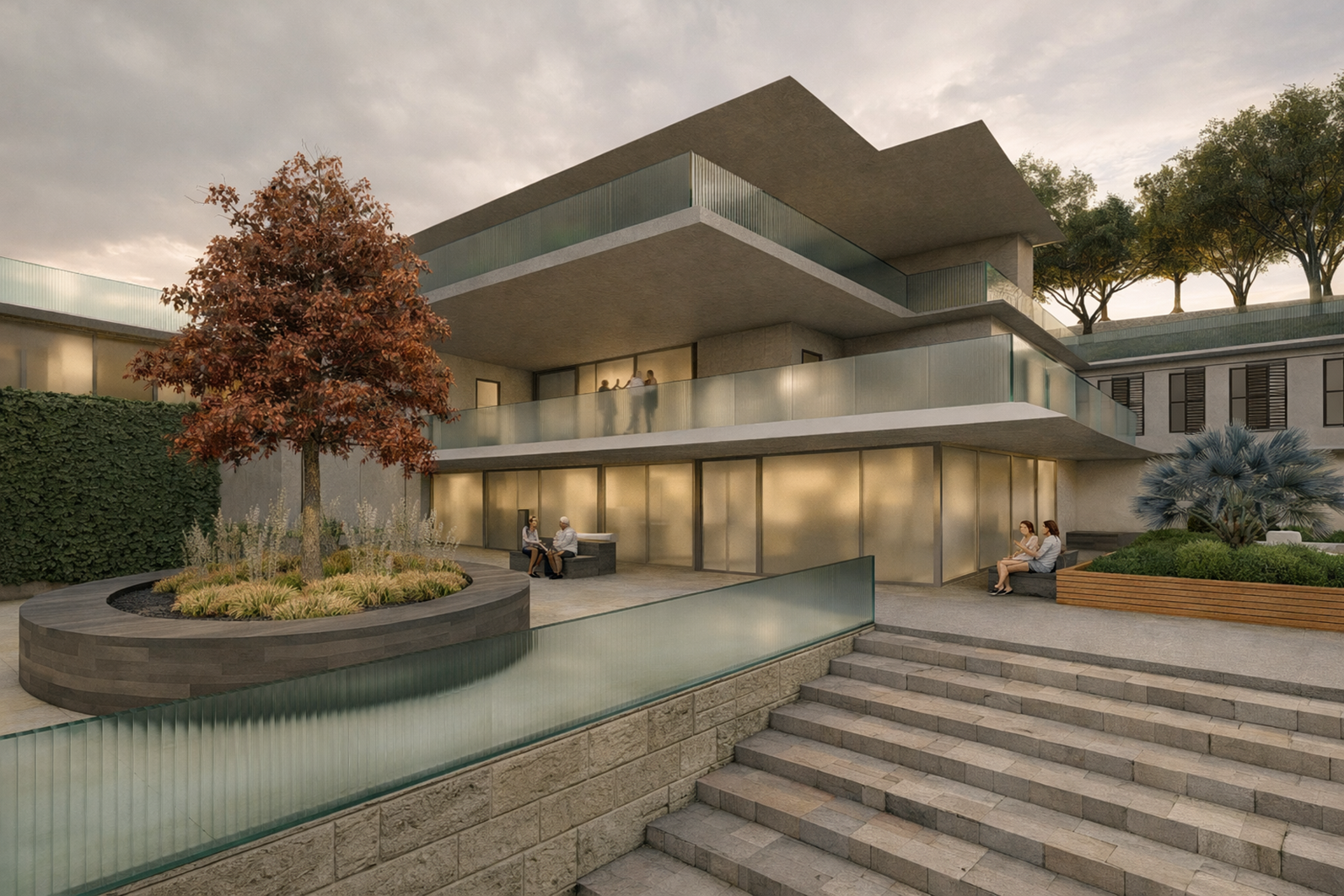
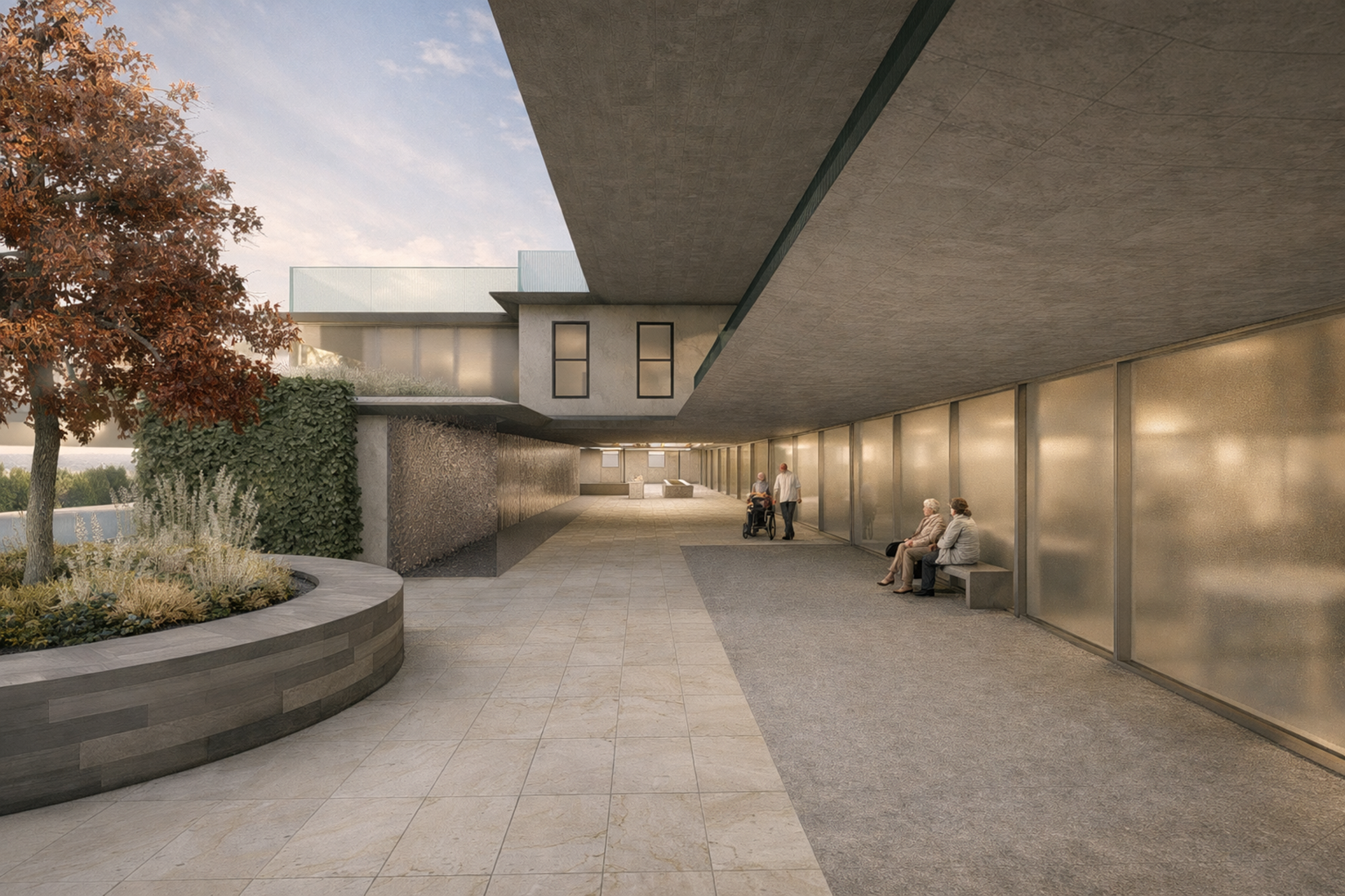
Inspired by the therapeutic landscapes of nearby Balçova Therapy Forest, the campus integrates architecture and landscape as a continuous spatial system. Buildings are carefully positioned along the terrain, allowing circulation routes, gardens, terraces, and semi-open spaces to function as extensions of the therapeutic environment. Walking paths, shaded courtyards, and planted terraces encourage slow movement and sensory engagement with the landscape.
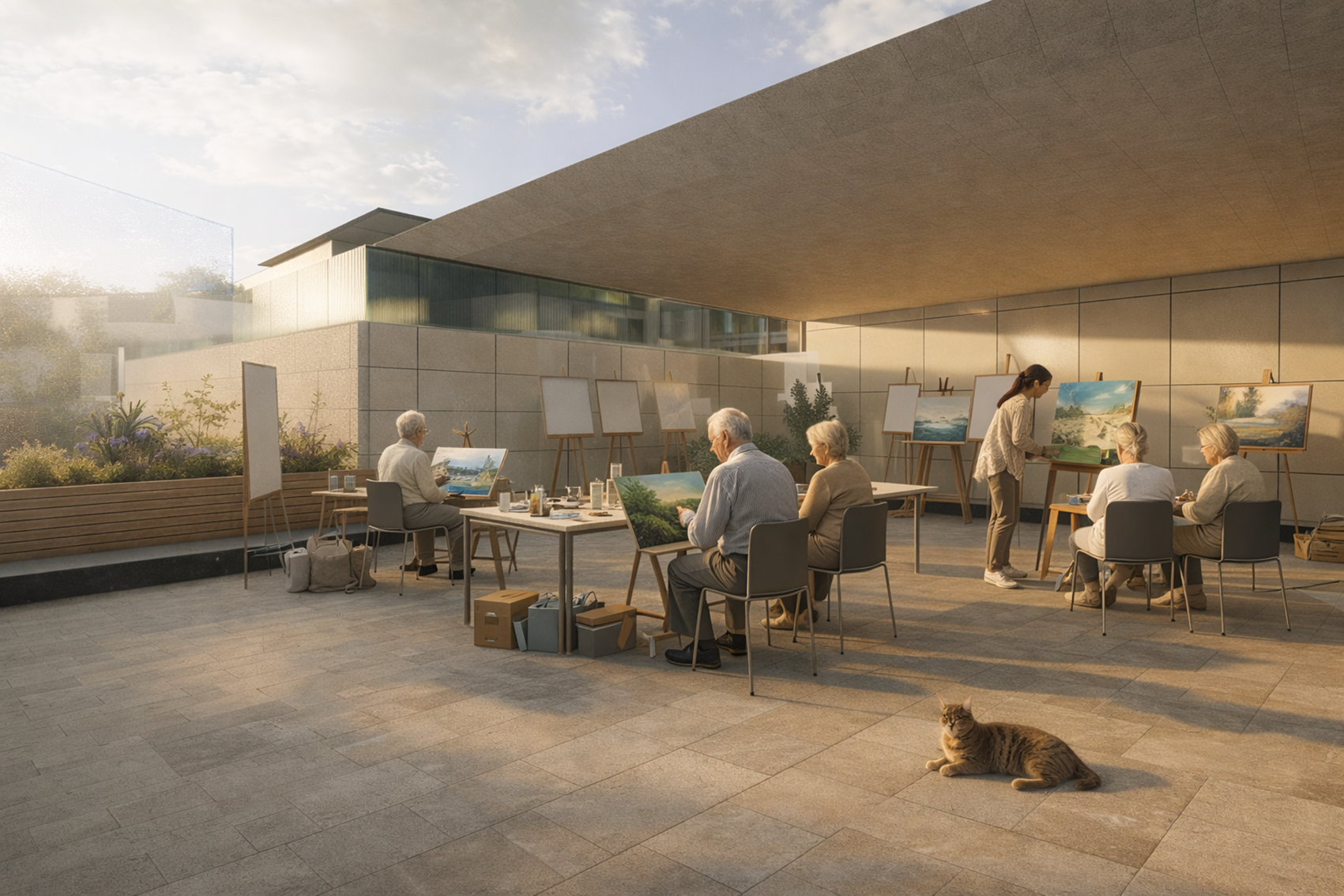
Art plays a central role in the daily life of the campus. Rather than isolating therapy within specialized rooms, creative practices are distributed throughout the complex. Painting workshops, collective gathering spaces, quiet studios, and open-air activity areas are interwoven with medical functions, allowing artistic expression to become part of the healing process. These spaces foster both individual reflection and communal participation.
Materiality reinforces the calm atmosphere of the campus. Neutral architectural surfaces, soft natural tones, and translucent glass elements create a quiet spatial language that emphasizes light, shadow, and landscape rather than formal expression. The architecture avoids visual noise, prioritizing clarity, warmth, and a sense of dignity appropriate for a healthcare environment.
Ultimately, the project proposes a therapeutic ecosystem where architecture, landscape, and community operate together. By integrating healthcare with artistic and collective practices, the campus seeks to create an environment that supports not only treatment, but also recovery, social connection, and long-term wellbeing.
1. This project was developed within the scope of the Integral Architectural Design Studio (IV) at Yaşar University, under the supervision of Assoc. Prof. Dr. Başak Kundakçı Koyunbaba.
2. The project was produced as a collaborative work by a two-person team.
3. AI tools were utilized during the post-production phase of the visualizations.
2. The project was produced as a collaborative work by a two-person team.
3. AI tools were utilized during the post-production phase of the visualizations.